
Before Memmo my notes were scattered across PDFs. Now a workspace pulls everything into one place — I see exactly what's still left to study.
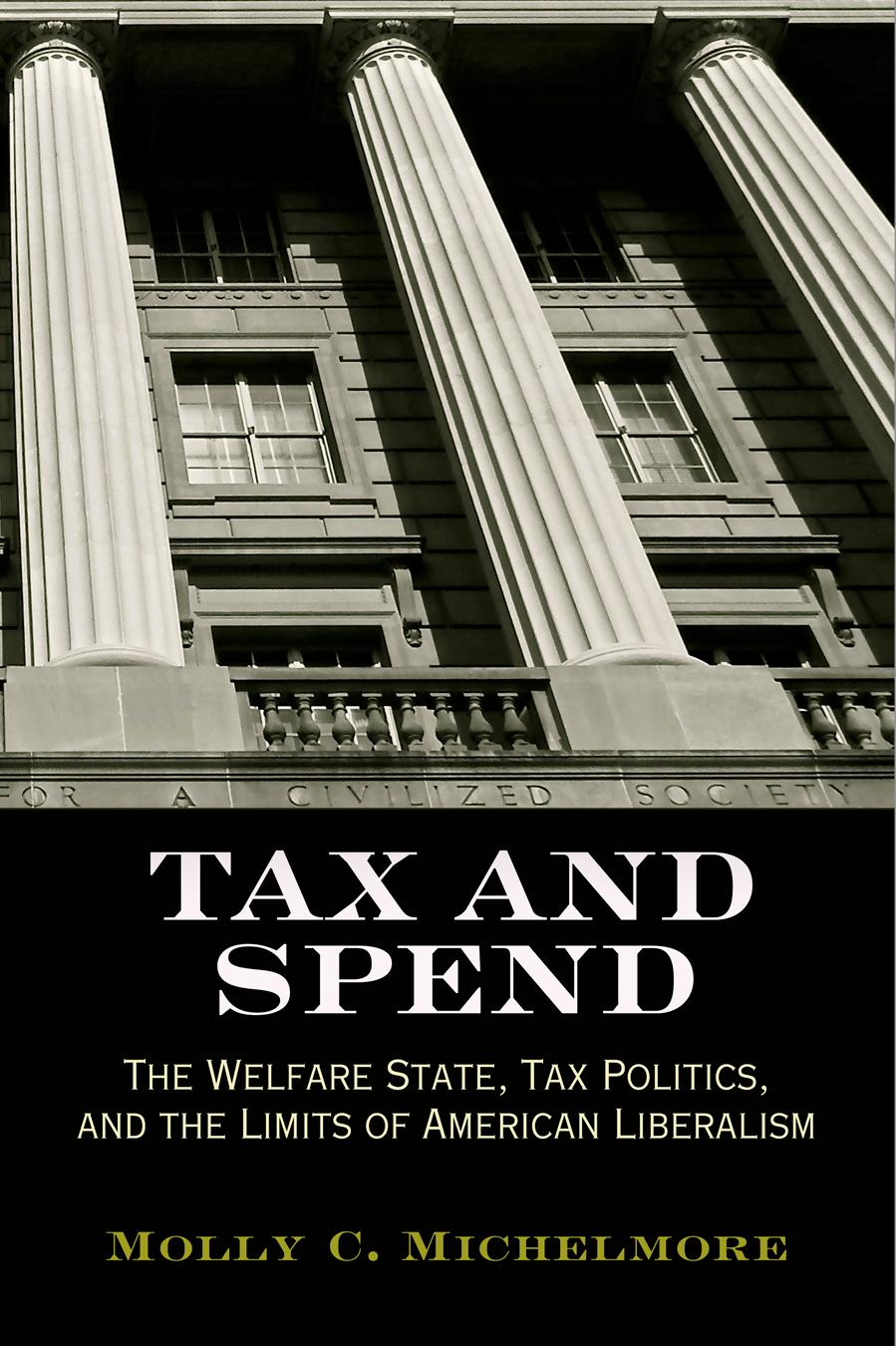
Taxes dominate contemporary American politics. Yet while many rail against big government, few Americans are prepared to give up the benefits they receive from the state. In Tax and Spend, historian Molly C. Michelmore examines an unexpected source of this contradiction and shows why many Americans have come to hate government but continue to demand the security it provides.
Tracing the development of taxing and spending policy over the course of the twentieth century, Michelmore uncovers the origins of today's antitax and antigovernment politics in choices made by liberal state builders in the 1930s, 1940s, and 1950s. By focusing on two key instruments of twentieth-century economic and social policy, Aid to Families with Dependent Children and the federal income tax, Tax and Spend explains the antitax logic that has guided liberal policy makers since the earliest days of Franklin Roosevelt's presidency. Grounded in careful archival research, this book reveals that the liberal social compact forged during the New Deal, World War II, and the postwar years included not only generous social benefits for the middle class—including Social Security, Medicare, and a host of expensive but hidden state subsidies—but also a commitment to preserve low taxes for the majority of American taxpayers.
In a surprising twist on conventional political history, Michelmore's analysis links postwar liberalism directly to the rise of the Republican right in the last decades of the twentieth century. Liberals' decision to reconcile public demand for low taxes and generous social benefits by relying on hidden sources of revenues and invisible kinds of public subsidy, combined with their persistent defense of taxpayer rights and suspicion of "tax eaters" on the welfare rolls, not only fueled but helped create the contours of antistate politics at the core of the Reagan Revolution.
Before Memmo my notes were scattered across PDFs. Now a workspace pulls everything into one place — I see exactly what's still left to study.
Memmo's summaries are gold before exams. I don't have to re-read 800 pages two weeks before — just the important parts.
The AI chat has saved me the night before an exam more than once. I just keep asking until I get it — no waiting on a study group to reply.
The quizzes hit exactly what I need to know. Memmo tracks what I get stuck on — so I only practice what's worth it.
Flashcards with spaced repetition are magic. Memmo knows when I'm about to forget something and brings it back.
The AI podcasts are my favorite. I listen on my way to school and get a recap without sitting at a computer.

Handbok i kvalitativa metoder
281 kr

Hållbar utveckling: en introduktion för ingenjörer och andra problemlösare
334 kr

Brymans Samhällsvetenskapliga metoder
390 kr

Projektledning
491 kr

Den orättvisa hälsan: om socioekonomiska skillnader i hälsa och livslängd
326 kr

Vetenskapsteori för nybörjare
196 kr

Organizational Leadership
429 kr

På väg mot läraryrket
172 kr

Det sociala livet i skolan: Socialpsykologiska perspektiv
253 kr

Betygsättningens didaktik
151 kr

Personality
402 kr

Studying Leadership
404 kr

Managing Innovation
477 kr

Introduktion till samhällsvetenskaplig metod
347 kr

The Psychology of Sex and Gender
698 kr

Evidens och kunskap för socialt arbete
207 kr

Introduction to Leadership
605 kr