
Before Memmo my notes were scattered across PDFs. Now a workspace pulls everything into one place — I see exactly what's still left to study.
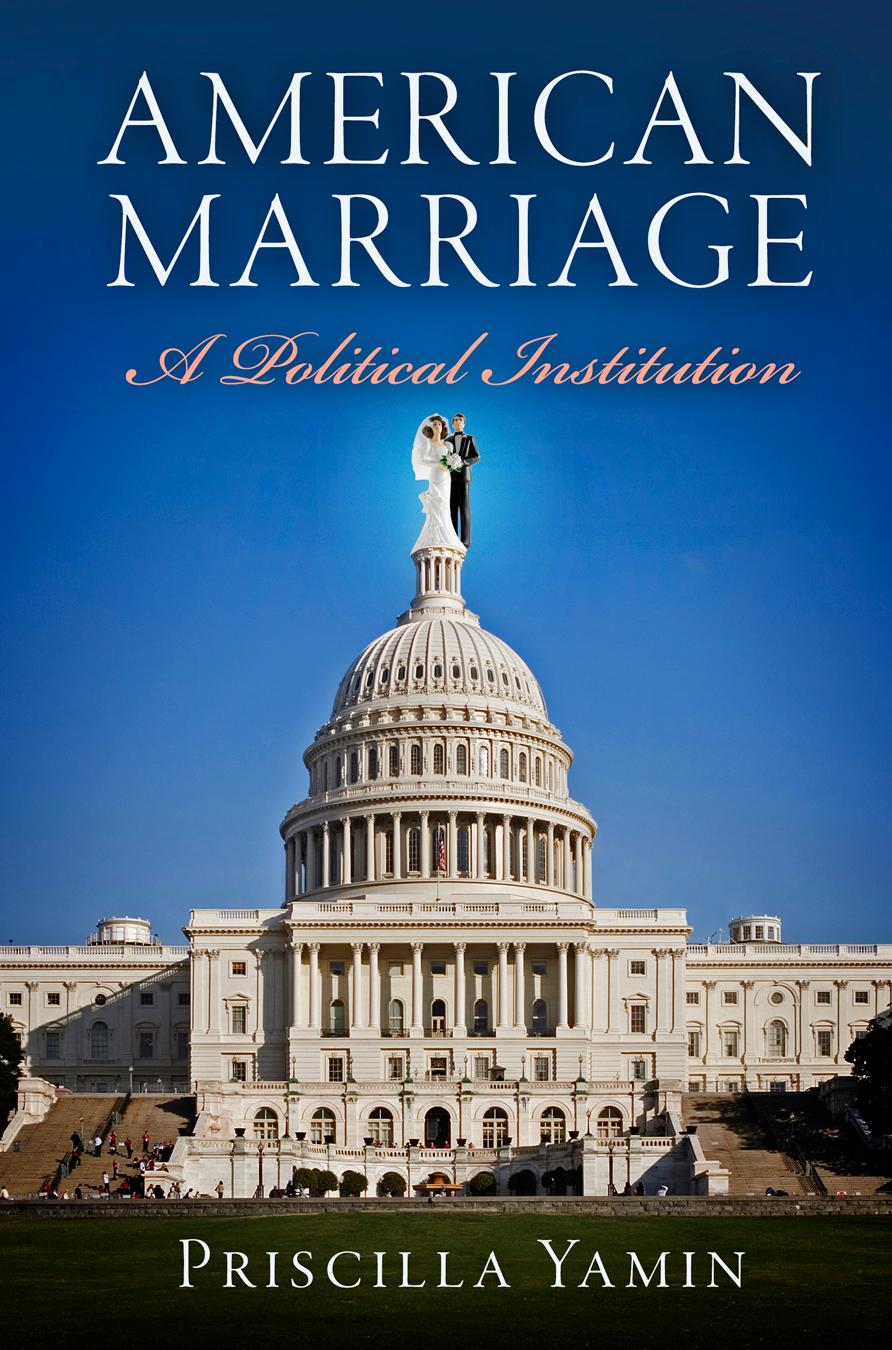
As states across the country battle internally over same-sex marriage in the courts, in legislatures, and at the ballot box, activists and scholars grapple with its implications for the status of gays and lesbians and for the institution of marriage itself. Yet, the struggle over same-sex marriage is only the most recent political and public debate over marriage in the United States. What is at stake for those who want to restrict marriage and for those who seek to extend it? Why has the issue become such a national debate? These questions can be answered only by viewing marriage as a political institution as well as a religious and cultural one.
In its political dimension, marriage circumscribes both the meaning and the concrete terms of citizenship. Marriage represents communal duty, moral education, and social and civic status. Yet, at the same time, it represents individual choice, contract, liberty, and independence from the state. According to Priscilla Yamin, these opposing but interrelated sets of characteristics generate a tension between a politics of obligations on the one hand and a politics of rights on the other. To analyze this interplay, American Marriage examines the status of ex-slaves at the close of the Civil War, immigrants at the turn of the twentieth century, civil rights and women's rights in the 1960s, and welfare recipients and gays and lesbians in the contemporary period. Yamin argues that at moments when extant political and social hierarchies become unstable, political actors turn to marriage either to stave off or to promote political and social changes. Some marriages are pushed as obligatory and necessary for the good of society, while others are contested or presented as dangerous and harmful. Thus political struggles over race, gender, economic inequality, and sexuality have been articulated at key moments through the language of marital obligations and rights. Seen this way, marriage is not outside the political realm but interlocked with it in mutual evolution.
Before Memmo my notes were scattered across PDFs. Now a workspace pulls everything into one place — I see exactly what's still left to study.
Memmo's summaries are gold before exams. I don't have to re-read 800 pages two weeks before — just the important parts.
The AI chat has saved me the night before an exam more than once. I just keep asking until I get it — no waiting on a study group to reply.
The quizzes hit exactly what I need to know. Memmo tracks what I get stuck on — so I only practice what's worth it.
Flashcards with spaced repetition are magic. Memmo knows when I'm about to forget something and brings it back.
The AI podcasts are my favorite. I listen on my way to school and get a recap without sitting at a computer.

Handbok i kvalitativa metoder
281 kr

Hållbar utveckling: en introduktion för ingenjörer och andra problemlösare
334 kr

Brymans Samhällsvetenskapliga metoder
390 kr

Projektledning
491 kr

Den orättvisa hälsan: om socioekonomiska skillnader i hälsa och livslängd
326 kr

Vetenskapsteori för nybörjare
196 kr

Organizational Leadership
429 kr

På väg mot läraryrket
172 kr

Det sociala livet i skolan: Socialpsykologiska perspektiv
253 kr

Betygsättningens didaktik
151 kr

Personality
402 kr

Studying Leadership
404 kr

Managing Innovation
477 kr

Introduktion till samhällsvetenskaplig metod
347 kr

The Psychology of Sex and Gender
698 kr

Evidens och kunskap för socialt arbete
207 kr

Introduction to Leadership
605 kr