
Before Memmo my notes were scattered across PDFs. Now a workspace pulls everything into one place — I see exactly what's still left to study.
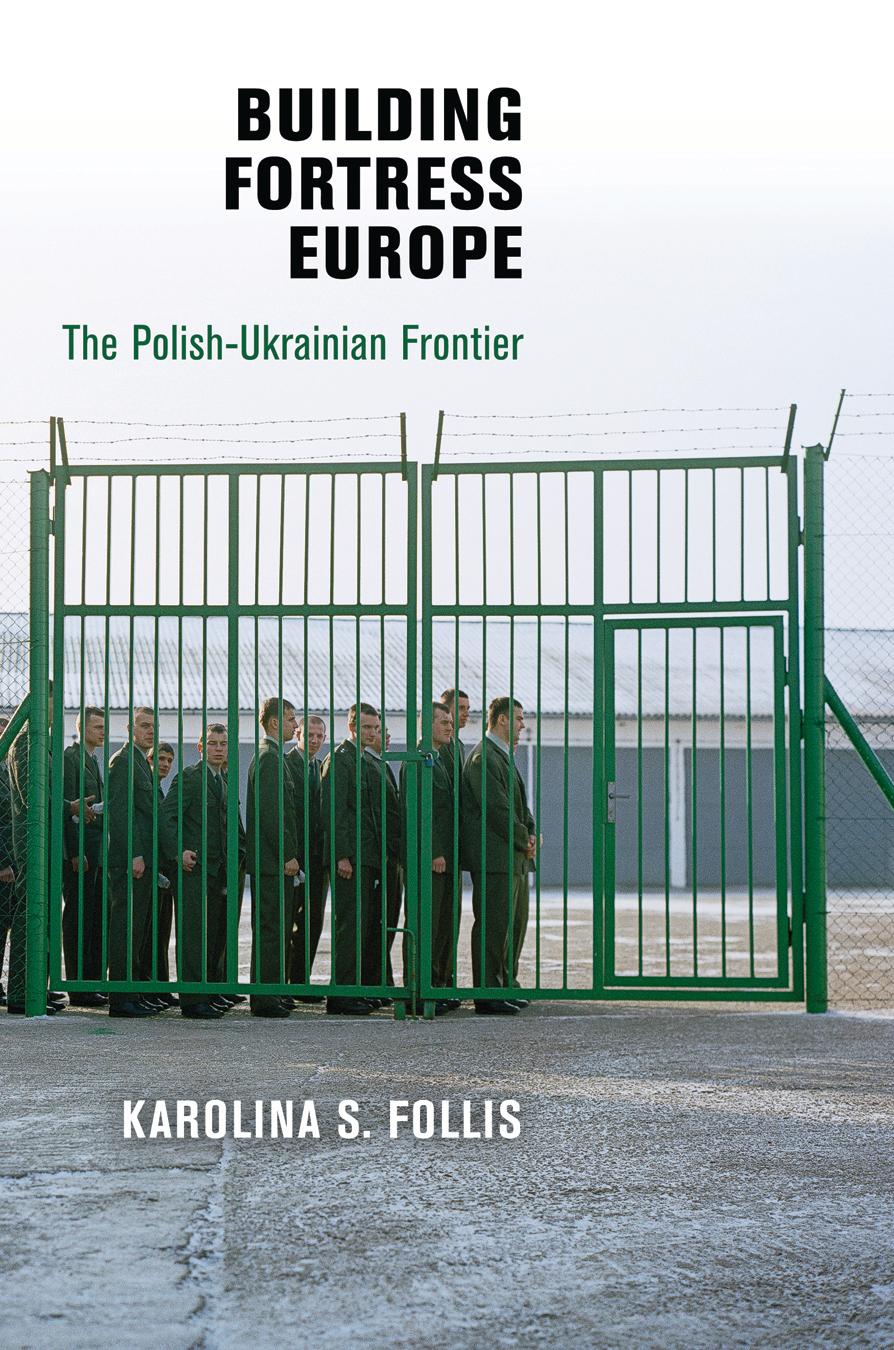
What happens when a region accustomed to violent shifts in borders is subjected to a new, peaceful partitioning? Has the European Union spent the last decade creating a new Iron Curtain at its fringes? Building Fortress Europe: The Polish-Ukrainian Frontier examines these questions from the perspective of the EU's new eastern external boundary. Since the Schengen Agreement in 1985, European states have worked together to create a territory free of internal borders and with heavily policed external boundaries. In 2004 those boundaries shifted east as the EU expanded to include eight postsocialist countries—including Poland but excluding neighboring Ukraine. Through an analysis of their shared frontier, Building Fortress Europe provides an ethnographic examination of the human, social, and political consequences of developing a specialized, targeted, and legally advanced border regime in the enlarged EU.
Based on fieldwork conducted with border guards, officials, and migrants shuttling between Poland and Ukraine as well as extensive archival research, Building Fortress Europe shows how people in the two countries are adjusting to living on opposite sides of a new divide. Anthropologist Karolina S. Follis argues that the policing of economic migrants and asylum seekers is caught between the contradictory imperatives of the European Union's border security, economic needs of member states, and their declared commitment to human rights. The ethnography explores the lives of migrants, and their patterns of mobility, as framed by these contradictions. It suggests that only a political effort to address these tensions will lead to the creation of fairer and more humane border policies.
Before Memmo my notes were scattered across PDFs. Now a workspace pulls everything into one place — I see exactly what's still left to study.
Memmo's summaries are gold before exams. I don't have to re-read 800 pages two weeks before — just the important parts.
The AI chat has saved me the night before an exam more than once. I just keep asking until I get it — no waiting on a study group to reply.
The quizzes hit exactly what I need to know. Memmo tracks what I get stuck on — so I only practice what's worth it.
Flashcards with spaced repetition are magic. Memmo knows when I'm about to forget something and brings it back.
The AI podcasts are my favorite. I listen on my way to school and get a recap without sitting at a computer.

Handbok i kvalitativa metoder
281 kr

Hållbar utveckling: en introduktion för ingenjörer och andra problemlösare
334 kr

Brymans Samhällsvetenskapliga metoder
390 kr

Projektledning
491 kr

Den orättvisa hälsan: om socioekonomiska skillnader i hälsa och livslängd
326 kr

Vetenskapsteori för nybörjare
196 kr

Organizational Leadership
429 kr

På väg mot läraryrket
172 kr

Det sociala livet i skolan: Socialpsykologiska perspektiv
253 kr

Betygsättningens didaktik
151 kr

Personality
402 kr

Studying Leadership
404 kr

Managing Innovation
477 kr

Introduktion till samhällsvetenskaplig metod
347 kr

The Psychology of Sex and Gender
698 kr

Evidens och kunskap för socialt arbete
207 kr

Introduction to Leadership
605 kr