
Before Memmo my notes were scattered across PDFs. Now a workspace pulls everything into one place — I see exactly what's still left to study.
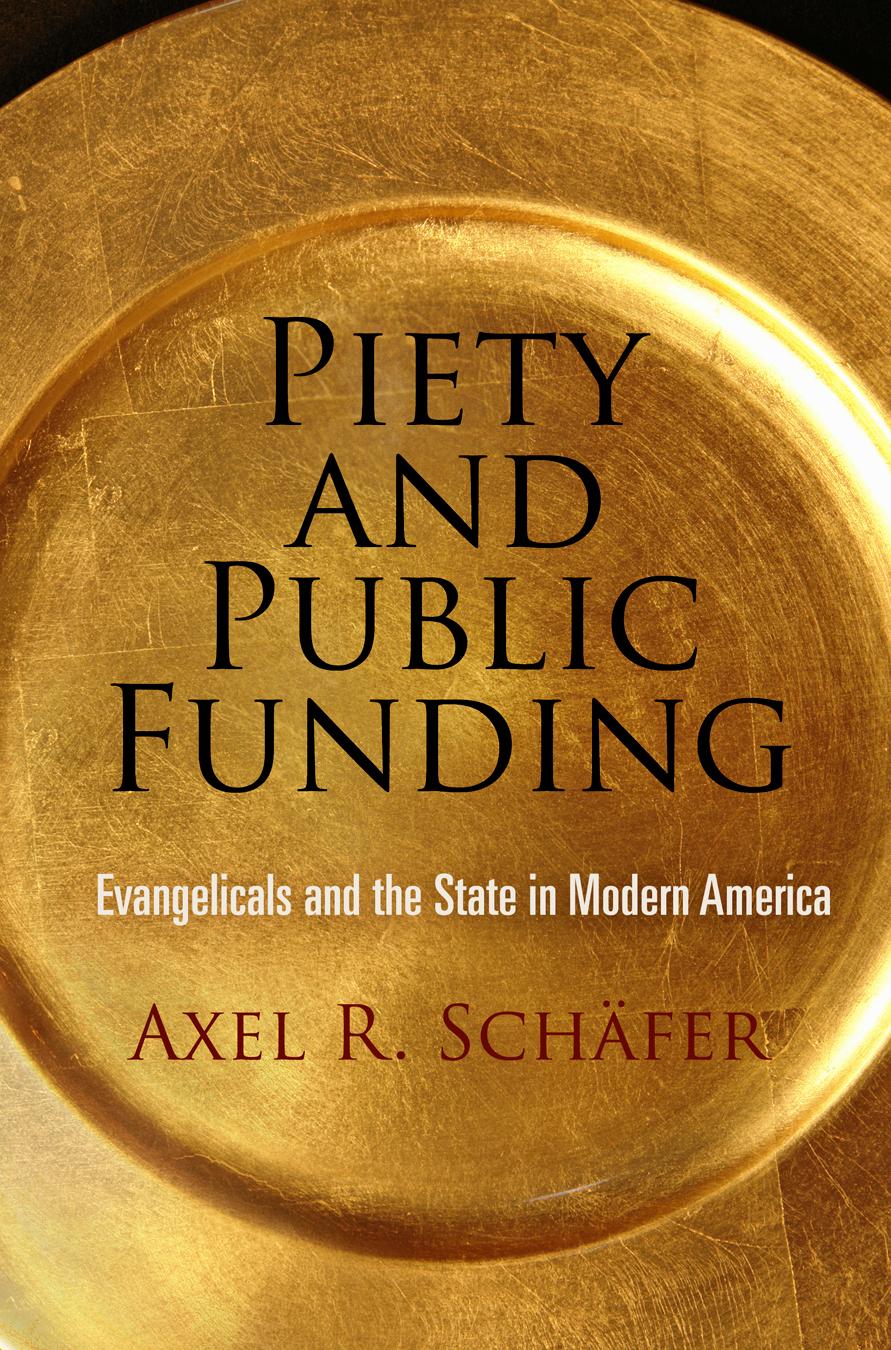
How is it that some conservative groups are viscerally antigovernment even while enjoying the benefits of government funding? In Piety and Public Funding historian Axel R. Schäfer offers a compelling answer to this question by chronicling how, in the first half century since World War II, conservative evangelical groups became increasingly adept at accommodating their hostility to the state with federal support.
Though holding to the ideals of church-state separation, evangelicals gradually took advantage of expanded public funding opportunities for religious foreign aid, health care, education, and social welfare. This was especially the case during the Cold War, when groups such as the National Association of Evangelicals were at the forefront of battling communism at home and abroad. It was evident, too, in the Sunbelt, where the military-industrial complex grew exponentially after World War II and where the postwar right would achieve its earliest success. Contrary to evangelicals' own claims, liberal public policies were a boon for, not a threat to, their own institutions and values. The welfare state, forged during the New Deal and renewed by the Great Society, hastened—not hindered—the ascendancy of a conservative political movement that would, in turn, use its resurgence as leverage against the very system that helped create it.
By showing that the liberal state's dependence on private and nonprofit social services made it vulnerable to assaults from the right, Piety and Public Funding brings a much needed historical perspective to a hotly debated contemporary issue: the efforts of both Republican and Democratic administrations to channel federal money to "faith-based" organizations. It suggests a major reevaluation of the religious right, which grew to dominate evangelicalism by exploiting institutional ties to the state while simultaneously brandishing a message of free enterprise and moral awakening.
Before Memmo my notes were scattered across PDFs. Now a workspace pulls everything into one place — I see exactly what's still left to study.
Memmo's summaries are gold before exams. I don't have to re-read 800 pages two weeks before — just the important parts.
The AI chat has saved me the night before an exam more than once. I just keep asking until I get it — no waiting on a study group to reply.
The quizzes hit exactly what I need to know. Memmo tracks what I get stuck on — so I only practice what's worth it.
Flashcards with spaced repetition are magic. Memmo knows when I'm about to forget something and brings it back.
The AI podcasts are my favorite. I listen on my way to school and get a recap without sitting at a computer.

Handbok i kvalitativa metoder
281 kr

Hållbar utveckling: en introduktion för ingenjörer och andra problemlösare
334 kr

Brymans Samhällsvetenskapliga metoder
390 kr

Projektledning
491 kr

Den orättvisa hälsan: om socioekonomiska skillnader i hälsa och livslängd
326 kr

Vetenskapsteori för nybörjare
196 kr

Organizational Leadership
429 kr

På väg mot läraryrket
172 kr

Det sociala livet i skolan: Socialpsykologiska perspektiv
253 kr

Betygsättningens didaktik
151 kr

Personality
402 kr

Studying Leadership
404 kr

Managing Innovation
477 kr

Introduktion till samhällsvetenskaplig metod
347 kr

The Psychology of Sex and Gender
698 kr

Evidens och kunskap för socialt arbete
207 kr

Introduction to Leadership
605 kr