
Before Memmo my notes were scattered across PDFs. Now a workspace pulls everything into one place — I see exactly what's still left to study.
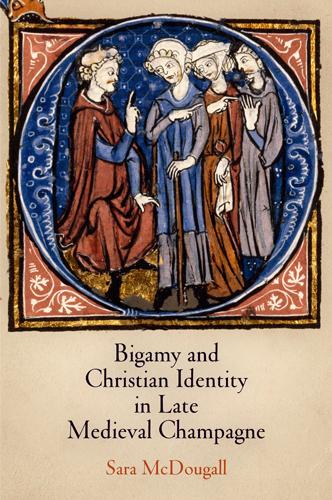
The institution of marriage is commonly thought to have fallen into crisis in late medieval northern France. While prior scholarship has identified the pervasiveness of clandestine marriage as the cause, Sara McDougall contends that the pressure came overwhelmingly from the prevalence of remarriage in violation of the Christian ban on divorce, a practice we might call "bigamy." Throughout the fifteenth century in Christian Europe, husbands and wives married to absent or distant spouses found new spouses to wed. In the church courts of northern France, many of the individuals so married were criminally prosecuted.
In Bigamy and Christian Identity in Late Medieval Champagne, McDougall traces the history of this conflict in the diocese of Troyes and places it in the larger context of Christian theology and culture. Multiple marriage was both inevitable and repugnant in a Christian world that forbade divorce and associated bigamy with the unchristian practices of Islam or Judaism. The prevalence of bigamy might seem to suggest a failure of Christianization in late medieval northern France, but careful study of the sources shows otherwise: Clergy and laity alike valued marriage highly. Indeed, some members of the laity placed such a high value on the institution that they were willing to risk criminal punishment by entering into illegal remarriage. The risk was great: the Bishop of Troyes's judicial court prosecuted bigamy with unprecedented severity, although this prosecution broke down along gender lines. The court treated male bigamy, and only male bigamy, as a grave crime, while female bigamy was almost completely excluded from harsh punishment. As this suggests, the Church was primarily concerned with imposing a high standard on men as heads of Christian households, responsible for their own behavior and also that of their wives.
Before Memmo my notes were scattered across PDFs. Now a workspace pulls everything into one place — I see exactly what's still left to study.
Memmo's summaries are gold before exams. I don't have to re-read 800 pages two weeks before — just the important parts.
The AI chat has saved me the night before an exam more than once. I just keep asking until I get it — no waiting on a study group to reply.
The quizzes hit exactly what I need to know. Memmo tracks what I get stuck on — so I only practice what's worth it.
Flashcards with spaced repetition are magic. Memmo knows when I'm about to forget something and brings it back.
The AI podcasts are my favorite. I listen on my way to school and get a recap without sitting at a computer.

Handbok i kvalitativa metoder
281 kr

Hållbar utveckling: en introduktion för ingenjörer och andra problemlösare
334 kr

Brymans Samhällsvetenskapliga metoder
390 kr

Projektledning
491 kr

Den orättvisa hälsan: om socioekonomiska skillnader i hälsa och livslängd
326 kr

Vetenskapsteori för nybörjare
196 kr

Organizational Leadership
429 kr

På väg mot läraryrket
172 kr

Det sociala livet i skolan: Socialpsykologiska perspektiv
253 kr

Betygsättningens didaktik
151 kr

Personality
402 kr

Studying Leadership
404 kr

Managing Innovation
477 kr

Introduktion till samhällsvetenskaplig metod
347 kr

The Psychology of Sex and Gender
698 kr

Evidens och kunskap för socialt arbete
207 kr

Introduction to Leadership
605 kr