
Before Memmo my notes were scattered across PDFs. Now a workspace pulls everything into one place — I see exactly what's still left to study.
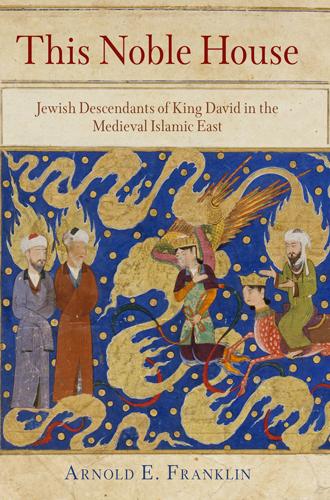
This Noble House explores the preoccupation with biblical genealogy that emerged among Jews in the Islamic Near East between the eleventh and fourteenth centuries. Arnold Franklin looks to Jewish society's fascination with Davidic ancestry, examining the profusion of claims to the lineage that had already begun to appear by the year 1000, the attempts to chart the validity of such claims through elaborate genealogical lists, and the range of meanings that came to be ascribed to the House of David in this period. Jews and Muslims shared the perception that the Davidic line and the noble family of the Prophet Muhammad were counterparts to one another, but captivation with Davidic lineage was just one facet of a much broader Jewish concern with biblical ancestry.
Based on documentary material from the Cairo Geniza, the book argues that this "genealogical turn" should be understood as a consequence of Jewish society's dynamic encounter with its Arab-Islamic milieu and constituted a selective adaptation to the importance of ancestry in the dominant cultural environment. While Jewish society surely had genealogical materials and preoccupations of its own upon which to draw, the Arab-Islamic regard for tracing the lineage of Muhammad provided the impetus for deploying those traditions in new and unprecedented ways.
On the one hand, the increased focus on ancestry is an instance of medieval Jews reflexively and unselfconsciously making use of the cultural forms of their Muslim neighbors; on the other, it is an expression of cultural competitiveness or even resistance, an implicit response to the claim of Arab genealogical superiority that uses the very methods of the Arab "science of genealogy." To be sure, Franklin notes, Jews were only one of several non-Arab minority groups to take up genealogy in this way. At the broadest level, then, This Noble House illuminates a strategy that various minority populations utilized as they sought legitimacy within the medieval Arab-Islamic world.
Before Memmo my notes were scattered across PDFs. Now a workspace pulls everything into one place — I see exactly what's still left to study.
Memmo's summaries are gold before exams. I don't have to re-read 800 pages two weeks before — just the important parts.
The AI chat has saved me the night before an exam more than once. I just keep asking until I get it — no waiting on a study group to reply.
The quizzes hit exactly what I need to know. Memmo tracks what I get stuck on — so I only practice what's worth it.
Flashcards with spaced repetition are magic. Memmo knows when I'm about to forget something and brings it back.
The AI podcasts are my favorite. I listen on my way to school and get a recap without sitting at a computer.

Handbok i kvalitativa metoder
281 kr

Hållbar utveckling: en introduktion för ingenjörer och andra problemlösare
334 kr

Brymans Samhällsvetenskapliga metoder
390 kr

Projektledning
491 kr

Den orättvisa hälsan: om socioekonomiska skillnader i hälsa och livslängd
326 kr

Organizational Leadership
429 kr

Vetenskapsteori för nybörjare
196 kr

På väg mot läraryrket
172 kr

Det sociala livet i skolan: Socialpsykologiska perspektiv
253 kr

Betygsättningens didaktik
151 kr

Personality
402 kr

Studying Leadership
404 kr

Managing Innovation
477 kr

Introduktion till samhällsvetenskaplig metod
347 kr

The Psychology of Sex and Gender
698 kr

Evidens och kunskap för socialt arbete
207 kr

Introduction to Leadership
605 kr