
Before Memmo my notes were scattered across PDFs. Now a workspace pulls everything into one place — I see exactly what's still left to study.
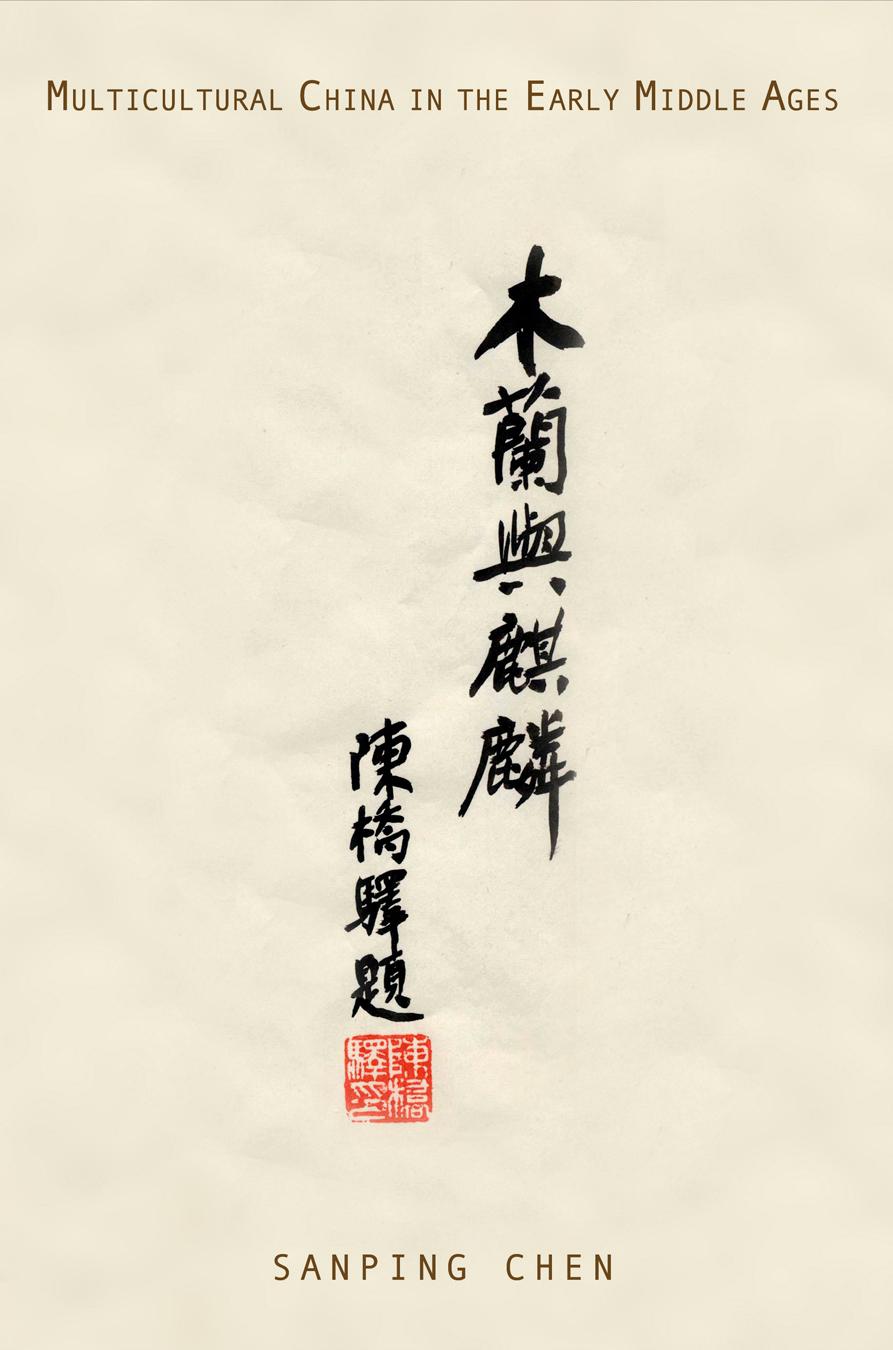
In contrast to the economic and cultural dominance by the south and the east coast over the past several centuries, influence in China in the early Middle Ages was centered in the north and featured a significantly multicultural society. Many events that were profoundly formative for the future of East Asian civilization occurred during this period, although much of this multiculturalism has long been obscured due to the Confucian monopoly of written records. Multicultural China in the Early Middle Ages endeavors to expose a number of long-hidden non-Sinitic characteristics and manifestations of heritage, some lasting to this very day.
Sanping Chen investigates several foundational aspects of Chinese culture during this period, including the legendary unicorn and the fabled heroine Mulan, to determine the origin and development of the lore. His meticulous research yields surprising results. For instance, he finds that the character Mulan is not of Chinese origin and that Central Asian influences are to be found in language, religion, governance, and other fundamental characteristics of Chinese culture. As Victor Mair writes in the Foreword, "While not everyone will acquiesce in the entirety of Dr. Chen's findings, no reputable scholar can afford to ignore them with impunity."
These "foreign"-origin elements were largely the legacy of the Tuoba, whose descendants in fact dominated China's political and cultural stage for nearly a millennium. Long before the Mongols, the Tuoba set a precedent for "using the civilized to rule the civilized" by attracting a large number of sedentary Central Asians to East Asia. This not only added a strong pre-Islamic Iranian layer to the contemporary Sinitic culture but also commenced China's golden age under the cosmopolitan Tang dynasty, whose nominally "Chinese" ruling house is revealed by Chen to be the biological and cultural heir of the Tuoba.
Before Memmo my notes were scattered across PDFs. Now a workspace pulls everything into one place — I see exactly what's still left to study.
Memmo's summaries are gold before exams. I don't have to re-read 800 pages two weeks before — just the important parts.
The AI chat has saved me the night before an exam more than once. I just keep asking until I get it — no waiting on a study group to reply.
The quizzes hit exactly what I need to know. Memmo tracks what I get stuck on — so I only practice what's worth it.
Flashcards with spaced repetition are magic. Memmo knows when I'm about to forget something and brings it back.
The AI podcasts are my favorite. I listen on my way to school and get a recap without sitting at a computer.

Handbok i kvalitativa metoder
281 kr

Hållbar utveckling: en introduktion för ingenjörer och andra problemlösare
334 kr

Brymans Samhällsvetenskapliga metoder
390 kr

Projektledning
491 kr

Den orättvisa hälsan: om socioekonomiska skillnader i hälsa och livslängd
326 kr

Vetenskapsteori för nybörjare
196 kr

Organizational Leadership
429 kr

På väg mot läraryrket
172 kr

Det sociala livet i skolan: Socialpsykologiska perspektiv
253 kr

Betygsättningens didaktik
151 kr

Personality
402 kr

Studying Leadership
404 kr

Managing Innovation
477 kr

Introduktion till samhällsvetenskaplig metod
347 kr

The Psychology of Sex and Gender
698 kr

Evidens och kunskap för socialt arbete
207 kr

Introduction to Leadership
605 kr