
Before Memmo my notes were scattered across PDFs. Now a workspace pulls everything into one place — I see exactly what's still left to study.
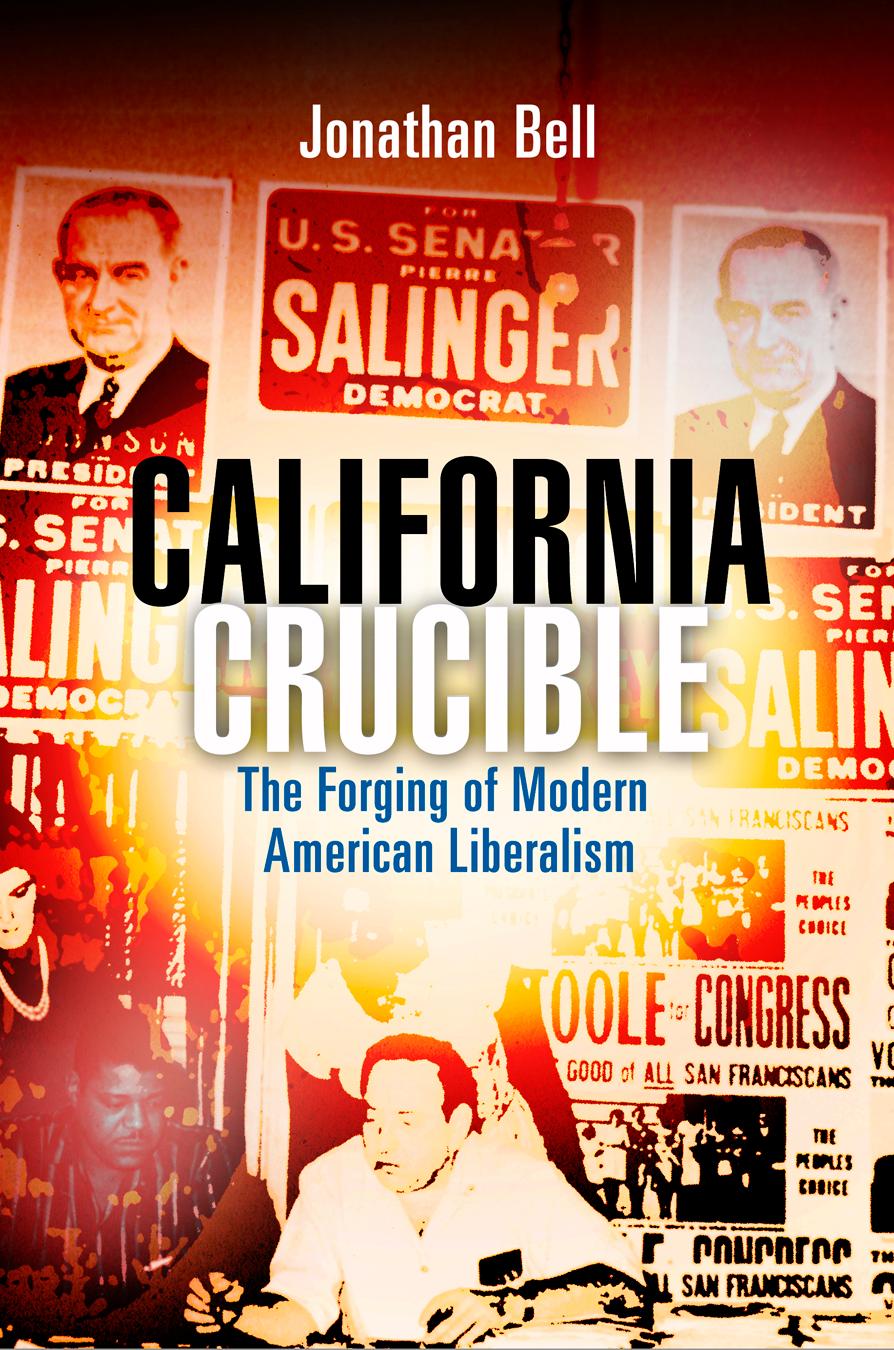
In the three decades following World War II, the Golden State was not only the fastest-growing state in the Union but also the site of significant political change. From the late 1940s through the mid-1970s, a generation of liberal activists transformed the political landscape of California, ending Republican dominance of state politics and eventually setting the tone for the Democratic Party nationwide.
In California Crucible, Jonathan Bell chronicles this dramatic story of postwar liberalism—from early grassroots organizing and the election of Pat Brown as governor in 1958 to the civil rights campaigns of the 1960s and the campaigns against the New Right in the 1970s. As Bell argues, the emergent "California liberalism" was a distinctly post-New Deal phenomenon that drew on the ambitious ideals of the New Deal but adapted them to a diverse population. The result was a broad coalition that sought to extend social democracy to marginalized groups—such as gay rights and civil rights organizations—that had not been well served by the Democratic Party in earlier decades. In building this coalition, liberal activists forged an ideology capable of bringing Latino farm workers, African American civil rights activists, and wealthy suburban homemakers into a shared political project.
By exploring California Democrats' largely successful attempts to link economic rights to civil rights and serve the needs of diverse groups, Bell challenges common assumptions about the rise of the New Right and the decline of American liberalism in the postwar era. As Bell shows, by the end of the 1970s California had become the spiritual home of the liberal wing of the Democratic Party as much as that of the Reagan Revolution.
Before Memmo my notes were scattered across PDFs. Now a workspace pulls everything into one place — I see exactly what's still left to study.
Memmo's summaries are gold before exams. I don't have to re-read 800 pages two weeks before — just the important parts.
The AI chat has saved me the night before an exam more than once. I just keep asking until I get it — no waiting on a study group to reply.
The quizzes hit exactly what I need to know. Memmo tracks what I get stuck on — so I only practice what's worth it.
Flashcards with spaced repetition are magic. Memmo knows when I'm about to forget something and brings it back.
The AI podcasts are my favorite. I listen on my way to school and get a recap without sitting at a computer.

Handbok i kvalitativa metoder
281 kr

Hållbar utveckling: en introduktion för ingenjörer och andra problemlösare
334 kr

Brymans Samhällsvetenskapliga metoder
390 kr

Projektledning
491 kr

Den orättvisa hälsan: om socioekonomiska skillnader i hälsa och livslängd
326 kr

Organizational Leadership
429 kr

Vetenskapsteori för nybörjare
196 kr

På väg mot läraryrket
172 kr

Det sociala livet i skolan: Socialpsykologiska perspektiv
253 kr

Betygsättningens didaktik
151 kr

Personality
402 kr

Studying Leadership
404 kr

Managing Innovation
477 kr

Introduktion till samhällsvetenskaplig metod
347 kr

The Psychology of Sex and Gender
698 kr

Evidens och kunskap för socialt arbete
207 kr

Introduction to Leadership
605 kr