
Before Memmo my notes were scattered across PDFs. Now a workspace pulls everything into one place — I see exactly what's still left to study.
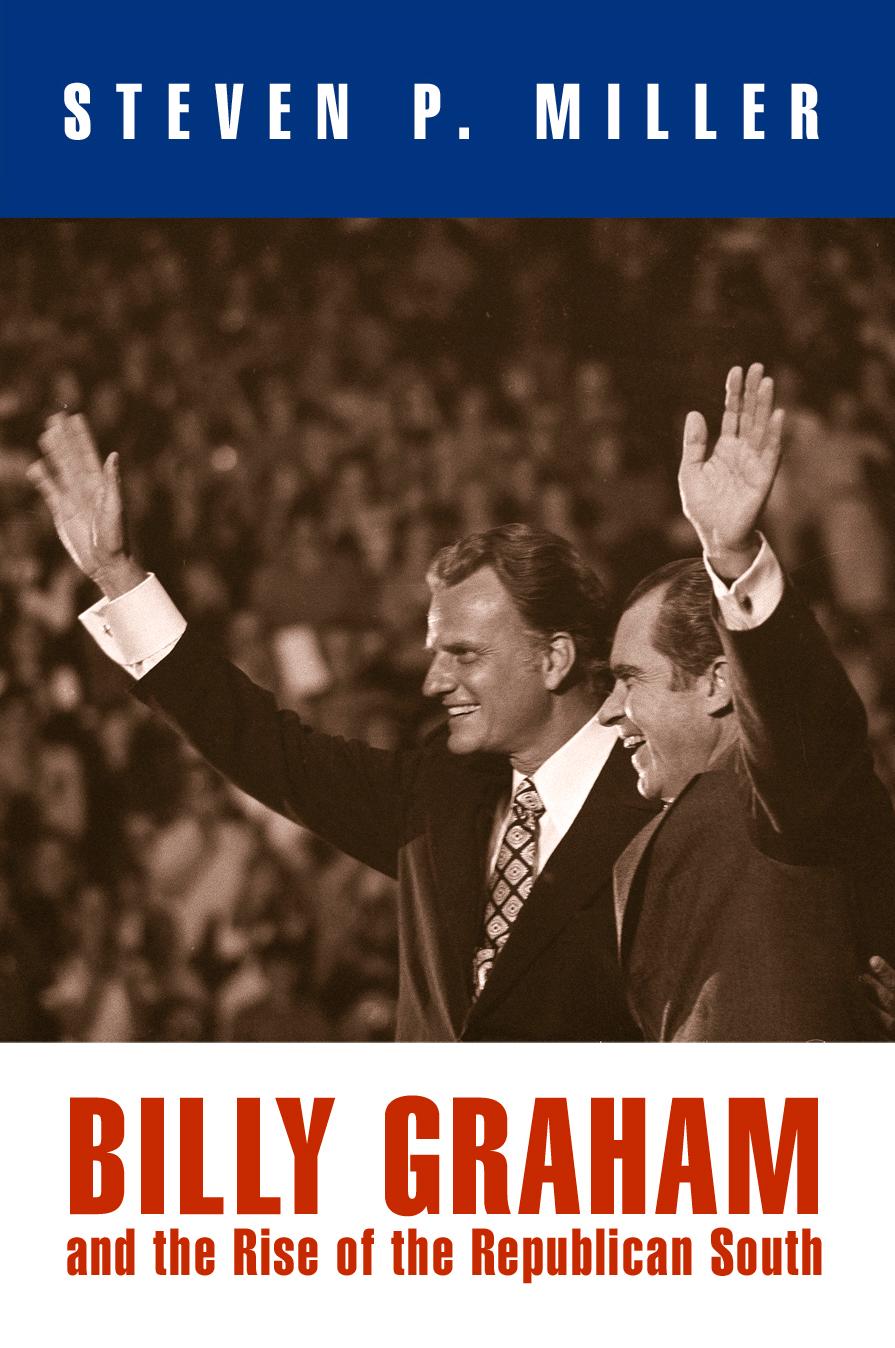
While spreading the gospel around the world through his signature crusades, internationally renowned evangelist Billy Graham maintained a visible and controversial presence in his native South, a region that underwent substantial political and economic change in the latter half of the twentieth century. In this period Graham was alternately a desegregating crusader in Alabama, Sunbelt booster in Atlanta, regional apologist in the national press, and southern strategist in the Nixon administration.
Billy Graham and the Rise of the Republican South considers the critical but underappreciated role of the noted evangelist in the creation of the modern American South. The region experienced two significant related shifts away from its status as what observers and critics called the "Solid South": the end of legalized Jim Crow and the end of Democratic Party dominance. Author Steven P. Miller treats Graham as a serious actor and a powerful symbol in this transition—an evangelist first and foremost, but also a profoundly political figure. In his roles as the nation's most visible evangelist, adviser to political leaders, and a regional spokesperson, Graham influenced many of the developments that drove celebrants and detractors alike to place the South at the vanguard of political, religious, and cultural trends. He forged a path on which white southern moderates could retreat from Jim Crow, while his evangelical critique of white supremacy portended the emergence of "color blind" rhetoric within mainstream conservatism. Through his involvement in the Eisenhower and Nixon administrations, as well as his deep social ties in the South, the evangelist influenced the decades-long process of political realignment.
Graham's public life sheds new light on recent southern history in all of its ambiguities, and his social and political ethics complicate conventional understandings of evangelical Christianity in postwar America. Miller's book seeks to reintroduce a familiar figure to the narrative of southern history and, in the process, examine the political and social transitions constitutive of the modern South.
Before Memmo my notes were scattered across PDFs. Now a workspace pulls everything into one place — I see exactly what's still left to study.
Memmo's summaries are gold before exams. I don't have to re-read 800 pages two weeks before — just the important parts.
The AI chat has saved me the night before an exam more than once. I just keep asking until I get it — no waiting on a study group to reply.
The quizzes hit exactly what I need to know. Memmo tracks what I get stuck on — so I only practice what's worth it.
Flashcards with spaced repetition are magic. Memmo knows when I'm about to forget something and brings it back.
The AI podcasts are my favorite. I listen on my way to school and get a recap without sitting at a computer.

Handbok i kvalitativa metoder
281 kr

Hållbar utveckling: en introduktion för ingenjörer och andra problemlösare
334 kr

Brymans Samhällsvetenskapliga metoder
390 kr

Projektledning
491 kr

Den orättvisa hälsan: om socioekonomiska skillnader i hälsa och livslängd
326 kr

Vetenskapsteori för nybörjare
196 kr

Organizational Leadership
429 kr

På väg mot läraryrket
172 kr

Det sociala livet i skolan: Socialpsykologiska perspektiv
253 kr

Betygsättningens didaktik
151 kr

Personality
402 kr

Studying Leadership
404 kr

Managing Innovation
477 kr

Introduktion till samhällsvetenskaplig metod
347 kr

The Psychology of Sex and Gender
698 kr

Evidens och kunskap för socialt arbete
207 kr

Introduction to Leadership
605 kr