
Before Memmo my notes were scattered across PDFs. Now a workspace pulls everything into one place — I see exactly what's still left to study.
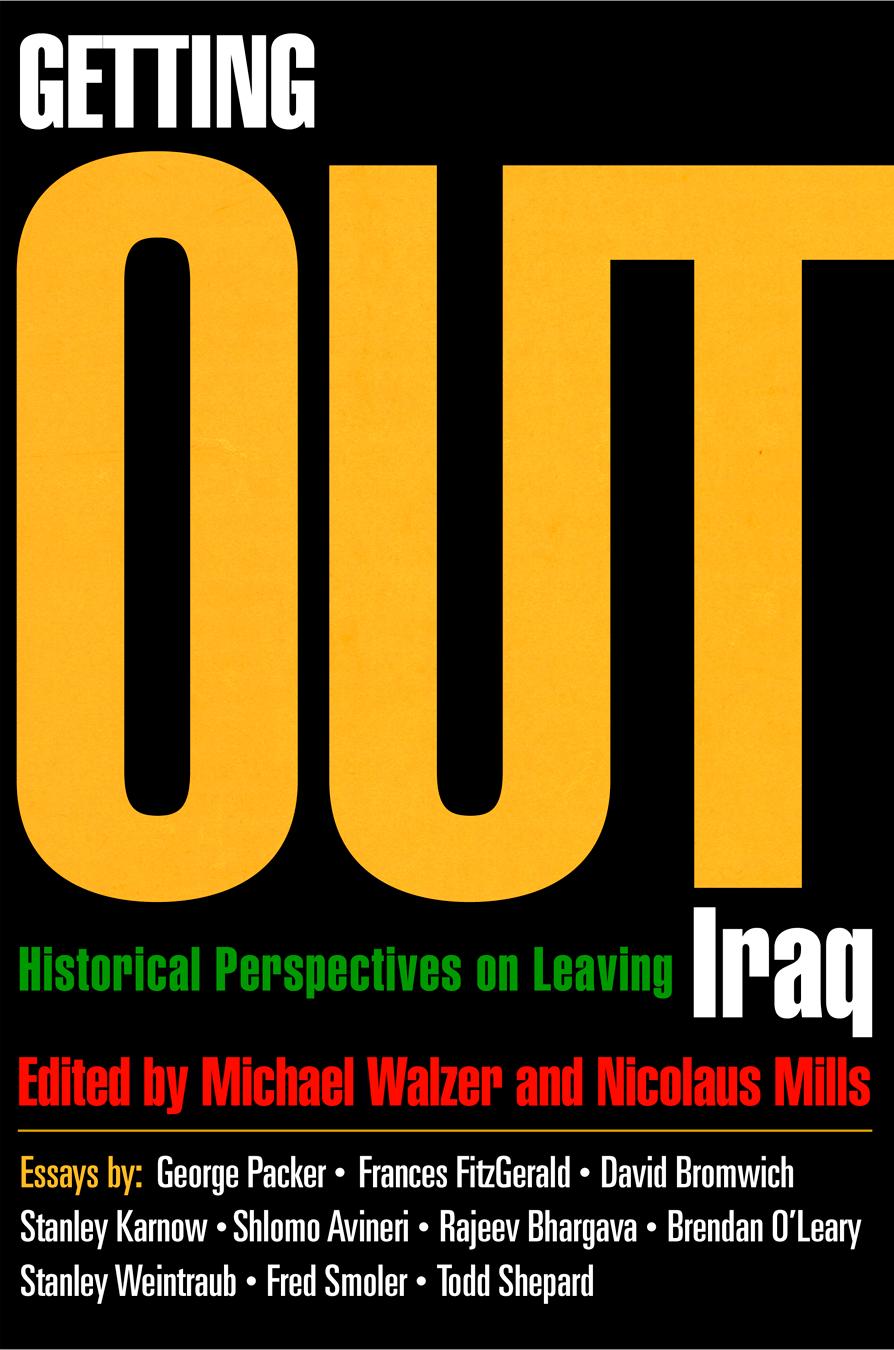
Eventually every conqueror, every imperial power, every occupying army gets out. Why do they decide to leave? And how do political and military leaders manage withdrawal? Do they take with them those who might be at risk if left behind? What are the immediate consequences of departure? For Michael Walzer and Nicolaus Mills, now is the time to ask those questions about exiting—and to worry specifically about the difficulties certain to arise as we leave—Iraq.
Getting Out approaches these issues in two sections. The first, entitled "Lessons Learned," examines seven historical cases of how and how not to withdraw: Britain's departure from the American colonies and from India, the French withdrawal from Algeria, Israel's unilateral withdrawal from Gaza, and the U.S. decision to leave (or not leave) the Philippines, Korea, and Vietnam. These cases offer a comparative perspective and an opportunity to learn from the history of political and military retreats.
The second section, "Exiting Iraq," begins with an introduction to just how the United States got into Iraq and continues with an examination of how the U.S. might leave from a diversity of voices, ranging from those who believe that the Iraq war has produced no real good to those who hope for a decent ending. In addition to essays by volume editors Walzer and Mills, Getting Out features contributions by Shlomo Avineri, Rajeev Bhargava, David Bromwich, Frances FitzGerald, Stanley Karnow, Brendan O'Leary, George Packer, Todd Shepard, Fred Smoler, and Stanley Weintraub.
Before Memmo my notes were scattered across PDFs. Now a workspace pulls everything into one place — I see exactly what's still left to study.
Memmo's summaries are gold before exams. I don't have to re-read 800 pages two weeks before — just the important parts.
The AI chat has saved me the night before an exam more than once. I just keep asking until I get it — no waiting on a study group to reply.
The quizzes hit exactly what I need to know. Memmo tracks what I get stuck on — so I only practice what's worth it.
Flashcards with spaced repetition are magic. Memmo knows when I'm about to forget something and brings it back.
The AI podcasts are my favorite. I listen on my way to school and get a recap without sitting at a computer.

Handbok i kvalitativa metoder
281 kr

Hållbar utveckling: en introduktion för ingenjörer och andra problemlösare
334 kr

Brymans Samhällsvetenskapliga metoder
390 kr

Projektledning
491 kr

Den orättvisa hälsan: om socioekonomiska skillnader i hälsa och livslängd
326 kr

Vetenskapsteori för nybörjare
196 kr

Organizational Leadership
429 kr

På väg mot läraryrket
172 kr

Det sociala livet i skolan: Socialpsykologiska perspektiv
253 kr

Betygsättningens didaktik
151 kr

Personality
402 kr

Studying Leadership
404 kr

Managing Innovation
477 kr

Introduktion till samhällsvetenskaplig metod
347 kr

The Psychology of Sex and Gender
698 kr

Evidens och kunskap för socialt arbete
207 kr

Introduction to Leadership
605 kr