
Before Memmo my notes were scattered across PDFs. Now a workspace pulls everything into one place — I see exactly what's still left to study.
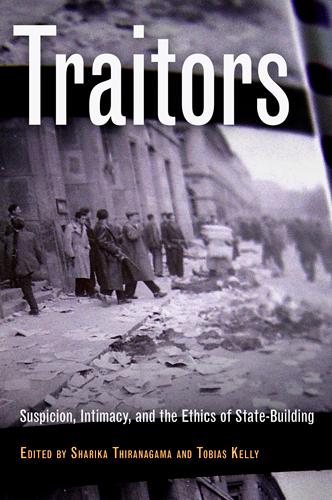
The figure of the traitor plays an intriguing role in modern politics. Traitors are a source of transgression from within, creating their own kinds of aversion and suspicion. They destabilize the rigid moral binaries of victim and persecutor, friend and enemy. Recent history is stained by collaborators, informers, traitors, and the bloody purges and other acts of retribution against them. In the emergent nation-state of Bhutan, the specter of the "antinational" traitor helped to transform the traditional view of loyalty based on social relations. In Sri Lanka, the Tamil Tigers' fear of traitors is tangled with the Tamil civilians' fear of being betrayed to the Tigers as traitors. For Palestinians in the West Bank, simply earning a living can mean complicity with people acting in the name of the Israeli state.
While most contemporary studies of violence and citizenship focus on the creation of the "other," the cases in Traitors: Suspicion, Intimacy, and the Ethics of State-Building illustrate the equally strong political and social anxieties among those who seem to be most alike. Treason is often treated as a pathological distortion of political life. However, the essays in Traitors propose that treachery is a constant, essential, and normal part of the processes through which social and political order is produced. In the political gray zones between personal and state loyalties, traitors and their prosecutors play roles that make and unmake regimes. In this volume, ten scholars examine political, ethnic, and personal trust and betrayals in modern times from Mozambique to the Taiwan Straits, from the former Eastern Bloc to the West Bank.
This fascinating collection studies the tension between close personal relationships, the demands of nation-states, and the moral choices that result when these interests collide. In asking how traitors are defined in the context of local histories, contributors address larger comparative questions about the nature of postcolonial citizenship.
Before Memmo my notes were scattered across PDFs. Now a workspace pulls everything into one place — I see exactly what's still left to study.
Memmo's summaries are gold before exams. I don't have to re-read 800 pages two weeks before — just the important parts.
The AI chat has saved me the night before an exam more than once. I just keep asking until I get it — no waiting on a study group to reply.
The quizzes hit exactly what I need to know. Memmo tracks what I get stuck on — so I only practice what's worth it.
Flashcards with spaced repetition are magic. Memmo knows when I'm about to forget something and brings it back.
The AI podcasts are my favorite. I listen on my way to school and get a recap without sitting at a computer.

Handbok i kvalitativa metoder
281 kr

Hållbar utveckling: en introduktion för ingenjörer och andra problemlösare
334 kr

Brymans Samhällsvetenskapliga metoder
390 kr

Projektledning
491 kr

Den orättvisa hälsan: om socioekonomiska skillnader i hälsa och livslängd
326 kr

Vetenskapsteori för nybörjare
196 kr

Organizational Leadership
429 kr

På väg mot läraryrket
172 kr

Det sociala livet i skolan: Socialpsykologiska perspektiv
253 kr

Betygsättningens didaktik
151 kr

Personality
402 kr

Studying Leadership
404 kr

Managing Innovation
477 kr

Introduktion till samhällsvetenskaplig metod
347 kr

The Psychology of Sex and Gender
698 kr

Evidens och kunskap för socialt arbete
207 kr

Introduction to Leadership
605 kr