
Before Memmo my notes were scattered across PDFs. Now a workspace pulls everything into one place — I see exactly what's still left to study.
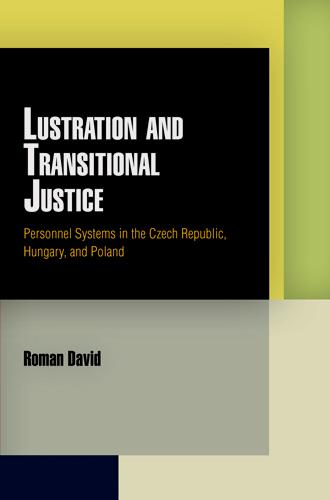
How do transitional democracies deal with officials who have been tainted by complicity with prior governments? Should they be excluded or should they be incorporated into the new system? In Lustration and Transitional Justice, Roman David examines major institutional innovations that developed in Central Europe following the collapse of communist regimes. While the Czech Republic approved a lustration (vetting) law based on the traditional method of dismissals, Hungary and Poland devised alternative models that granted their tainted officials a second chance in exchange for truth. David classifies personnel systems as exclusive, inclusive, and reconciliatory; they are based on dismissal, exposure, and confession, respectively, and they represent three major classes of transitional justice.
David argues that in addition to their immediate purposes, personnel systems carry symbolic meanings that help explain their origin and shape their effects. In their effort to purify public life, personnel systems send different ideological messages that affect trust in government and the social standing of former adversaries. Exclusive systems may establish trust at the expense of reconciliation, while inclusive and reconciliatory systems may promote both trust and reconciliation.
In spite of its importance, the topic of inherited personnel has received only limited attention in research on transitional justice and democratization. Lustration and Transitional Justice is the first attempt to fill this gap. Combining insights from cultural sociology and political psychology with the analysis of original experiments, historical surveys, parliamentary debates, and interviews, the book shows how perceptions of tainted personnel affected the origin of lustration systems and how dismissal, exposure, and confession affected trust in government, reconciliation, and collective memory.
Before Memmo my notes were scattered across PDFs. Now a workspace pulls everything into one place — I see exactly what's still left to study.
Memmo's summaries are gold before exams. I don't have to re-read 800 pages two weeks before — just the important parts.
The AI chat has saved me the night before an exam more than once. I just keep asking until I get it — no waiting on a study group to reply.
The quizzes hit exactly what I need to know. Memmo tracks what I get stuck on — so I only practice what's worth it.
Flashcards with spaced repetition are magic. Memmo knows when I'm about to forget something and brings it back.
The AI podcasts are my favorite. I listen on my way to school and get a recap without sitting at a computer.

Handbok i kvalitativa metoder
281 kr

Hållbar utveckling: en introduktion för ingenjörer och andra problemlösare
334 kr

Brymans Samhällsvetenskapliga metoder
390 kr

Projektledning
491 kr

Den orättvisa hälsan: om socioekonomiska skillnader i hälsa och livslängd
326 kr

Vetenskapsteori för nybörjare
196 kr

Organizational Leadership
429 kr

På väg mot läraryrket
172 kr

Det sociala livet i skolan: Socialpsykologiska perspektiv
253 kr

Betygsättningens didaktik
151 kr

Personality
402 kr

Studying Leadership
404 kr

Managing Innovation
477 kr

Introduktion till samhällsvetenskaplig metod
347 kr

The Psychology of Sex and Gender
698 kr

Evidens och kunskap för socialt arbete
207 kr

Introduction to Leadership
605 kr