
Before Memmo my notes were scattered across PDFs. Now a workspace pulls everything into one place — I see exactly what's still left to study.
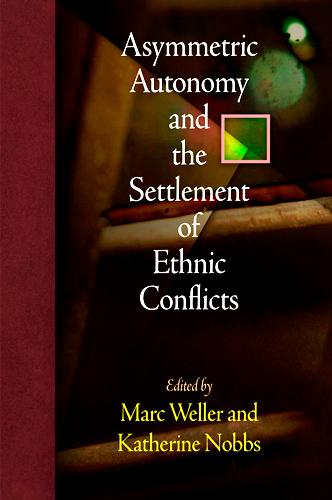
Throughout the world many sovereign states grant one or more of their territories greater autonomy than other areas. This arrangement, known as asymmetric autonomy, has been adopted with greater regularity as a solution to ethnic strife and secessionist struggles in recent decades. As asymmetric autonomy becomes one of the most frequently used conflict resolution methods, examination of the positive and negative consequences of its implementation, as well as its efficacy, is vital.
Asymmetric Autonomy and the Settlement of Ethnic Conflicts assesses the ability of such power distribution arrangements to resolve violent struggles between central governments and separatist groups. This collection of new case studies from around the world covers a host of important developments, from recentralization in Russia, to "one country, two systems" in China, to constitutional innovation in Iraq. As a whole, these essays examine how well asymmetric autonomy agreements can bring protracted and bloody conflicts to an end, satisfy the demands of both sides, guarantee the physical integrity of a state, and ensure peace and stability. Contributors to this book also analyze the many problems and dilemmas that can arise when autonomous regions are formed. For example, powers may be loosely defined or unrealistically assigned to the state within a state. Redrawn boundaries can create new minorities and make other groups vulnerable to human rights violations. Given the number of limited self-determination systems in place, the essays in this volume present varied evaluations of these political structures.
Asymmetric state agreements have the potential to remedy some of humanity's most intractable disputes. In Asymmetric Autonomy and the Settlement of Ethnic Conflicts, leading political scientists and diplomatic experts shed new light on the practical consequences of these settlements and offer sophisticated frameworks for understanding this path toward lasting peace.
Before Memmo my notes were scattered across PDFs. Now a workspace pulls everything into one place — I see exactly what's still left to study.
Memmo's summaries are gold before exams. I don't have to re-read 800 pages two weeks before — just the important parts.
The AI chat has saved me the night before an exam more than once. I just keep asking until I get it — no waiting on a study group to reply.
The quizzes hit exactly what I need to know. Memmo tracks what I get stuck on — so I only practice what's worth it.
Flashcards with spaced repetition are magic. Memmo knows when I'm about to forget something and brings it back.
The AI podcasts are my favorite. I listen on my way to school and get a recap without sitting at a computer.

Handbok i kvalitativa metoder
281 kr

Hållbar utveckling: en introduktion för ingenjörer och andra problemlösare
334 kr

Brymans Samhällsvetenskapliga metoder
390 kr

Projektledning
491 kr

Den orättvisa hälsan: om socioekonomiska skillnader i hälsa och livslängd
326 kr

Vetenskapsteori för nybörjare
196 kr

Organizational Leadership
429 kr

På väg mot läraryrket
172 kr

Det sociala livet i skolan: Socialpsykologiska perspektiv
253 kr

Betygsättningens didaktik
151 kr

Personality
402 kr

Studying Leadership
404 kr

Managing Innovation
477 kr

Introduktion till samhällsvetenskaplig metod
347 kr

The Psychology of Sex and Gender
698 kr

Evidens och kunskap för socialt arbete
207 kr

Introduction to Leadership
605 kr