
Before Memmo my notes were scattered across PDFs. Now a workspace pulls everything into one place — I see exactly what's still left to study.
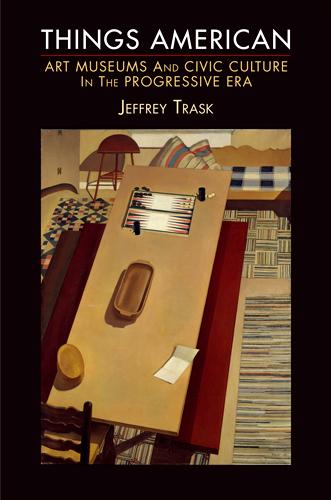
American art museums of the Gilded Age were established as civic institutions intended to provide civilizing influences to an urban public, but the parochial worldview of their founders limited their democratic potential. Instead, critics have derided nineteenth-century museums as temples of spiritual uplift far removed from the daily experiences and concerns of common people. But in the early twentieth century, a new generation of cultural leaders revolutionized ideas about art institutions by insisting that their collections and galleries serve the general public.
Things American: Art Museums and Civic Culture in the Progressive Era tells the story of the civic reformers and arts professionals who brought museums from the realm of exclusivity into the progressive fold of libraries, schools, and settlement houses. Jeffrey Trask's history focuses on New York's Metropolitan Museum of Art, which stood at the center of this movement to preserve artifacts from the American past for social change and Americanization. Metropolitan trustee Robert de Forest and pioneering museum professional Henry Watson Kent influenced a wide network of fellow reformers and cultural institutions. Drawing on the teachings of John Dewey and close study of museum developments in Germany and Great Britain, they expanded audiences, changed access policies, and broadened the scope of what museums collect and display. They believed that tasteful urban and domestic environments contributed to good citizenship and recognized the economic advantages of improving American industrial production through design education. Trask follows the influence of these people and ideas through the 1920s and 1930s as the Met opened its innovative American Wing while simultaneously promoting modern industrial art.
Things American is not only the first critical history of the Metropolitan Museum. The book also places museums in the context of the cultural politics of the progressive movement—illustrating the limits of progressive ideas of democratic reform as well as the boldness of vision about cultural capital promoted by museums and other cultural institutions.
Before Memmo my notes were scattered across PDFs. Now a workspace pulls everything into one place — I see exactly what's still left to study.
Memmo's summaries are gold before exams. I don't have to re-read 800 pages two weeks before — just the important parts.
The AI chat has saved me the night before an exam more than once. I just keep asking until I get it — no waiting on a study group to reply.
The quizzes hit exactly what I need to know. Memmo tracks what I get stuck on — so I only practice what's worth it.
Flashcards with spaced repetition are magic. Memmo knows when I'm about to forget something and brings it back.
The AI podcasts are my favorite. I listen on my way to school and get a recap without sitting at a computer.

Handbok i kvalitativa metoder
281 kr

Hållbar utveckling: en introduktion för ingenjörer och andra problemlösare
334 kr

Brymans Samhällsvetenskapliga metoder
390 kr

Projektledning
491 kr

Den orättvisa hälsan: om socioekonomiska skillnader i hälsa och livslängd
326 kr

Organizational Leadership
429 kr

Vetenskapsteori för nybörjare
196 kr

På väg mot läraryrket
172 kr

Det sociala livet i skolan: Socialpsykologiska perspektiv
253 kr

Betygsättningens didaktik
151 kr

Personality
402 kr

Studying Leadership
404 kr

Managing Innovation
477 kr

Introduktion till samhällsvetenskaplig metod
347 kr

The Psychology of Sex and Gender
698 kr

Evidens och kunskap för socialt arbete
207 kr

Introduction to Leadership
605 kr