
Before Memmo my notes were scattered across PDFs. Now a workspace pulls everything into one place — I see exactly what's still left to study.
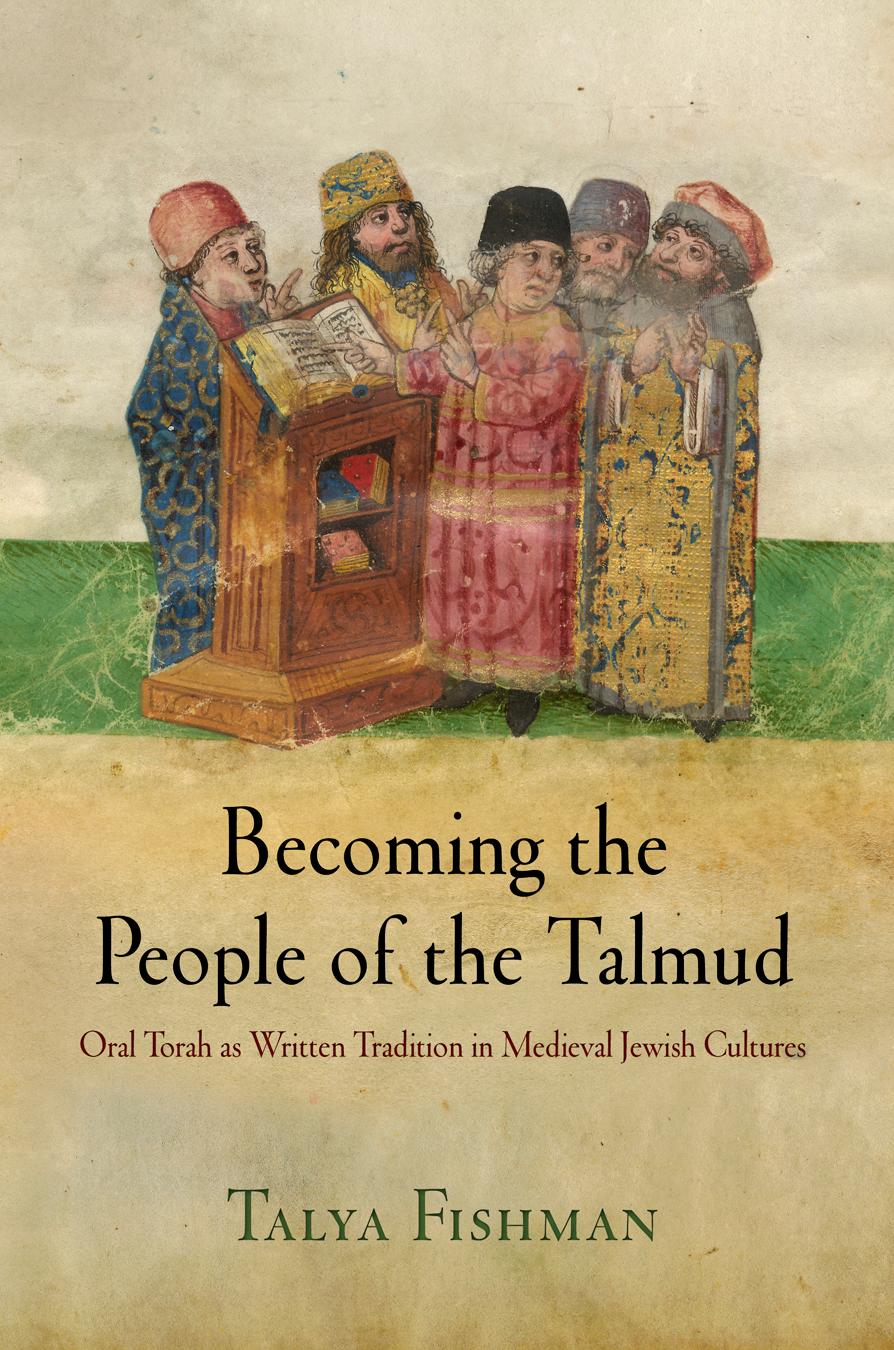
In Becoming the People of the Talmud, Talya Fishman examines ways in which circumstances of transmission have shaped the cultural meaning of Jewish traditions. Although the Talmud's preeminence in Jewish study and its determining role in Jewish practice are generally taken for granted, Fishman contends that these roles were not solidified until the late eleventh and early twelfth centuries. The inscription of Talmud—which Sefardi Jews understand to have occurred quite early, and Ashkenazi Jews only later—precipitated these developments. The encounter with Oral Torah as a written corpus was transformative for both subcultures, and it shaped the roles that Talmud came to play in Jewish life.
What were the historical circumstances that led to the inscription of Oral Torah in medieval Europe? How did this body of ancient rabbinic traditions, replete with legal controversies and nonlegal material, come to be construed as a reference work and prescriptive guide to Jewish life? Connecting insights from geonica, medieval Jewish and Christian history, and orality-textuality studies, Becoming the People of the Talmud reconstructs the process of cultural transformation that occurred once medieval Jews encountered the Babylonian Talmud as a written text. According to Fishman, the ascription of greater authority to written text was accompanied by changes in reading habits, compositional predilections, classroom practices, approaches to adjudication, assessments of the past, and social hierarchies. She contends that certain medieval Jews were aware of these changes: some noted that books had replaced teachers; others protested the elevation of Talmud-centered erudition and casuistic virtuosity into standards of religious excellence, at the expense of spiritual refinement. The book concludes with a consideration of Rhineland Pietism's emergence in this context and suggests that two contemporaneous phenomena—the prominence of custom in medieval Ashkenazi culture and the novel Christian attack on Talmud—were indirectly linked to the new eminence of this written text in Jewish life.
Before Memmo my notes were scattered across PDFs. Now a workspace pulls everything into one place — I see exactly what's still left to study.
Memmo's summaries are gold before exams. I don't have to re-read 800 pages two weeks before — just the important parts.
The AI chat has saved me the night before an exam more than once. I just keep asking until I get it — no waiting on a study group to reply.
The quizzes hit exactly what I need to know. Memmo tracks what I get stuck on — so I only practice what's worth it.
Flashcards with spaced repetition are magic. Memmo knows when I'm about to forget something and brings it back.
The AI podcasts are my favorite. I listen on my way to school and get a recap without sitting at a computer.

Handbok i kvalitativa metoder
281 kr

Hållbar utveckling: en introduktion för ingenjörer och andra problemlösare
334 kr

Brymans Samhällsvetenskapliga metoder
390 kr

Projektledning
491 kr

Den orättvisa hälsan: om socioekonomiska skillnader i hälsa och livslängd
326 kr

Vetenskapsteori för nybörjare
196 kr

Organizational Leadership
429 kr

På väg mot läraryrket
172 kr

Det sociala livet i skolan: Socialpsykologiska perspektiv
253 kr

Betygsättningens didaktik
151 kr

Personality
402 kr

Studying Leadership
404 kr

Managing Innovation
477 kr

Introduktion till samhällsvetenskaplig metod
347 kr

The Psychology of Sex and Gender
698 kr

Evidens och kunskap för socialt arbete
207 kr

Introduction to Leadership
605 kr