
Before Memmo my notes were scattered across PDFs. Now a workspace pulls everything into one place — I see exactly what's still left to study.
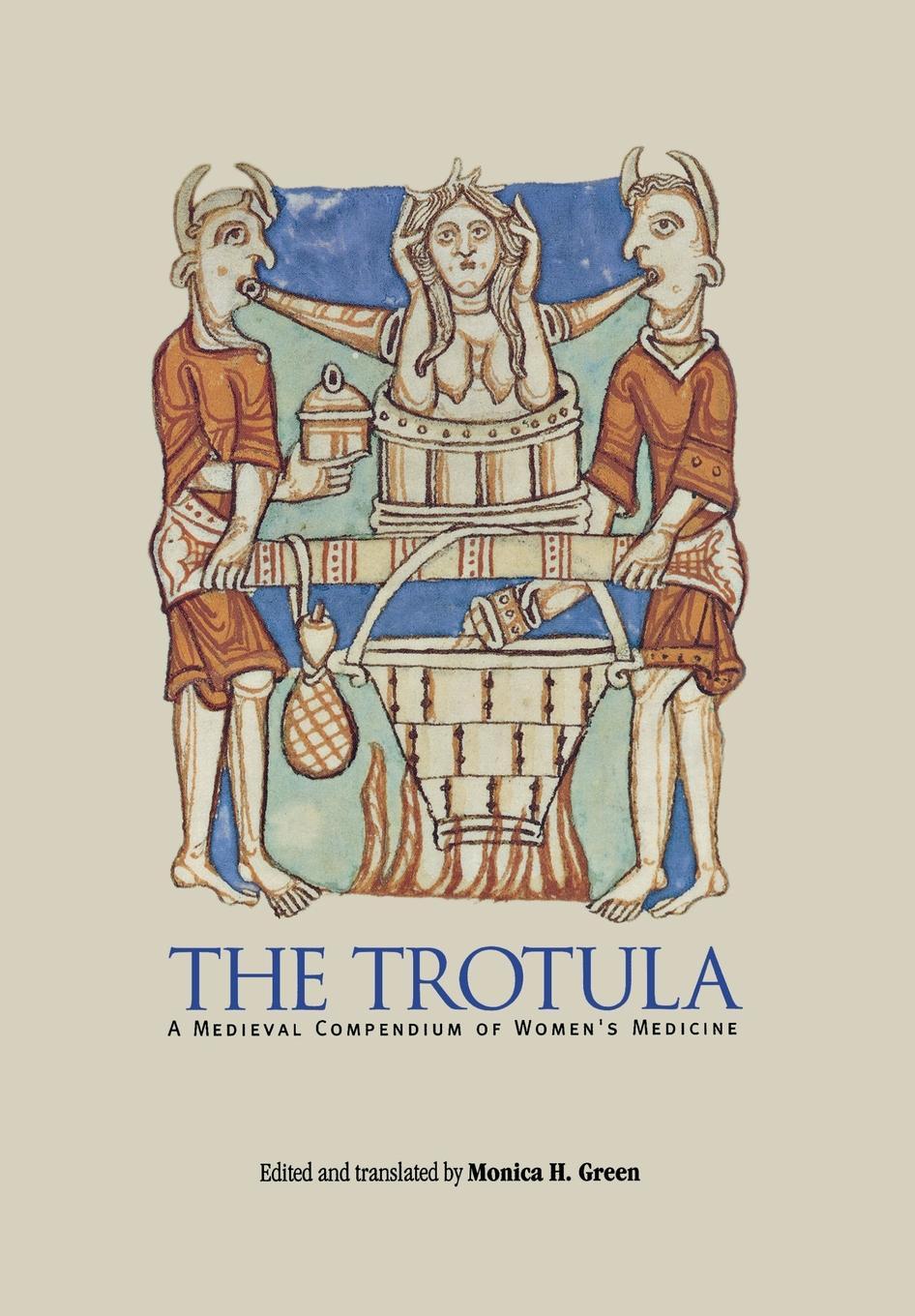
The Trotula was the most influential compendium on women's medicine in medieval Europe. Scholarly debate has long focused on the traditional attribution of the work to the mysterious Trotula, said to have been the first female professor of medicine in eleventh- or twelfth-century Salerno, just south of Naples, then the leading center of medical learning in Europe. Yet as Monica H. Green reveals in her introduction to this first edition of the Latin text since the sixteenth century, and the first English translation of the book ever based upon a medieval form of the text, the Trotula is not a single treatise but an ensemble of three independent works, each by a different author. To varying degrees, these three works reflect the synthesis of indigenous practices of southern Italians with the new theories, practices, and medicinal substances coming out of the Arabic world.
Arguing that these texts can be understood only within the intellectual and social context that produced them, Green analyzes them against the background of historical gynecological literature as well as current knowledge about women's lives in twelfth-century southern Italy. She examines the history and composition of the three works and introduces the reader to the medical culture of medieval Salerno from which they emerged. Among her findings is that the second of the three texts, "On the Treatments for Women," does derive from the work of a Salernitan woman healer named Trota. However, the other two texts—"On the Conditions of Women" and "On Women's Cosmetics"—are probably of male authorship, a fact indicating the complex gender relations surrounding the production and use of knowledge about the female body.
Through an exhaustive study of the extant manuscripts of the Trotula, Green presents a critical edition of the so-called standardized Trotula ensemble, a composite form of the texts that was produced in the mid-thirteenth century and circulated widely in learned circles. The facing-page complete English translation makes the work accessible to a broad audience of readers interested in medieval history, women's studies, and premodern systems of medical thought and practice.
Before Memmo my notes were scattered across PDFs. Now a workspace pulls everything into one place — I see exactly what's still left to study.
Memmo's summaries are gold before exams. I don't have to re-read 800 pages two weeks before — just the important parts.
The AI chat has saved me the night before an exam more than once. I just keep asking until I get it — no waiting on a study group to reply.
The quizzes hit exactly what I need to know. Memmo tracks what I get stuck on — so I only practice what's worth it.
Flashcards with spaced repetition are magic. Memmo knows when I'm about to forget something and brings it back.
The AI podcasts are my favorite. I listen on my way to school and get a recap without sitting at a computer.

Handbok i kvalitativa metoder
281 kr

Hållbar utveckling: en introduktion för ingenjörer och andra problemlösare
334 kr

Brymans Samhällsvetenskapliga metoder
390 kr

Projektledning
491 kr

Den orättvisa hälsan: om socioekonomiska skillnader i hälsa och livslängd
326 kr

Organizational Leadership
429 kr

Vetenskapsteori för nybörjare
196 kr

På väg mot läraryrket
172 kr

Det sociala livet i skolan: Socialpsykologiska perspektiv
253 kr

Betygsättningens didaktik
151 kr

Personality
402 kr

Studying Leadership
404 kr

Managing Innovation
477 kr

Introduktion till samhällsvetenskaplig metod
347 kr

The Psychology of Sex and Gender
698 kr

Evidens och kunskap för socialt arbete
207 kr

Introduction to Leadership
605 kr