
Before Memmo my notes were scattered across PDFs. Now a workspace pulls everything into one place — I see exactly what's still left to study.
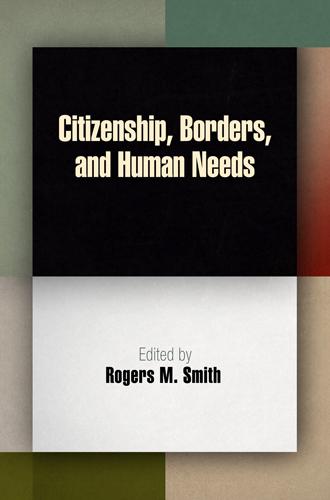
From anxiety about Muslim immigrants in Western Europe to concerns about undocumented workers and cross-border security threats in the United States, disputes over immigration have proliferated and intensified in recent years. These debates are among the most contentious facing constitutional democracies, and they show little sign of fading away.
Edited and with an introduction by political scientist Rogers M. Smith, Citizenship, Borders, and Human Needs brings together essays by leading international scholars from a wide range of disciplines to explore the economic, cultural, political, and normative aspects of comparative immigration policies. In the first section, contributors go beyond familiar explanations of immigration's economic effects to explore whose needs are truly helped and harmed by current migration patterns. The concerns of receiving countries include but are not limited to their economic interests, and several essays weigh different models of managing cultural identity and conflict in democracies with large immigrant populations.
Other essays consider the implications of immigration for politics and citizenship. In many nations, large-scale immigration challenges existing political institutions, which must struggle to foster political inclusion and accommodate changing ways of belonging to the polity. The volume concludes with contrasting reflections on the normative standards that should guide immigration policies in modern constitutional democracies.
Citizenship, Borders, and Human Needs develops connections between thoughtful scholarship and public policy, thereby advancing public debate on these complex and divisive issues. Though most attention in the collection is devoted to the dilemmas facing immigrant-receiving countries in the West, the volume also explores policies and outcomes in immigrant-sending countries, as well as the situation of developing nations—such as India—that are net receivers of migrants.
Before Memmo my notes were scattered across PDFs. Now a workspace pulls everything into one place — I see exactly what's still left to study.
Memmo's summaries are gold before exams. I don't have to re-read 800 pages two weeks before — just the important parts.
The AI chat has saved me the night before an exam more than once. I just keep asking until I get it — no waiting on a study group to reply.
The quizzes hit exactly what I need to know. Memmo tracks what I get stuck on — so I only practice what's worth it.
Flashcards with spaced repetition are magic. Memmo knows when I'm about to forget something and brings it back.
The AI podcasts are my favorite. I listen on my way to school and get a recap without sitting at a computer.

Handbok i kvalitativa metoder
281 kr

Hållbar utveckling: en introduktion för ingenjörer och andra problemlösare
334 kr

Brymans Samhällsvetenskapliga metoder
390 kr

Projektledning
491 kr

Den orättvisa hälsan: om socioekonomiska skillnader i hälsa och livslängd
326 kr

Vetenskapsteori för nybörjare
196 kr

Organizational Leadership
429 kr

På väg mot läraryrket
172 kr

Det sociala livet i skolan: Socialpsykologiska perspektiv
253 kr

Betygsättningens didaktik
151 kr

Personality
402 kr

Studying Leadership
404 kr

Managing Innovation
477 kr

Introduktion till samhällsvetenskaplig metod
347 kr

The Psychology of Sex and Gender
698 kr

Evidens och kunskap för socialt arbete
207 kr

Introduction to Leadership
605 kr