
Before Memmo my notes were scattered across PDFs. Now a workspace pulls everything into one place — I see exactly what's still left to study.
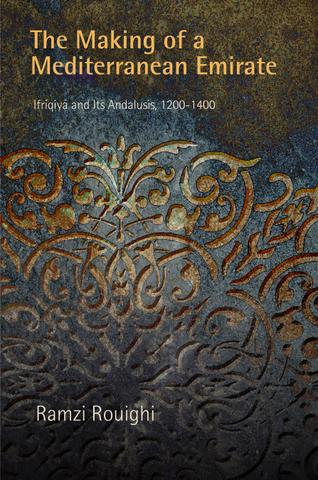
The thirteenth century marks a turning point in the history of the western Mediterranean. The armies of Castile and Aragon won significant and decisive victories over Muslims in Iberia and took over a number of important cities including Cordoba, Seville, Jaen, and Murcia. Chased out of their native cities, a large number of Andalusis migrated to Ifrīqiyā in northern Africa. There, a newly founded Hafsid dynasty (1229-1574) welcomed members of the Andalusi elite and showered them with honors and high positions at court.
While historians have tended to conceive of Ifrīqiyā as a region ruled by the Hafsids, Ramzi Rouighi argues in The Making of a Mediterranean Emirate that the Andalusis who joined the Hafsid court supported economic arrangements and political relationships that effectively prevented regional integration from taking place during this period. Rouighi examines an array of documentary, literary, and legal sources to argue that Ifrīqiyā was integrated neither politically nor economically and that, consequently, it was not a region in a meaningful sense. Through a close reading of narrative sources, especially historical chronicles, Rouighi further argues that the emergence in the late fourteenth century of the political ideology of Emirism accounts for the representation of the rule of the Hafsid dynasty over cities as its rule over the whole of Ifrīqiyā. Setting the activities of Andalusis such as the celebrated historian Ibn Khaldūn (1332-1406) in relation to specific political, economic, and intellectual developments in Ifrīqiyā, The Making of a Mediterranean Emirate proposes a counter to the dynastic-centric view of the period that pervades medieval sources and continues to inform most modern generalizations about the Maghrib and the Mediterranean.
Before Memmo my notes were scattered across PDFs. Now a workspace pulls everything into one place — I see exactly what's still left to study.
Memmo's summaries are gold before exams. I don't have to re-read 800 pages two weeks before — just the important parts.
The AI chat has saved me the night before an exam more than once. I just keep asking until I get it — no waiting on a study group to reply.
The quizzes hit exactly what I need to know. Memmo tracks what I get stuck on — so I only practice what's worth it.
Flashcards with spaced repetition are magic. Memmo knows when I'm about to forget something and brings it back.
The AI podcasts are my favorite. I listen on my way to school and get a recap without sitting at a computer.

Handbok i kvalitativa metoder
281 kr

Hållbar utveckling: en introduktion för ingenjörer och andra problemlösare
334 kr

Brymans Samhällsvetenskapliga metoder
390 kr

Projektledning
491 kr

Den orättvisa hälsan: om socioekonomiska skillnader i hälsa och livslängd
326 kr

Organizational Leadership
429 kr

Vetenskapsteori för nybörjare
196 kr

På väg mot läraryrket
172 kr

Det sociala livet i skolan: Socialpsykologiska perspektiv
253 kr

Betygsättningens didaktik
151 kr

Personality
402 kr

Studying Leadership
404 kr

Managing Innovation
477 kr

Introduktion till samhällsvetenskaplig metod
347 kr

The Psychology of Sex and Gender
698 kr

Evidens och kunskap för socialt arbete
207 kr

Introduction to Leadership
605 kr