
Before Memmo my notes were scattered across PDFs. Now a workspace pulls everything into one place — I see exactly what's still left to study.
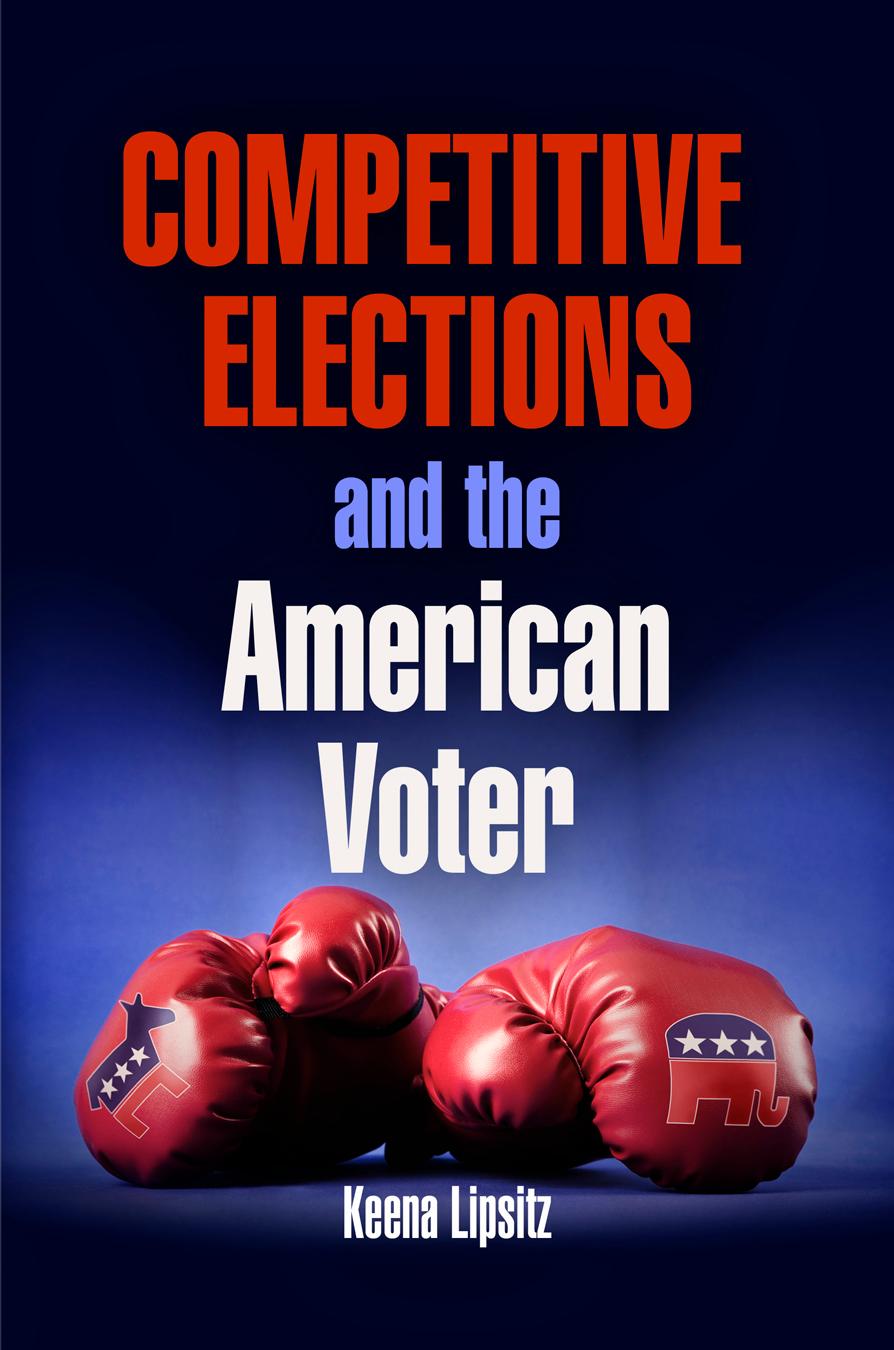
Tight political races with their emotionally charged debates, mud-slinging, and uncertain outcomes are stressful for voters and candidates alike, but that stress may be healthy for democracy. In Competitive Elections and the American Voter, Keena Lipsitz argues that highly contested electoral battles create an environment that allows citizens to make more enlightened decisions.
The first book to use democratic theory to evaluate the quality of campaign rhetoric, Competitive Elections and the American Voter offers a rare overview of political contests at different levels of government. Lipsitz draws on a range of contemporary democratic theories, including egalitarian and deliberative conceptions, to develop campaign communication standards. To promote the values of political competition, equality, and deliberation Lipsitz contends that voters must have access to abundant, balanced information, representing a range of voices and involving a high level of dialogue between the candidates. Using advertising data, the book examines whether competitive House, Senate, and presidential campaigns operating at the state level generate such facts and arguments. It also tests the connection between this knowledge and greater voter understanding and engagement. Because close elections can push candidates to attack their opponents, the book investigates how negative advertising affects voters as well. Given the link between electoral competitiveness and an informed electorate, the book includes reform proposals that enhance competition.
Competitive Elections and the American Voter reminds us that we avoid political controversy and conflict at our peril. This eye-opening analysis of political communication and campaign information environments encourages citizens, scholars, and campaign reformers to recognize the crucial role that well contested elections play in a democracy.
Before Memmo my notes were scattered across PDFs. Now a workspace pulls everything into one place — I see exactly what's still left to study.
Memmo's summaries are gold before exams. I don't have to re-read 800 pages two weeks before — just the important parts.
The AI chat has saved me the night before an exam more than once. I just keep asking until I get it — no waiting on a study group to reply.
The quizzes hit exactly what I need to know. Memmo tracks what I get stuck on — so I only practice what's worth it.
Flashcards with spaced repetition are magic. Memmo knows when I'm about to forget something and brings it back.
The AI podcasts are my favorite. I listen on my way to school and get a recap without sitting at a computer.

Handbok i kvalitativa metoder
281 kr

Hållbar utveckling: en introduktion för ingenjörer och andra problemlösare
334 kr

Brymans Samhällsvetenskapliga metoder
390 kr

Projektledning
491 kr

Den orättvisa hälsan: om socioekonomiska skillnader i hälsa och livslängd
326 kr

Vetenskapsteori för nybörjare
196 kr

Organizational Leadership
429 kr

På väg mot läraryrket
172 kr

Det sociala livet i skolan: Socialpsykologiska perspektiv
253 kr

Betygsättningens didaktik
151 kr

Personality
402 kr

Studying Leadership
404 kr

Managing Innovation
477 kr

Introduktion till samhällsvetenskaplig metod
347 kr

The Psychology of Sex and Gender
698 kr

Evidens och kunskap för socialt arbete
207 kr

Introduction to Leadership
605 kr