
Before Memmo my notes were scattered across PDFs. Now a workspace pulls everything into one place — I see exactly what's still left to study.
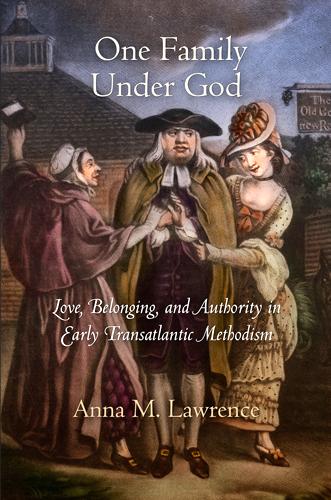
Originally a sect within the Anglican church, Methodism blossomed into a dominant mainstream religion in America during the nineteenth century. At the beginning, though, Methodists constituted a dissenting religious group whose ideas about sexuality, marriage, and family were very different from those of their contemporaries.
Focusing on the Methodist notion of family that cut across biological ties, One Family Under God speaks to historical debates over the meaning of family and how the nuclear family model developed over the eighteenth century. Historian Anna M. Lawrence demonstrates that Methodists adopted flexible definitions of affection and allegiance and emphasized extended communal associations that enabled them to incorporate people outside the traditional boundaries of family. They used the language of romantic, ecstatic love to describe their religious feelings and the language of the nuclear family to describe their bonds to one another. In this way, early Methodism provides a useful lens for exploring eighteenth-century modes of family, love, and authority, as Methodists grappled with the limits of familial and social authority in their extended religious family.
Methodists also married and formed conjugal families within this larger spiritual framework. Evangelical modes of marriage called for careful, slow courtships, and often marriages happened later in life and produced fewer children. Religious views of the family offered alternatives to traditional coupling and marriage—through celibacy, spiritual service, and the idea of finding one's true spiritual match, which both challenged the role of parental authority within marriage-making and accelerated the turn within the larger society toward romantic marriage.
By examining the language and practice of evangelical sexuality and family, One Family Under God highlights how the Methodist movement in the eighteenth century was central to the rise of romantic marriage and the formation of the modern family.
Before Memmo my notes were scattered across PDFs. Now a workspace pulls everything into one place — I see exactly what's still left to study.
Memmo's summaries are gold before exams. I don't have to re-read 800 pages two weeks before — just the important parts.
The AI chat has saved me the night before an exam more than once. I just keep asking until I get it — no waiting on a study group to reply.
The quizzes hit exactly what I need to know. Memmo tracks what I get stuck on — so I only practice what's worth it.
Flashcards with spaced repetition are magic. Memmo knows when I'm about to forget something and brings it back.
The AI podcasts are my favorite. I listen on my way to school and get a recap without sitting at a computer.

Handbok i kvalitativa metoder
281 kr

Hållbar utveckling: en introduktion för ingenjörer och andra problemlösare
334 kr

Brymans Samhällsvetenskapliga metoder
390 kr

Projektledning
491 kr

Den orättvisa hälsan: om socioekonomiska skillnader i hälsa och livslängd
326 kr

Organizational Leadership
429 kr

Vetenskapsteori för nybörjare
196 kr

På väg mot läraryrket
172 kr

Det sociala livet i skolan: Socialpsykologiska perspektiv
253 kr

Betygsättningens didaktik
151 kr

Personality
402 kr

Studying Leadership
404 kr

Managing Innovation
477 kr

Introduktion till samhällsvetenskaplig metod
347 kr

The Psychology of Sex and Gender
698 kr

Evidens och kunskap för socialt arbete
207 kr

Introduction to Leadership
605 kr