
Before Memmo my notes were scattered across PDFs. Now a workspace pulls everything into one place — I see exactly what's still left to study.
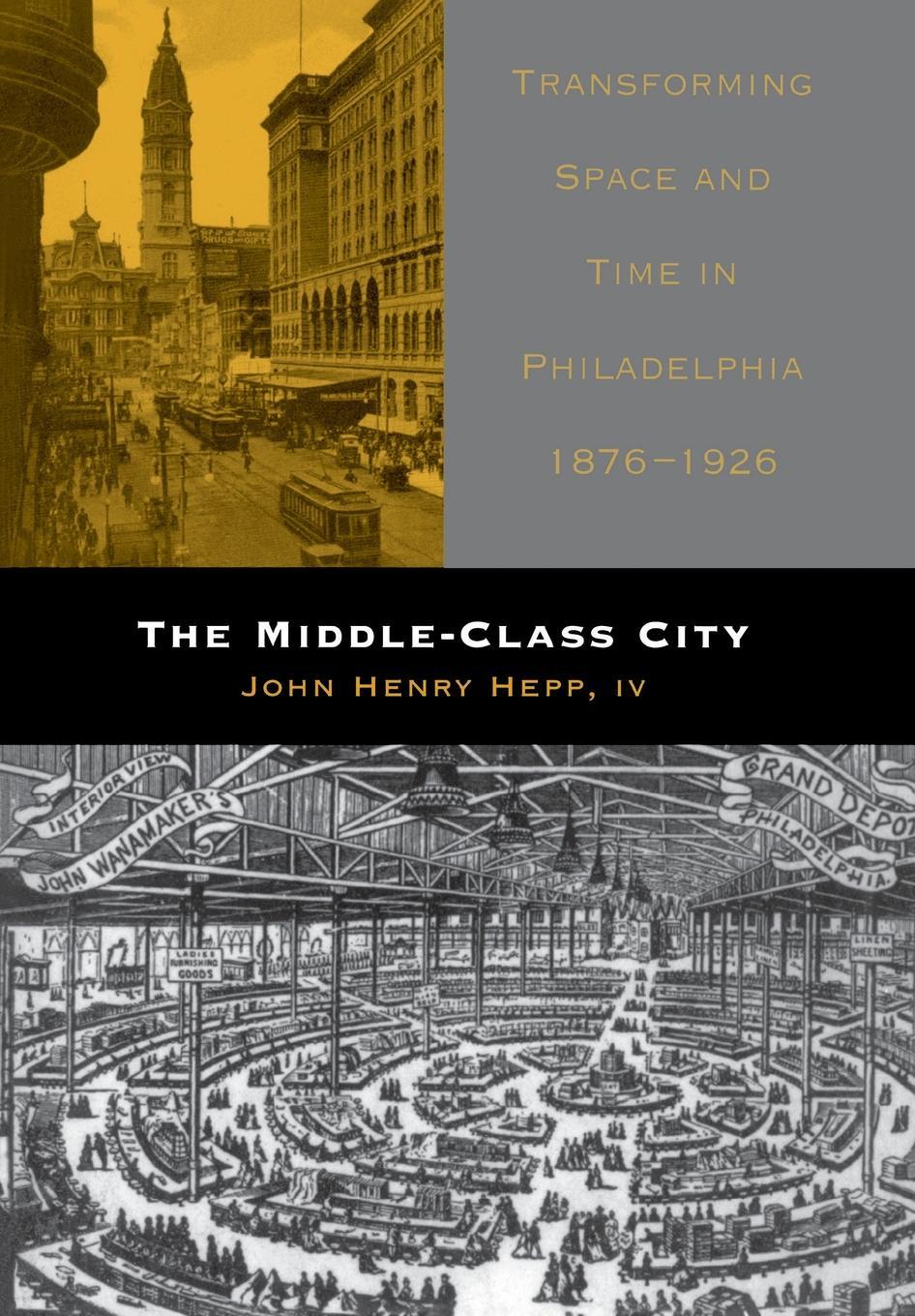
The classic historical interpretation of the late nineteenth and early twentieth centuries in America sees this period as a political search for order by the middle class, culminating in Progressive Era reforms. In The Middle-Class City, John Hepp examines transformations in everyday middle-class life in Philadelphia between 1876 and 1926 to discover the cultural roots of this search for order. By looking at complex relationships among members of that city's middle class and three largely bourgeois commercial institutions—newspapers, department stores, and railroads—Hepp finds that the men and women of the middle class consistently reordered their world along rational lines.
According to Hepp, this period was rife with evidence of creative reorganization that served to mold middle-class life. The department store was more than just an expanded dry goods emporium; it was a middle-class haven of order in the heart of a frenetic city—an entirely new way of organizing merchandise for sale. Redesigned newspapers brought well-ordered news and entertainment to middle-class homes and also carried retail advertisements to entice consumers downtown via train and streetcar. The complex interiors of urban railroad stations reflected a rationalization of space, and rail schedules embodied the modernized specialization of standard time. In his fascinating investigation of similar patterns of behavior among commercial institutions, Hepp exposes an important intersection between the histories of the city and the middle class.
In his careful reconstruction of this now vanished culture, Hepp examines a wide variety of sources, including diaries and memoirs left by middle-class women and men of the region. Following Philadelphians as they rode trains and trolleys, read newspapers, and shopped at department stores, he uses their accounts as individualized guidebooks to middle-class life in the metropolis. And through a creative use of photographs, floor plans, maps, and material culture, The Middle-Class City helps to reconstruct the physical settings of these enterprises and recreate everyday middle-class life, shedding new light on an underanalyzed historical group and the cultural history of twentieth-century America.
Before Memmo my notes were scattered across PDFs. Now a workspace pulls everything into one place — I see exactly what's still left to study.
Memmo's summaries are gold before exams. I don't have to re-read 800 pages two weeks before — just the important parts.
The AI chat has saved me the night before an exam more than once. I just keep asking until I get it — no waiting on a study group to reply.
The quizzes hit exactly what I need to know. Memmo tracks what I get stuck on — so I only practice what's worth it.
Flashcards with spaced repetition are magic. Memmo knows when I'm about to forget something and brings it back.
The AI podcasts are my favorite. I listen on my way to school and get a recap without sitting at a computer.

Handbok i kvalitativa metoder
281 kr

Hållbar utveckling: en introduktion för ingenjörer och andra problemlösare
334 kr

Brymans Samhällsvetenskapliga metoder
390 kr

Projektledning
491 kr

Den orättvisa hälsan: om socioekonomiska skillnader i hälsa och livslängd
326 kr

Vetenskapsteori för nybörjare
196 kr

Organizational Leadership
429 kr

På väg mot läraryrket
172 kr

Det sociala livet i skolan: Socialpsykologiska perspektiv
253 kr

Betygsättningens didaktik
151 kr

Personality
402 kr

Studying Leadership
404 kr

Managing Innovation
477 kr

Introduktion till samhällsvetenskaplig metod
347 kr

The Psychology of Sex and Gender
698 kr

Evidens och kunskap för socialt arbete
207 kr

Introduction to Leadership
605 kr