
Before Memmo my notes were scattered across PDFs. Now a workspace pulls everything into one place — I see exactly what's still left to study.
Awarded honorable mention for the 2007 Wallace K. Ferguson Prize sponsored by the Canadian Historical Association
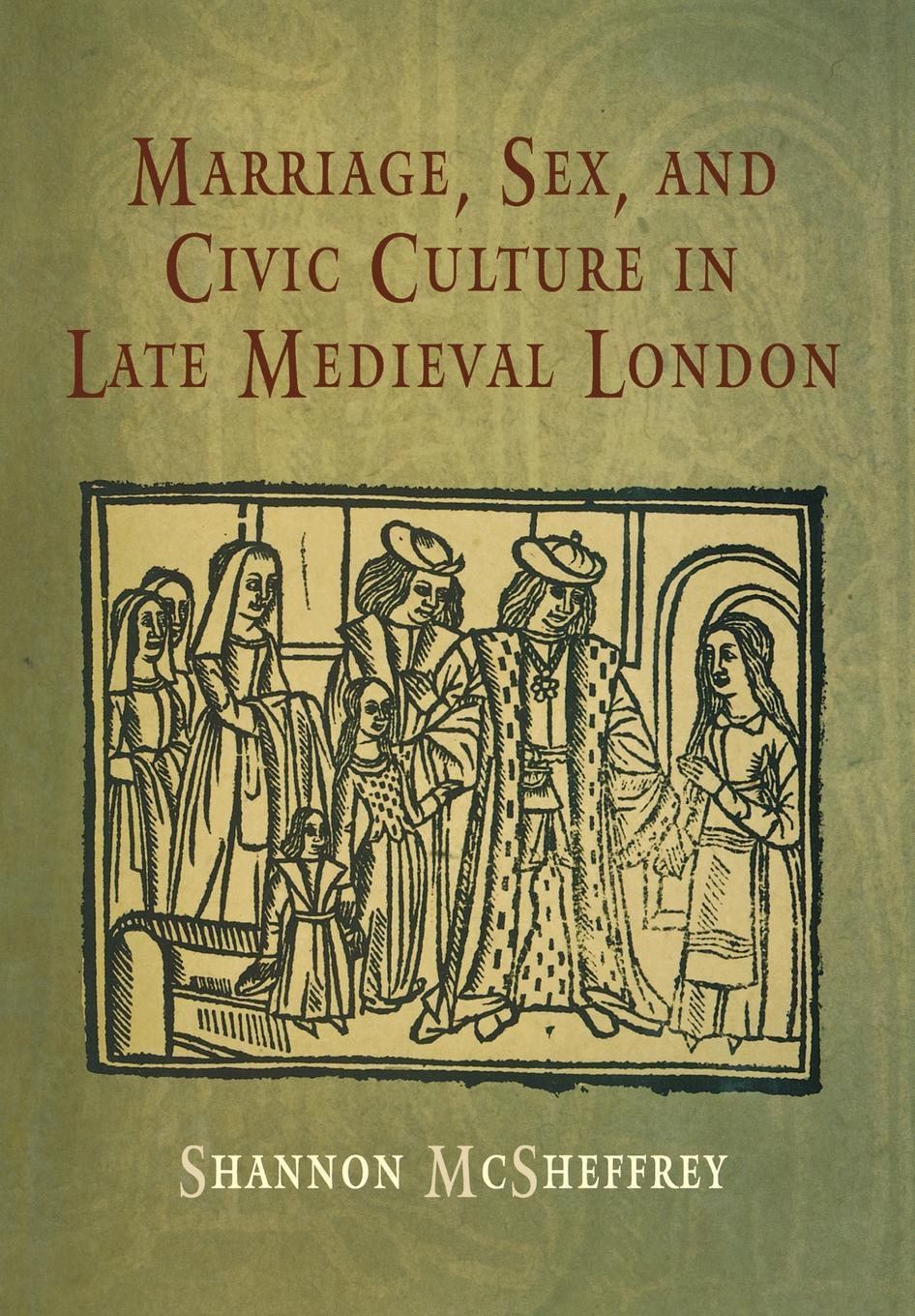
How were marital and sexual relationships woven into the fabric of late medieval society, and what form did these relationships take? Using extensive documentary evidence from both the ecclesiastical court system and the records of city and royal government, as well as advice manuals, chronicles, moral tales, and liturgical texts, Shannon McSheffrey focuses her study on England's largest city in the second half of the fifteenth century.
Marriage was a religious union—one of the seven sacraments of the Catholic Church and imbued with deep spiritual significance—but the marital unit of husband and wife was also the fundamental domestic, social, political, and economic unit of medieval society. As such, marriage created political alliances at all levels, from the arena of international politics to local neighborhoods. Sexual relationships outside marriage were even more complicated. McSheffrey notes that medieval Londoners saw them as variously attributable to female seduction or to male lustfulness, as irrelevant or deeply damaging to society and to the body politic, as economically productive or wasteful of resources. Yet, like marriage, sexual relationships were also subject to control and influence from parents, relatives, neighbors, civic officials, parish priests, and ecclesiastical judges.
Although by medieval canon law a marriage was irrevocable from the moment a man and a woman exchanged vows of consent before two witnesses, in practice marriage was usually a socially complicated process involving many people. McSheffrey looks more broadly at sex, governance, and civic morality to show how medieval patriarchy extended a far wider reach than a father's governance over his biological offspring. By focusing on a particular time and place, she not only elucidates the culture of England's metropolitan center but also contributes generally to our understanding of the social mechanisms through which premodern European people negotiated their lives.
Before Memmo my notes were scattered across PDFs. Now a workspace pulls everything into one place — I see exactly what's still left to study.
Memmo's summaries are gold before exams. I don't have to re-read 800 pages two weeks before — just the important parts.
The AI chat has saved me the night before an exam more than once. I just keep asking until I get it — no waiting on a study group to reply.
The quizzes hit exactly what I need to know. Memmo tracks what I get stuck on — so I only practice what's worth it.
Flashcards with spaced repetition are magic. Memmo knows when I'm about to forget something and brings it back.
The AI podcasts are my favorite. I listen on my way to school and get a recap without sitting at a computer.

Handbok i kvalitativa metoder
281 kr

Hållbar utveckling: en introduktion för ingenjörer och andra problemlösare
334 kr

Brymans Samhällsvetenskapliga metoder
390 kr

Projektledning
491 kr

Den orättvisa hälsan: om socioekonomiska skillnader i hälsa och livslängd
326 kr

Vetenskapsteori för nybörjare
196 kr

Organizational Leadership
429 kr

På väg mot läraryrket
172 kr

Det sociala livet i skolan: Socialpsykologiska perspektiv
253 kr

Betygsättningens didaktik
151 kr

Personality
402 kr

Studying Leadership
404 kr

Managing Innovation
477 kr

Introduktion till samhällsvetenskaplig metod
347 kr

The Psychology of Sex and Gender
698 kr

Evidens och kunskap för socialt arbete
207 kr

Introduction to Leadership
605 kr