
Before Memmo my notes were scattered across PDFs. Now a workspace pulls everything into one place — I see exactly what's still left to study.
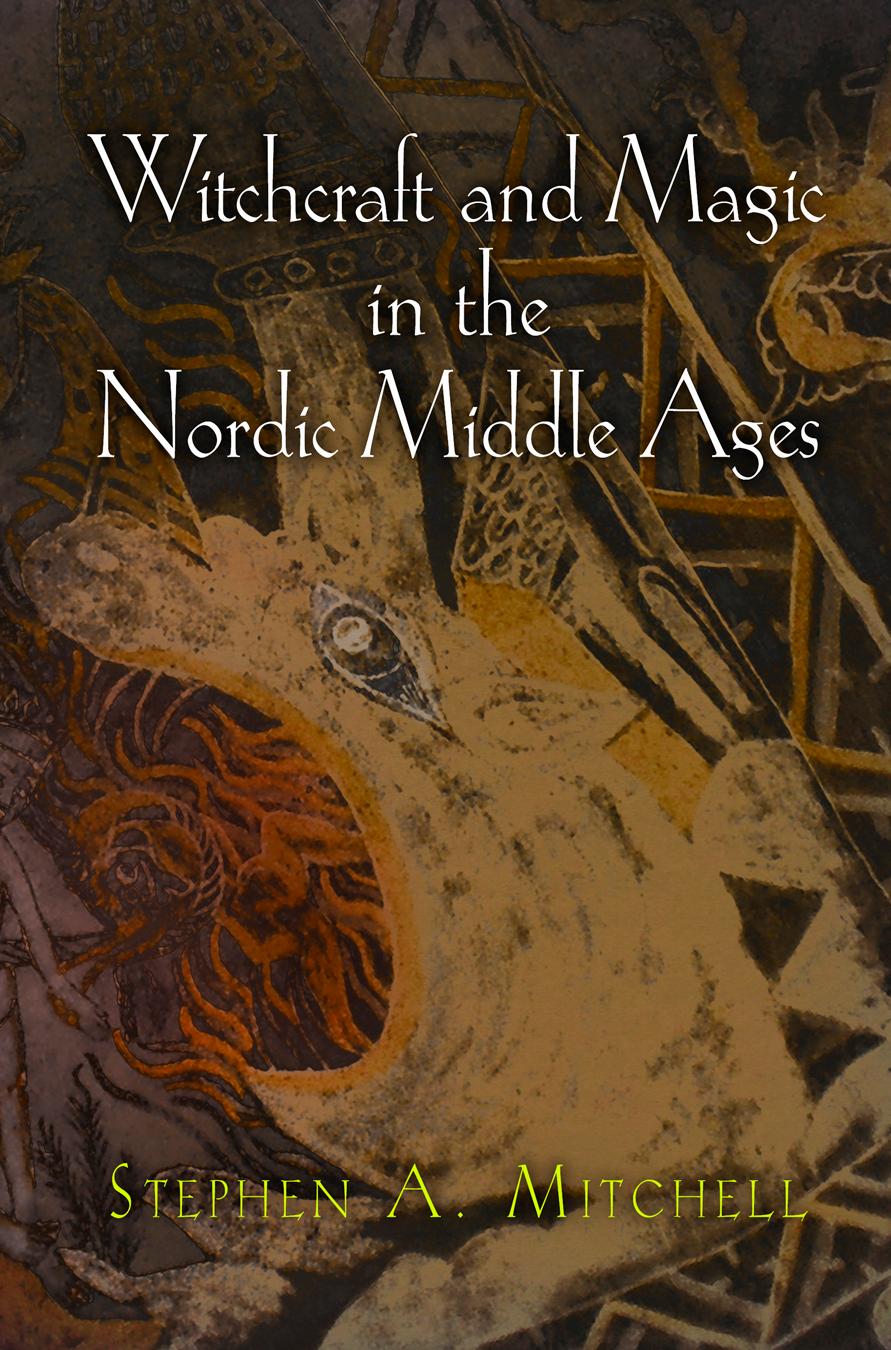
Stephen A. Mitchell here offers the fullest examination available of witchcraft in late medieval Scandinavia. He focuses on those people believed to be able—and who in some instances thought themselves able—to manipulate the world around them through magical practices, and on the responses to these beliefs in the legal, literary, and popular cultures of the Nordic Middle Ages. His sources range from the Icelandic sagas to cultural monuments much less familiar to the nonspecialist, including legal cases, church art, law codes, ecclesiastical records, and runic spells.
Mitchell's starting point is the year 1100, by which time Christianity was well established in elite circles throughout Scandinavia, even as some pre-Christian practices and beliefs persisted in various forms. The book's endpoint coincides with the coming of the Reformation and the onset of the early modern Scandinavian witch hunts. The terrain covered is complex, home to the Germanic Scandinavians as well as their non-Indo-European neighbors, the Sámi and Finns, and it encompasses such diverse areas as the important trade cities of Copenhagen, Bergen, and Stockholm, with their large foreign populations; the rural hinterlands; and the insular outposts of Iceland and Greenland.
By examining witches, wizards, and seeresses in literature, lore, and law, as well as surviving charm magic directed toward love, prophecy, health, and weather, Mitchell provides a portrait of both the practitioners of medieval Nordic magic and its performance. With an understanding of mythology as a living system of cultural signs (not just ancient sacred narratives), this study also focuses on such powerful evolving myths as those of "the milk-stealing witch," the diabolical pact, and the witches' journey to Blåkulla. Court cases involving witchcraft, charm magic, and apostasy demonstrate that witchcraft ideologies played a key role in conceptualizing gender and were themselves an important means of exercising social control.
Before Memmo my notes were scattered across PDFs. Now a workspace pulls everything into one place — I see exactly what's still left to study.
Memmo's summaries are gold before exams. I don't have to re-read 800 pages two weeks before — just the important parts.
The AI chat has saved me the night before an exam more than once. I just keep asking until I get it — no waiting on a study group to reply.
The quizzes hit exactly what I need to know. Memmo tracks what I get stuck on — so I only practice what's worth it.
Flashcards with spaced repetition are magic. Memmo knows when I'm about to forget something and brings it back.
The AI podcasts are my favorite. I listen on my way to school and get a recap without sitting at a computer.

Handbok i kvalitativa metoder
281 kr

Hållbar utveckling: en introduktion för ingenjörer och andra problemlösare
334 kr

Brymans Samhällsvetenskapliga metoder
390 kr

Projektledning
491 kr

Den orättvisa hälsan: om socioekonomiska skillnader i hälsa och livslängd
326 kr

Vetenskapsteori för nybörjare
196 kr

Organizational Leadership
429 kr

På väg mot läraryrket
172 kr

Det sociala livet i skolan: Socialpsykologiska perspektiv
253 kr

Betygsättningens didaktik
151 kr

Personality
402 kr

Studying Leadership
404 kr

Managing Innovation
477 kr

Introduktion till samhällsvetenskaplig metod
347 kr

The Psychology of Sex and Gender
698 kr

Evidens och kunskap för socialt arbete
207 kr

Introduction to Leadership
605 kr