
Before Memmo my notes were scattered across PDFs. Now a workspace pulls everything into one place — I see exactly what's still left to study.
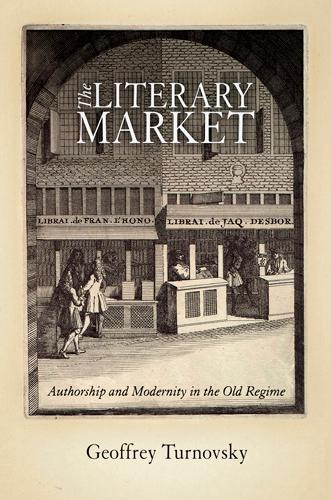
A central theme in the history of Old Regime authorship highlights the opportunities offered by a growing book trade to writers seeking to free themselves from patrons and live "by the pen." Accounts of this passage from patronage to market have explored in far greater detail the opportunities themselves—the rising sums paid by publishers and the progression of laws protecting literary property—than how and why writers would have seized on them, no doubt because the choice to do so has seemed an obvious or natural one for writers assumed to prefer economic self-sufficiency over elite protection.
In The Literary Market, Geoffrey Turnovsky claims that there was nothing obvious or natural about the choice. Writers had been involved in commercial book publication since the earliest days of the printing press, yet had not necessarily linked these activities with their freedom to think and write. The association of autonomy and professionalism was forged, not given. Analyzing the literary market as a key articulation of the association, Turnovsky explores how in eighteenth-century polemics a rhetoric of commercial authorship came to signify independence for intellectuals. He finds the roots of the connection not in the claims of entrepreneurial writers to rights and income but in a world to which that of the modern author has been contrasted: the aristocratic culture of the seventeenth century. Aristocratic culture, he argues, generated a disparaging view of the professional author as one defined by activities tainting him or her as greedy and arrogant and therefore unworthy of protection and socially isolated. The Literary Market examines the story of the "birth of the author" in terms of the revalorization of this negative trope in Enlightenment-era debates about the radically changing role of writers in society.
Before Memmo my notes were scattered across PDFs. Now a workspace pulls everything into one place — I see exactly what's still left to study.
Memmo's summaries are gold before exams. I don't have to re-read 800 pages two weeks before — just the important parts.
The AI chat has saved me the night before an exam more than once. I just keep asking until I get it — no waiting on a study group to reply.
The quizzes hit exactly what I need to know. Memmo tracks what I get stuck on — so I only practice what's worth it.
Flashcards with spaced repetition are magic. Memmo knows when I'm about to forget something and brings it back.
The AI podcasts are my favorite. I listen on my way to school and get a recap without sitting at a computer.

Handbok i kvalitativa metoder
281 kr

Hållbar utveckling: en introduktion för ingenjörer och andra problemlösare
334 kr

Brymans Samhällsvetenskapliga metoder
390 kr

Projektledning
491 kr

Den orättvisa hälsan: om socioekonomiska skillnader i hälsa och livslängd
326 kr

Vetenskapsteori för nybörjare
196 kr

Organizational Leadership
429 kr

På väg mot läraryrket
172 kr

Det sociala livet i skolan: Socialpsykologiska perspektiv
253 kr

Betygsättningens didaktik
151 kr

Personality
402 kr

Studying Leadership
404 kr

Managing Innovation
477 kr

Introduktion till samhällsvetenskaplig metod
347 kr

The Psychology of Sex and Gender
698 kr

Evidens och kunskap för socialt arbete
207 kr

Introduction to Leadership
605 kr