
Before Memmo my notes were scattered across PDFs. Now a workspace pulls everything into one place — I see exactly what's still left to study.
Up the close and down the stair,
Up and down with Burke and Hare.
Burke's the butcher, Hare's the thief,
Knox the man who buys the beef.
—anonymous children's song
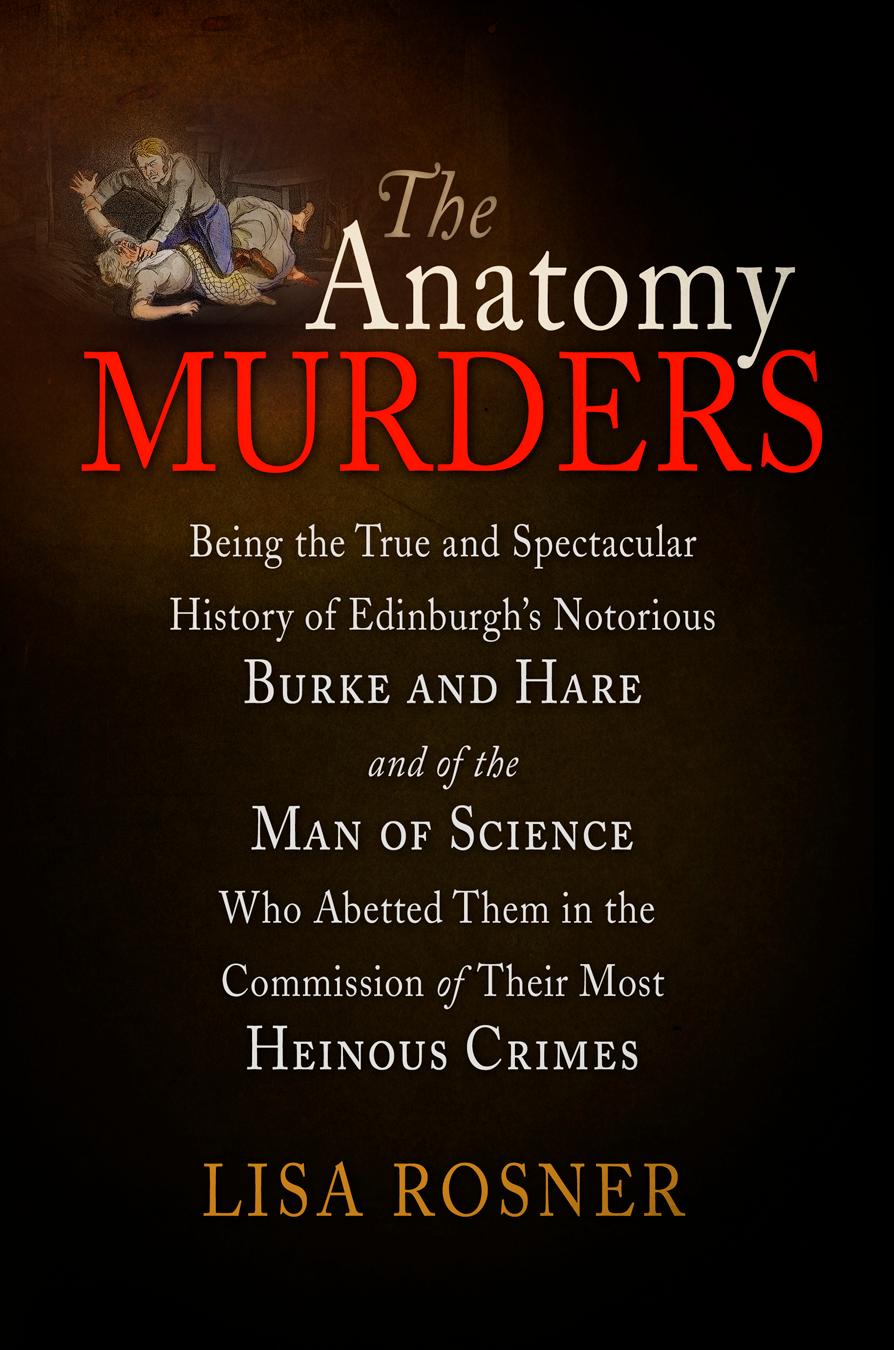
On Halloween night 1828, in the West Port district of Edinburgh, Scotland, a woman sometimes known as Madgy Docherty was last seen in the company of William Burke and William Hare. Days later, police discovered her remains in the surgery of the prominent anatomist Dr. Robert Knox. Docherty was the final victim of the most atrocious murder spree of the century, outflanking even Jack the Ripper's. Together with their accomplices, Burke and Hare would be accused of killing sixteen people over the course of twelve months in order to sell the corpses as "subjects" for dissection. The ensuing criminal investigation into the "Anatomy Murders" raised troubling questions about the common practices by which medical men obtained cadavers, the lives of the poor in Edinburgh's back alleys, and the ability of the police to protect the public from cold-blooded murder.
Famous among true crime aficionados, Burke and Hare were the first serial killers to capture media attention, yet The Anatomy Murders is the first book to situate their story against the social and cultural forces that were bringing early nineteenth-century Britain into modernity. In Lisa Rosner's deft treatment, each of the murder victims, from the beautiful, doomed Mary Paterson to the unfortunate "Daft Jamie," opens a window on a different aspect of this world in transition. Tapping into a wealth of unpublished materials, Rosner meticulously portrays the aspirations of doctors and anatomists, the makeshift existence of the so-called dangerous classes, the rudimentary police apparatus, and the half-fiction, half-journalism of the popular press.
The Anatomy Murders resurrects a tale of murder and medicine in a city whose grand Georgian squares and crescents stood beside a maze of slums, a place in which a dead body was far more valuable than a living laborer.
Before Memmo my notes were scattered across PDFs. Now a workspace pulls everything into one place — I see exactly what's still left to study.
Memmo's summaries are gold before exams. I don't have to re-read 800 pages two weeks before — just the important parts.
The AI chat has saved me the night before an exam more than once. I just keep asking until I get it — no waiting on a study group to reply.
The quizzes hit exactly what I need to know. Memmo tracks what I get stuck on — so I only practice what's worth it.
Flashcards with spaced repetition are magic. Memmo knows when I'm about to forget something and brings it back.
The AI podcasts are my favorite. I listen on my way to school and get a recap without sitting at a computer.

Handbok i kvalitativa metoder
281 kr

Hållbar utveckling: en introduktion för ingenjörer och andra problemlösare
334 kr

Brymans Samhällsvetenskapliga metoder
390 kr

Projektledning
491 kr

Den orättvisa hälsan: om socioekonomiska skillnader i hälsa och livslängd
326 kr

Vetenskapsteori för nybörjare
196 kr

Organizational Leadership
429 kr

På väg mot läraryrket
172 kr

Det sociala livet i skolan: Socialpsykologiska perspektiv
253 kr

Betygsättningens didaktik
151 kr

Personality
402 kr

Studying Leadership
404 kr

Managing Innovation
477 kr

Introduktion till samhällsvetenskaplig metod
347 kr

The Psychology of Sex and Gender
698 kr

Evidens och kunskap för socialt arbete
207 kr

Introduction to Leadership
605 kr