
Before Memmo my notes were scattered across PDFs. Now a workspace pulls everything into one place — I see exactly what's still left to study.
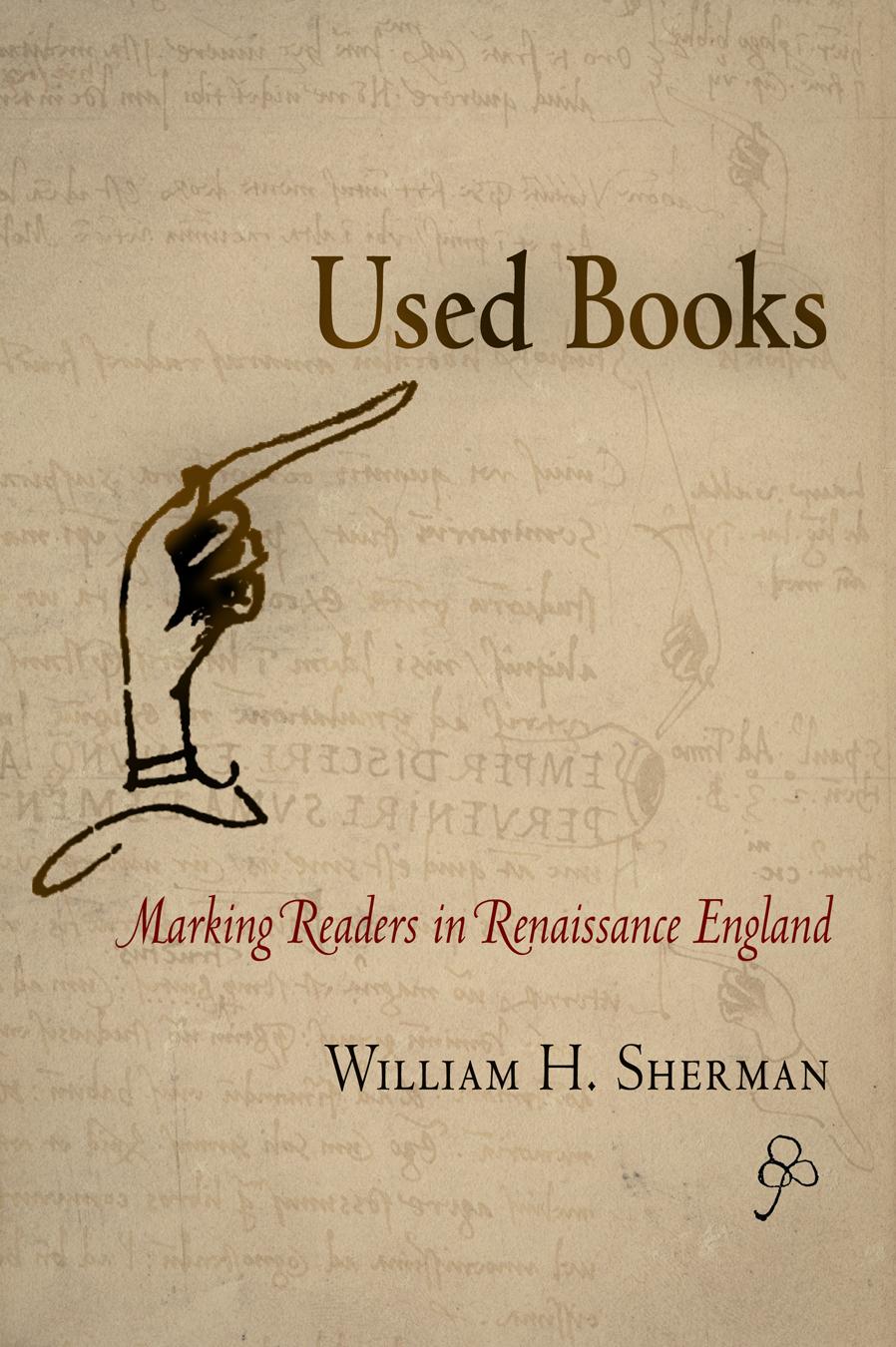
In a recent sale catalog, one bookseller apologized for the condition of a sixteenth-century volume as "rather soiled by use." When the book was displayed the next year, the exhibition catalogue described it as "well and piously used [with] marginal notations in an Elizabethan hand [that] bring to life an early and earnest owner"; and the book's buyer, for his part, considered it to be "enlivened by the marginal notes and comments." For this collector, as for an increasing number of cultural historians and historians of the book, a marked-up copy was more interesting than one in pristine condition.
William H. Sherman recovers a culture that took the phrase "mark my words" quite literally. Books from the first two centuries of printing are full of marginalia and other signs of engagement and use, such as customized bindings, traces of food and drink, penmanship exercises, and doodles. These marks offer a vast archive of information about the lives of books and their place in the lives of their readers.
Based on a survey of thousands of early printed books, Used Books describes what readers wrote in and around their books and what we can learn from these marks by using the tools of archaeologists as well as historians and literary critics. The chapters address the place of book-marking in schools and churches, the use of the "manicule" (the ubiquitous hand-with-pointing-finger symbol), the role played by women in information management, the extraordinary commonplace book used for nearly sixty years by Renaissance England's greatest lawyer-statesman, and the attitudes toward annotated books among collectors and librarians from the Middle Ages to the present.
This wide-ranging, learned, and often surprising book will make the marks of Renaissance readers more visible and legible to scholars, collectors, and bibliophiles.
Before Memmo my notes were scattered across PDFs. Now a workspace pulls everything into one place — I see exactly what's still left to study.
Memmo's summaries are gold before exams. I don't have to re-read 800 pages two weeks before — just the important parts.
The AI chat has saved me the night before an exam more than once. I just keep asking until I get it — no waiting on a study group to reply.
The quizzes hit exactly what I need to know. Memmo tracks what I get stuck on — so I only practice what's worth it.
Flashcards with spaced repetition are magic. Memmo knows when I'm about to forget something and brings it back.
The AI podcasts are my favorite. I listen on my way to school and get a recap without sitting at a computer.

Handbok i kvalitativa metoder
281 kr

Hållbar utveckling: en introduktion för ingenjörer och andra problemlösare
334 kr

Brymans Samhällsvetenskapliga metoder
390 kr

Projektledning
491 kr

Den orättvisa hälsan: om socioekonomiska skillnader i hälsa och livslängd
326 kr

Vetenskapsteori för nybörjare
196 kr

Organizational Leadership
429 kr

På väg mot läraryrket
172 kr

Det sociala livet i skolan: Socialpsykologiska perspektiv
253 kr

Betygsättningens didaktik
151 kr

Personality
402 kr

Studying Leadership
404 kr

Managing Innovation
477 kr

Introduktion till samhällsvetenskaplig metod
347 kr

The Psychology of Sex and Gender
698 kr

Evidens och kunskap för socialt arbete
207 kr

Introduction to Leadership
605 kr