
Before Memmo my notes were scattered across PDFs. Now a workspace pulls everything into one place — I see exactly what's still left to study.
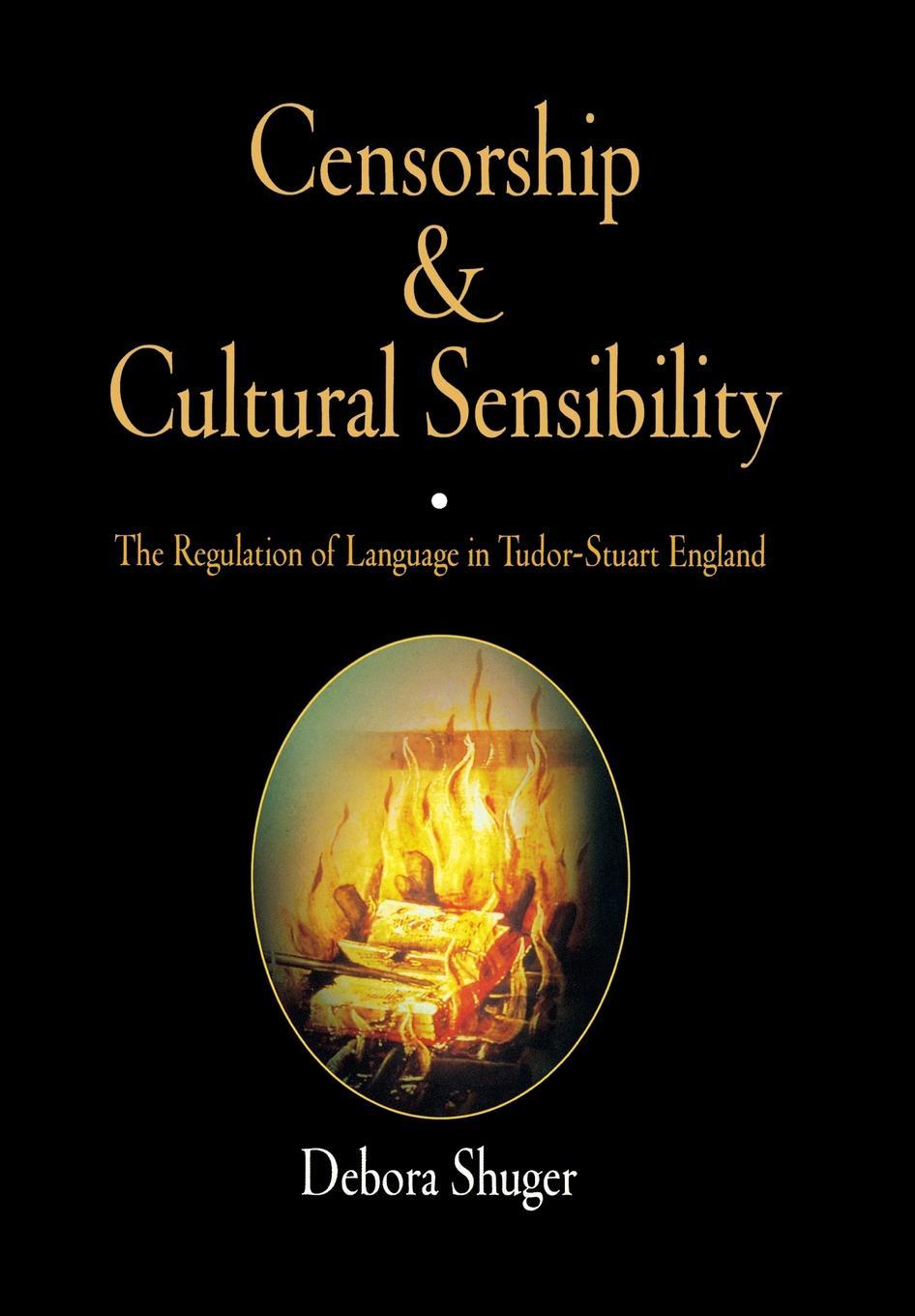
In this study of the reciprocities binding religion, politics, law, and literature, Debora Shuger offers a profoundly new history of early modern English censorship, one that bears centrally on issues still current: the rhetoric of ideological extremism, the use of defamation to ruin political opponents, the grounding of law in theological ethics, and the terrible fragility of public spheres. Starting from the question of why no one prior to the mid-1640s argued for free speech or a free press per se, Censorship and Cultural Sensibility surveys the texts against which Tudor-Stuart censorship aimed its biggest guns, which turned out not to be principled dissent but libels, conspiracy fantasies, and hate speech. The book explores the laws that attempted to suppress such material, the cultural values that underwrote this regulation, and, finally, the very different framework of assumptions whose gradual adoption rendered censorship illegitimate.
Virtually all substantive law on language concerned defamation, regulating what one could say about other people. Hence Tudor-Stuart laws extended protection only to the person hurt by another's words, never to their speaker. In treating transgressive language as akin to battery, English law differed fundamentally from papal censorship, which construed its target as heresy. There were thus two models of censorship operative in the early modern period, both premised on religious norms, but one concerned primarily with false accusation and libel, the other with false belief and immorality. Shuger investigates the first of these models—the dominant English one—tracing its complex origins in the Roman law of iniuria through medieval theological ethics and Continental jurisprudence to its continuities and discontinuities with current U.S. law. In so doing, she enables her reader to grasp how in certain contexts censorship could be understood as safeguarding both charitable community and personal dignitary rights.
Before Memmo my notes were scattered across PDFs. Now a workspace pulls everything into one place — I see exactly what's still left to study.
Memmo's summaries are gold before exams. I don't have to re-read 800 pages two weeks before — just the important parts.
The AI chat has saved me the night before an exam more than once. I just keep asking until I get it — no waiting on a study group to reply.
The quizzes hit exactly what I need to know. Memmo tracks what I get stuck on — so I only practice what's worth it.
Flashcards with spaced repetition are magic. Memmo knows when I'm about to forget something and brings it back.
The AI podcasts are my favorite. I listen on my way to school and get a recap without sitting at a computer.

Handbok i kvalitativa metoder
281 kr

Hållbar utveckling: en introduktion för ingenjörer och andra problemlösare
334 kr

Brymans Samhällsvetenskapliga metoder
390 kr

Projektledning
491 kr

Den orättvisa hälsan: om socioekonomiska skillnader i hälsa och livslängd
326 kr

Vetenskapsteori för nybörjare
196 kr

Organizational Leadership
429 kr

På väg mot läraryrket
172 kr

Det sociala livet i skolan: Socialpsykologiska perspektiv
253 kr

Betygsättningens didaktik
151 kr

Personality
402 kr

Studying Leadership
404 kr

Managing Innovation
477 kr

Introduktion till samhällsvetenskaplig metod
347 kr

The Psychology of Sex and Gender
698 kr

Evidens och kunskap för socialt arbete
207 kr

Introduction to Leadership
605 kr