
Before Memmo my notes were scattered across PDFs. Now a workspace pulls everything into one place — I see exactly what's still left to study.
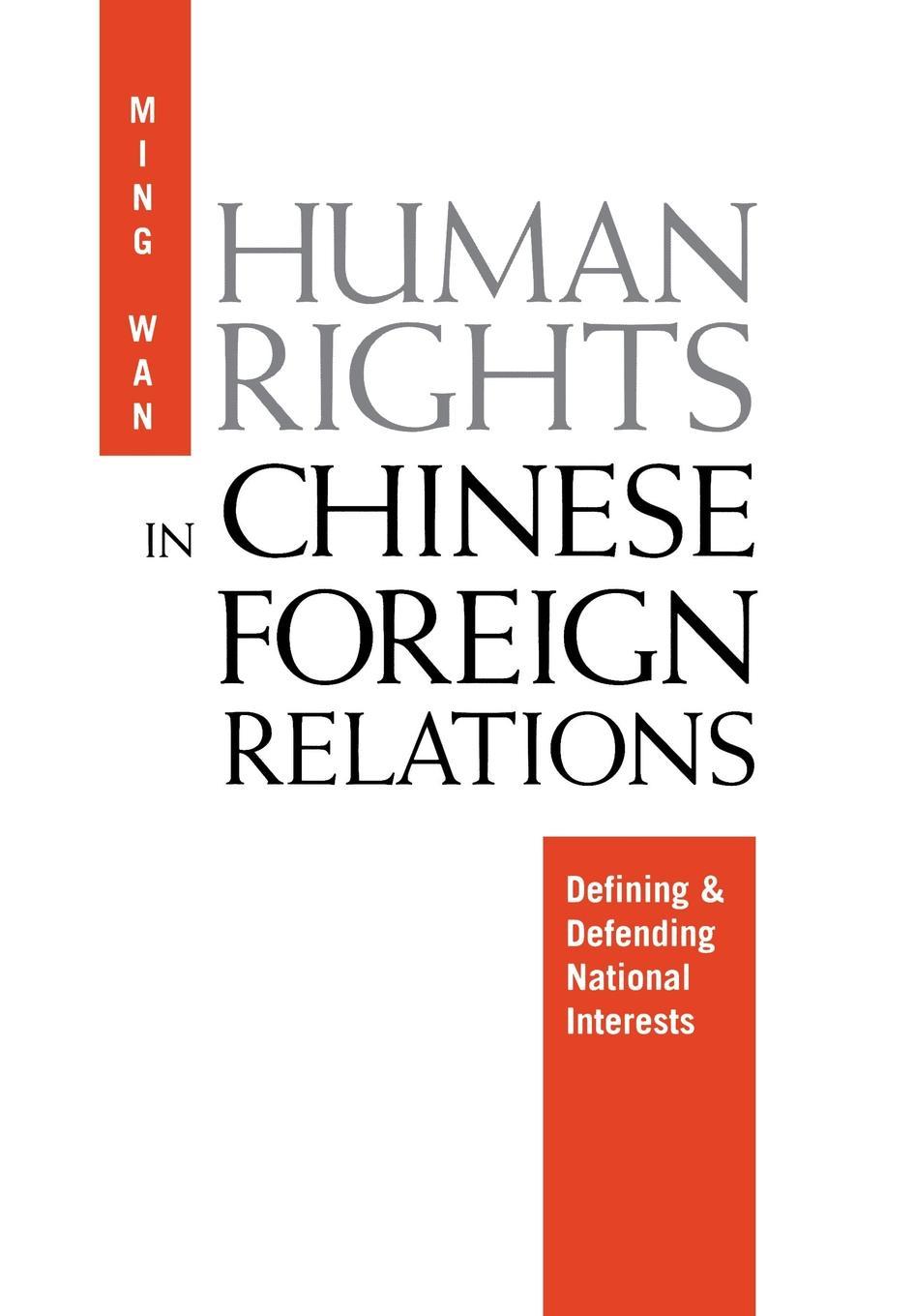
Few issues in the relations between China and the West invoke as much passion as human rights. At stake, however, are much more than moral concerns and hurt national feelings. To Washington, the undemocratic nature of the Chinese government makes it ultimately suspect on all issues. To Beijing, the human rights pressure exerted by the West on China seems designed to compromise its legitimacy. As China's economic power grows and its influence on the politics of developing countries continues, an understanding of the place of human rights in China's foreign relations is crucial to the implementation of an effective international human rights agenda.
In Human Rights in Chinese Foreign Relations, Ming Wan examines China's relations with the United States, Western Europe, Japan, and the United Nations human rights institutions.
Wan shows that, after a decade of persistent external pressure to reform its practices, China still plays human rights diplomacy as traditional power politics and deflects pressure by mobilizing its propaganda machine to neutralize Western criticism, by making compromises that do not threaten core interests, and by offering commercial incentives to important nations to help prevent a unified Western front. Furthermore, at the UN, China has largely succeeded in rallying developing nation members to defeat Western efforts at censure.
In turn, it is apparent to Wan that, while the idea of human rights matters in Western policy, it has seldom prevailed over economic considerations or concerns about national security. Western governments have not committed as many policy resources to pressuring Beijing on human rights as to other issues, and the differing degrees of commitment to human rights-related foreign policy explain why Japan, Western Europe, and the United States, in that order, have gradually retreated from confronting China on human rights issues.
Before Memmo my notes were scattered across PDFs. Now a workspace pulls everything into one place — I see exactly what's still left to study.
Memmo's summaries are gold before exams. I don't have to re-read 800 pages two weeks before — just the important parts.
The AI chat has saved me the night before an exam more than once. I just keep asking until I get it — no waiting on a study group to reply.
The quizzes hit exactly what I need to know. Memmo tracks what I get stuck on — so I only practice what's worth it.
Flashcards with spaced repetition are magic. Memmo knows when I'm about to forget something and brings it back.
The AI podcasts are my favorite. I listen on my way to school and get a recap without sitting at a computer.

Handbok i kvalitativa metoder
281 kr

Hållbar utveckling: en introduktion för ingenjörer och andra problemlösare
334 kr

Brymans Samhällsvetenskapliga metoder
390 kr

Projektledning
491 kr

Den orättvisa hälsan: om socioekonomiska skillnader i hälsa och livslängd
326 kr

Vetenskapsteori för nybörjare
196 kr

Organizational Leadership
429 kr

På väg mot läraryrket
172 kr

Det sociala livet i skolan: Socialpsykologiska perspektiv
253 kr

Betygsättningens didaktik
151 kr

Personality
402 kr

Studying Leadership
404 kr

Managing Innovation
477 kr

Introduktion till samhällsvetenskaplig metod
347 kr

The Psychology of Sex and Gender
698 kr

Evidens och kunskap för socialt arbete
207 kr

Introduction to Leadership
605 kr