
Before Memmo my notes were scattered across PDFs. Now a workspace pulls everything into one place — I see exactly what's still left to study.
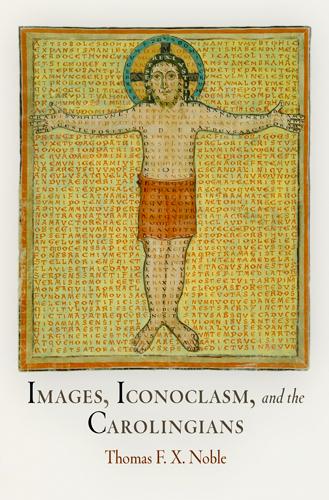
In the year 726 C.E., the Byzantine emperor Leo III issued an edict declaring images to be idols, forbidden by Exodus, and ordering all such images in churches to be destroyed. Thus commenced the first wave of Byzantine iconoclasm, which ran its violent course until 787, when the underlying issues were temporarily resolved at the Second Council of Nicaea. In 815, a second great wave of iconoclasm was set off, only to end in 842 when the icons were restored to the churches of the East and the iconoclasts excommunicated.
The iconoclast controversies have long been understood as marking major fissures between the Western and Eastern churches. Thomas F. X. Noble reveals that the lines of division were not so clear. It is traditionally maintained that the Carolingians in the 790s did not understand the basic issues involved in the Byzantine dispute. Noble contends that there was, in fact, a significant Carolingian controversy about visual art and, if its ties to Byzantine iconoclasm were tenuous, they were also complex and deeply rooted in central concerns of the Carolingian court. Furthermore, he asserts that the Carolingians made distinctive and original contributions to the whole debate over religious art.
Images, Iconoclasm, and the Carolingians is the first book to provide a comprehensive study of the Western response to Byzantine iconoclasm. By comparing art-texts with laws, letters, poems, and other sources, Noble reveals the power and magnitude of the key discourses of the Carolingian world during its most dynamic and creative decades.
Before Memmo my notes were scattered across PDFs. Now a workspace pulls everything into one place — I see exactly what's still left to study.
Memmo's summaries are gold before exams. I don't have to re-read 800 pages two weeks before — just the important parts.
The AI chat has saved me the night before an exam more than once. I just keep asking until I get it — no waiting on a study group to reply.
The quizzes hit exactly what I need to know. Memmo tracks what I get stuck on — so I only practice what's worth it.
Flashcards with spaced repetition are magic. Memmo knows when I'm about to forget something and brings it back.
The AI podcasts are my favorite. I listen on my way to school and get a recap without sitting at a computer.

Handbok i kvalitativa metoder
281 kr

Hållbar utveckling: en introduktion för ingenjörer och andra problemlösare
334 kr

Brymans Samhällsvetenskapliga metoder
390 kr

Projektledning
491 kr

Den orättvisa hälsan: om socioekonomiska skillnader i hälsa och livslängd
326 kr

Vetenskapsteori för nybörjare
196 kr

Organizational Leadership
429 kr

På väg mot läraryrket
172 kr

Det sociala livet i skolan: Socialpsykologiska perspektiv
253 kr

Betygsättningens didaktik
151 kr

Personality
402 kr

Studying Leadership
404 kr

Managing Innovation
477 kr

Introduktion till samhällsvetenskaplig metod
347 kr

The Psychology of Sex and Gender
698 kr

Evidens och kunskap för socialt arbete
207 kr

Introduction to Leadership
605 kr