
Before Memmo my notes were scattered across PDFs. Now a workspace pulls everything into one place — I see exactly what's still left to study.
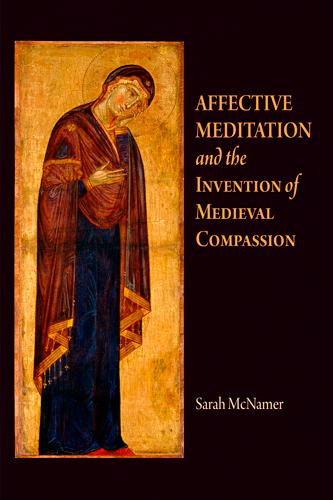
Affective meditation on the Passion was one of the most popular literary genres of the high and later Middle Ages. Proliferating in a rich variety of forms, these lyrical, impassioned, script-like texts in Latin and the vernacular had a deceptively simple goal: to teach their readers how to feel. They were thus instrumental in shaping and sustaining the wide-scale shift in medieval Christian sensibility from fear of God to compassion for the suffering Christ.
Affective Meditation and the Invention of Medieval Compassion advances a new narrative for this broad cultural change and the meditative writings that both generated and reflected it. Sarah McNamer locates women as agents in the creation of the earliest and most influential texts in the genre, from John of Fécamp's Libellus to the Meditationes Vitae Christi, thus challenging current paradigms that cast the compassionate affective mode as Anselmian or Franciscan in origin. The early development of the genre in women's practices had a powerful and lasting legacy. With special attention to Middle English texts, including Nicholas Love's Mirror and a wide range of Passion lyrics and laments, Affective Meditation and the Invention of Medieval Compassion illuminates how these scripts for the performance of prayer served to construct compassion itself as an intimate and feminine emotion. To feel compassion for Christ, in the private drama of the heart that these texts stage, was to feel like a woman. This was an assumption about emotion that proved historically consequential, McNamer demonstrates, as she traces some of its legal, ethical, and social functions in late medieval England.
Before Memmo my notes were scattered across PDFs. Now a workspace pulls everything into one place — I see exactly what's still left to study.
Memmo's summaries are gold before exams. I don't have to re-read 800 pages two weeks before — just the important parts.
The AI chat has saved me the night before an exam more than once. I just keep asking until I get it — no waiting on a study group to reply.
The quizzes hit exactly what I need to know. Memmo tracks what I get stuck on — so I only practice what's worth it.
Flashcards with spaced repetition are magic. Memmo knows when I'm about to forget something and brings it back.
The AI podcasts are my favorite. I listen on my way to school and get a recap without sitting at a computer.

Handbok i kvalitativa metoder
281 kr

Hållbar utveckling: en introduktion för ingenjörer och andra problemlösare
334 kr

Brymans Samhällsvetenskapliga metoder
390 kr

Projektledning
491 kr

Den orättvisa hälsan: om socioekonomiska skillnader i hälsa och livslängd
326 kr

Vetenskapsteori för nybörjare
196 kr

Organizational Leadership
429 kr

På väg mot läraryrket
172 kr

Det sociala livet i skolan: Socialpsykologiska perspektiv
253 kr

Betygsättningens didaktik
151 kr

Personality
402 kr

Studying Leadership
404 kr

Managing Innovation
477 kr

Introduktion till samhällsvetenskaplig metod
347 kr

The Psychology of Sex and Gender
698 kr

Evidens och kunskap för socialt arbete
207 kr

Introduction to Leadership
605 kr