
Before Memmo my notes were scattered across PDFs. Now a workspace pulls everything into one place — I see exactly what's still left to study.
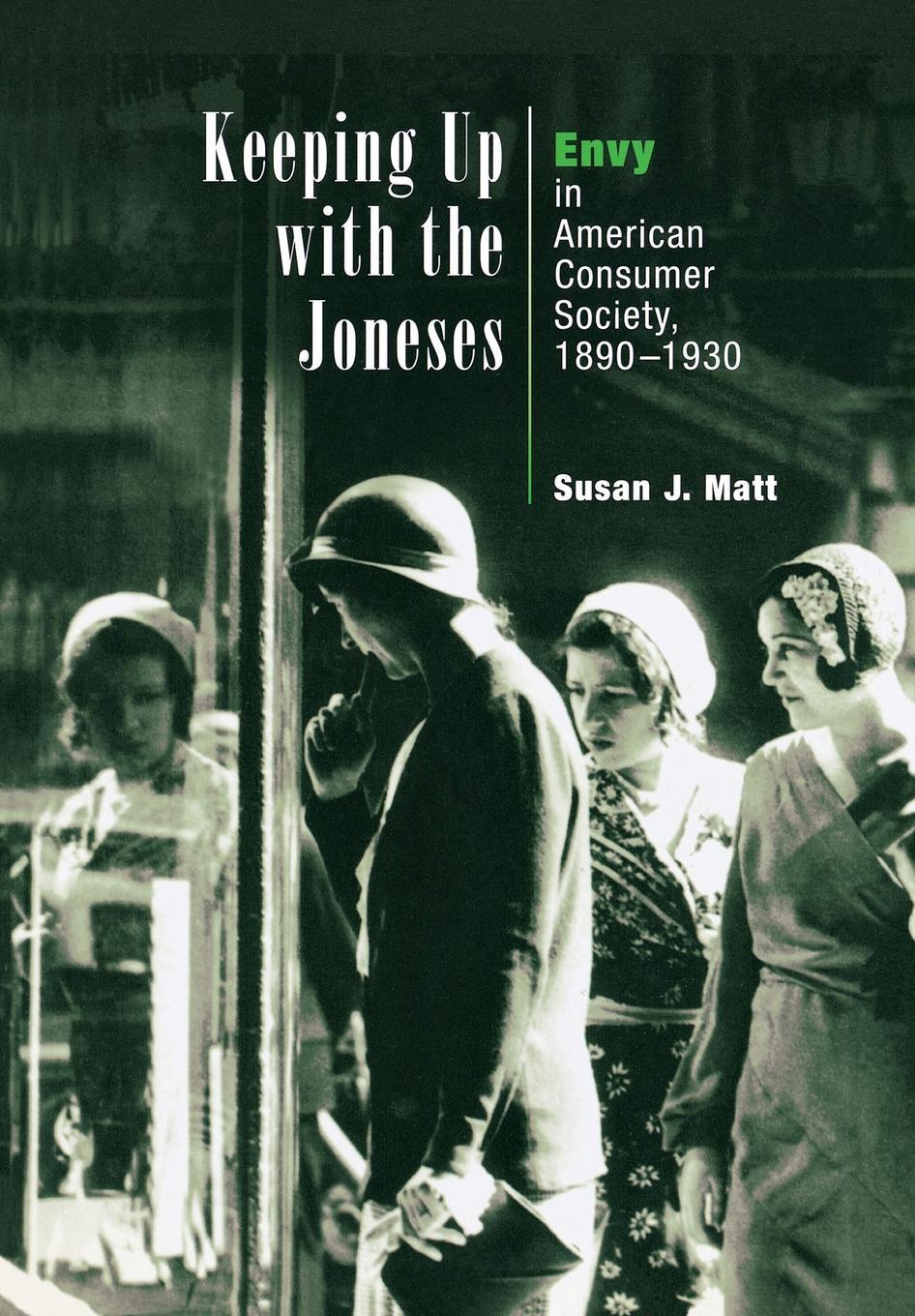
A century ago many Americans condemned envy as a destructive emotion and a sin. Today few Americans expect criticism when they express envy, and some commentators maintain that the emotion drives the economy. This shift in attitude is Susan Matt's central concern. Keeping up with the Joneses: Envy in American Consumer Society, 1890-1930 examines a key transition in the meaning of envy for the American middle class. Although people certainly have experienced envy throughout history, the expansion of the consumer economy at the turn of the twentieth century dramatically reshaped the social role of the emotion. Matt looks at how different groups within the middle class—men in white-collar jobs, bourgeois women, farm families, and children—responded to the transformation in social and cultural life.
Keeping Up with the Joneses traces how attitudes about envy changed as department stores, mail-order catalogs, magazines, movies, and advertising became more prevalent, and the mass production of imitation luxury goods offered middle- and working-class individuals the opportunity to emulate upper-class life. Between 1890 and 1910 moralists sought to tame envy and emulation in order to uphold a moral economy and preserve social order. They criticized the liberal-capitalist preoccupation with personal striving and advancement and praised the virtue of contentment. They admonished the bourgeoisie to be satisfied with their circumstances and cease yearning for their neighbors' possessions. After 1910 more secular commentators gained ground, repudiating the doctrine of contentment and rejecting the notion that there were divinely ordained limits on what each class should possess. They encouraged everyone to pursue the objects of desire. Envy was no longer a sin, but a valuable economic stimulant.
The expansion of consumer economy fostered such institutions as department stores and advertising firms, but it also depended on a transformation in attitudes and emotional codes. Matt explores the ways gender, geography, and age shaped this transformation. Bridging the history of emotions and the history of consumerism, she uncovers the connection between changing social norms and the growth of the consumer economy.
Before Memmo my notes were scattered across PDFs. Now a workspace pulls everything into one place — I see exactly what's still left to study.
Memmo's summaries are gold before exams. I don't have to re-read 800 pages two weeks before — just the important parts.
The AI chat has saved me the night before an exam more than once. I just keep asking until I get it — no waiting on a study group to reply.
The quizzes hit exactly what I need to know. Memmo tracks what I get stuck on — so I only practice what's worth it.
Flashcards with spaced repetition are magic. Memmo knows when I'm about to forget something and brings it back.
The AI podcasts are my favorite. I listen on my way to school and get a recap without sitting at a computer.

Handbok i kvalitativa metoder
281 kr

Hållbar utveckling: en introduktion för ingenjörer och andra problemlösare
334 kr

Brymans Samhällsvetenskapliga metoder
390 kr

Projektledning
491 kr

Den orättvisa hälsan: om socioekonomiska skillnader i hälsa och livslängd
326 kr

Vetenskapsteori för nybörjare
196 kr

Organizational Leadership
429 kr

På väg mot läraryrket
172 kr

Det sociala livet i skolan: Socialpsykologiska perspektiv
253 kr

Betygsättningens didaktik
151 kr

Personality
402 kr

Studying Leadership
404 kr

Managing Innovation
477 kr

Introduktion till samhällsvetenskaplig metod
347 kr

The Psychology of Sex and Gender
698 kr

Evidens och kunskap för socialt arbete
207 kr

Introduction to Leadership
605 kr