
Before Memmo my notes were scattered across PDFs. Now a workspace pulls everything into one place — I see exactly what's still left to study.
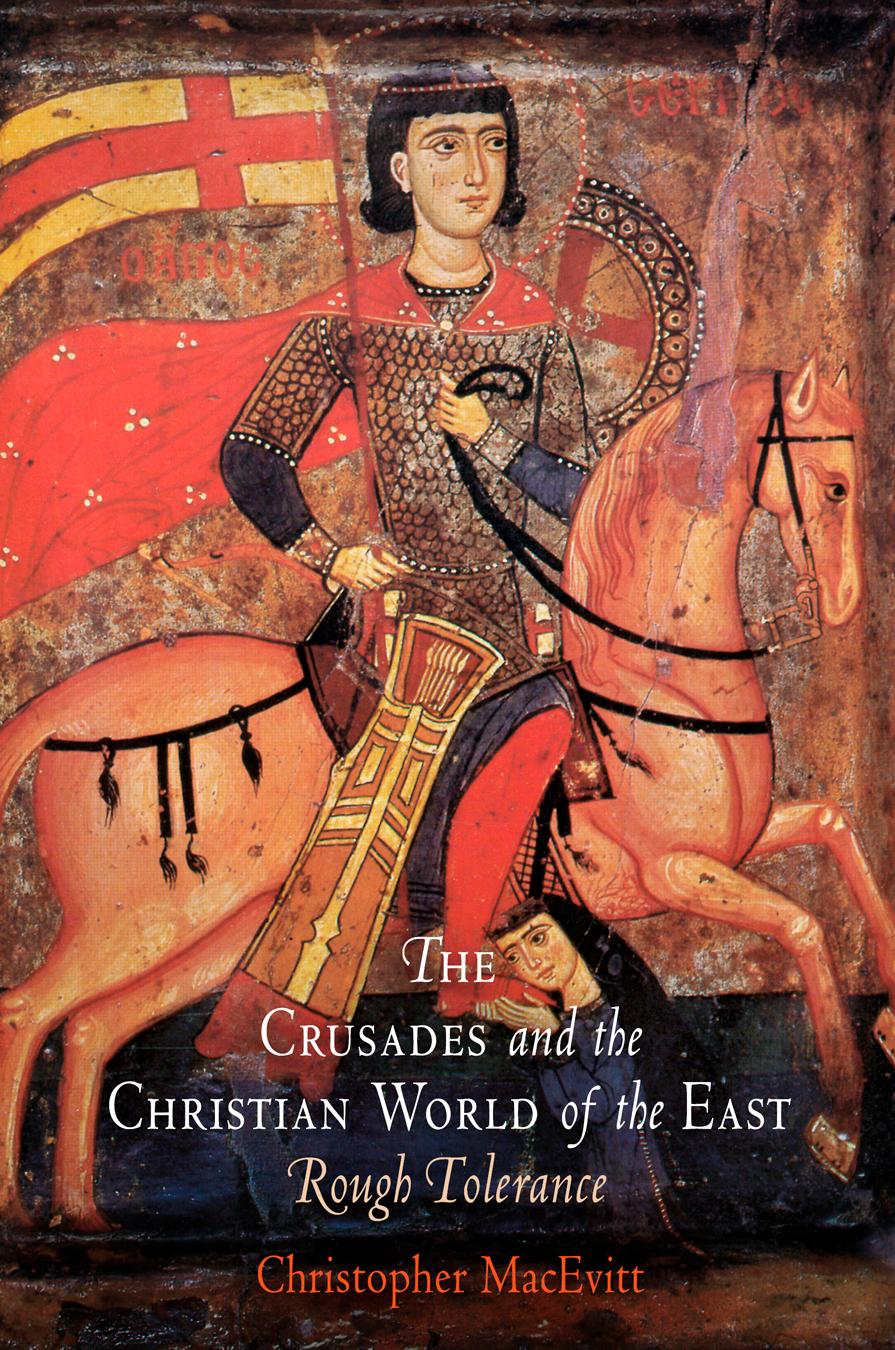
In the wake of Jerusalem's fall in 1099, the crusading armies of western Christians known as the Franks found themselves governing not only Muslims and Jews but also local Christians, whose culture and traditions were a world apart from their own. The crusader-occupied swaths of Syria and Palestine were home to many separate Christian communities: Greek and Syrian Orthodox, Armenians, and other sects with sharp doctrinal differences. How did these disparate groups live together under Frankish rule?
In The Crusades and the Christian World of the East, Christopher MacEvitt marshals an impressive array of literary, legal, artistic, and archeological evidence to demonstrate how crusader ideology and religious difference gave rise to a mode of coexistence he calls "rough tolerance." The twelfth-century Frankish rulers of the Levant and their Christian subjects were separated by language, religious practices, and beliefs. Yet western Christians showed little interest in such differences. Franks intermarried with local Christians and shared shrines and churches, but they did not hesitate to use military force against Christian communities. Rough tolerance was unlike other medieval modes of dealing with religious difference, and MacEvitt illuminates the factors that led to this striking divergence.
"It is commonplace to discuss the diversity of the Middle East in terms of Muslims, Jews, and Christians," MacEvitt writes, "yet even this simplifies its religious complexity." While most crusade history has focused on Christian-Muslim encounters, MacEvitt offers an often surprising account by examining the intersection of the Middle Eastern and Frankish Christian worlds during the century of the First Crusade.
Before Memmo my notes were scattered across PDFs. Now a workspace pulls everything into one place — I see exactly what's still left to study.
Memmo's summaries are gold before exams. I don't have to re-read 800 pages two weeks before — just the important parts.
The AI chat has saved me the night before an exam more than once. I just keep asking until I get it — no waiting on a study group to reply.
The quizzes hit exactly what I need to know. Memmo tracks what I get stuck on — so I only practice what's worth it.
Flashcards with spaced repetition are magic. Memmo knows when I'm about to forget something and brings it back.
The AI podcasts are my favorite. I listen on my way to school and get a recap without sitting at a computer.

Handbok i kvalitativa metoder
281 kr

Hållbar utveckling: en introduktion för ingenjörer och andra problemlösare
334 kr

Brymans Samhällsvetenskapliga metoder
390 kr

Projektledning
491 kr

Den orättvisa hälsan: om socioekonomiska skillnader i hälsa och livslängd
326 kr

Vetenskapsteori för nybörjare
196 kr

Organizational Leadership
429 kr

På väg mot läraryrket
172 kr

Det sociala livet i skolan: Socialpsykologiska perspektiv
253 kr

Betygsättningens didaktik
151 kr

Personality
402 kr

Studying Leadership
404 kr

Managing Innovation
477 kr

Introduktion till samhällsvetenskaplig metod
347 kr

The Psychology of Sex and Gender
698 kr

Evidens och kunskap för socialt arbete
207 kr

Introduction to Leadership
605 kr