
Before Memmo my notes were scattered across PDFs. Now a workspace pulls everything into one place — I see exactly what's still left to study.
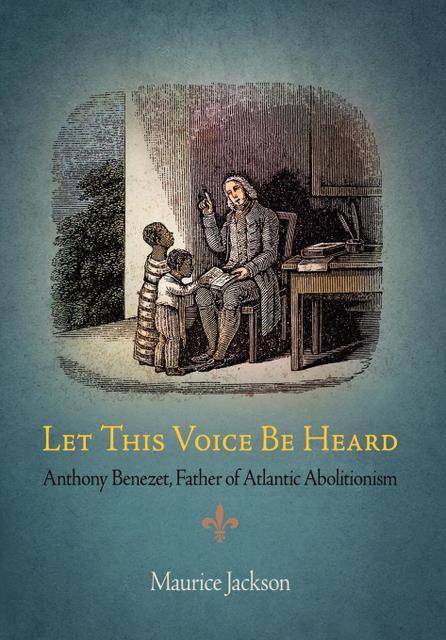
Anthony Benezet (1713-84), universally recognized by the leaders of the eighteenth-century antislavery movement as its founder, was born to a Huguenot family in Saint-Quentin, France. As a boy, Benezet moved to Holland, England, and, in 1731, Philadelphia, where he rose to prominence in the Quaker antislavery community.
In transforming Quaker antislavery sentiment into a broad-based transatlantic movement, Benezet translated ideas from diverse sources—Enlightenment philosophy, African travel narratives, Quakerism, practical life, and the Bible—into concrete action. He founded the African Free School in Philadelphia, and such future abolitionist leaders as Absalom Jones and James Forten studied at Benezet's school and spread his ideas to broad social groups. At the same time, Benezet's correspondents, including Benjamin Franklin, Benjamin Rush, Abbé Raynal, Granville Sharp, and John Wesley, gave his ideas an audience in the highest intellectual and political circles.
In this wide-ranging intellectual biography, Maurice Jackson demonstrates how Benezet mediated Enlightenment political and social thought, narratives of African life written by slave traders themselves, and the ideas and experiences of ordinary people to create a new antislavery critique. Benezet's use of travel narratives challenged proslavery arguments about an undifferentiated, "primitive" African society. Benezet's empirical evidence, laid on the intellectual scaffolding provided by the writings of Hutcheson, Wallace, and Montesquieu, had a profound influence, from the high-culture writings of the Marquis de Condorcet to the opinions of ordinary citizens. When the great antislavery spokesmen Jacques-Pierre Brissot in France and William Wilberforce in England rose to demand abolition of the slave trade, they read into the record of the French National Assembly and the British Parliament extensive unattributed quotations from Benezet's writings, a fitting tribute to the influence of his work.
Before Memmo my notes were scattered across PDFs. Now a workspace pulls everything into one place — I see exactly what's still left to study.
Memmo's summaries are gold before exams. I don't have to re-read 800 pages two weeks before — just the important parts.
The AI chat has saved me the night before an exam more than once. I just keep asking until I get it — no waiting on a study group to reply.
The quizzes hit exactly what I need to know. Memmo tracks what I get stuck on — so I only practice what's worth it.
Flashcards with spaced repetition are magic. Memmo knows when I'm about to forget something and brings it back.
The AI podcasts are my favorite. I listen on my way to school and get a recap without sitting at a computer.

Handbok i kvalitativa metoder
281 kr

Hållbar utveckling: en introduktion för ingenjörer och andra problemlösare
334 kr

Brymans Samhällsvetenskapliga metoder
390 kr

Projektledning
491 kr

Den orättvisa hälsan: om socioekonomiska skillnader i hälsa och livslängd
326 kr

Organizational Leadership
429 kr

Vetenskapsteori för nybörjare
196 kr

På väg mot läraryrket
172 kr

Det sociala livet i skolan: Socialpsykologiska perspektiv
253 kr

Betygsättningens didaktik
151 kr

Personality
402 kr

Studying Leadership
404 kr

Managing Innovation
477 kr

Introduktion till samhällsvetenskaplig metod
347 kr

The Psychology of Sex and Gender
698 kr

Evidens och kunskap för socialt arbete
207 kr

Introduction to Leadership
605 kr