
Before Memmo my notes were scattered across PDFs. Now a workspace pulls everything into one place — I see exactly what's still left to study.
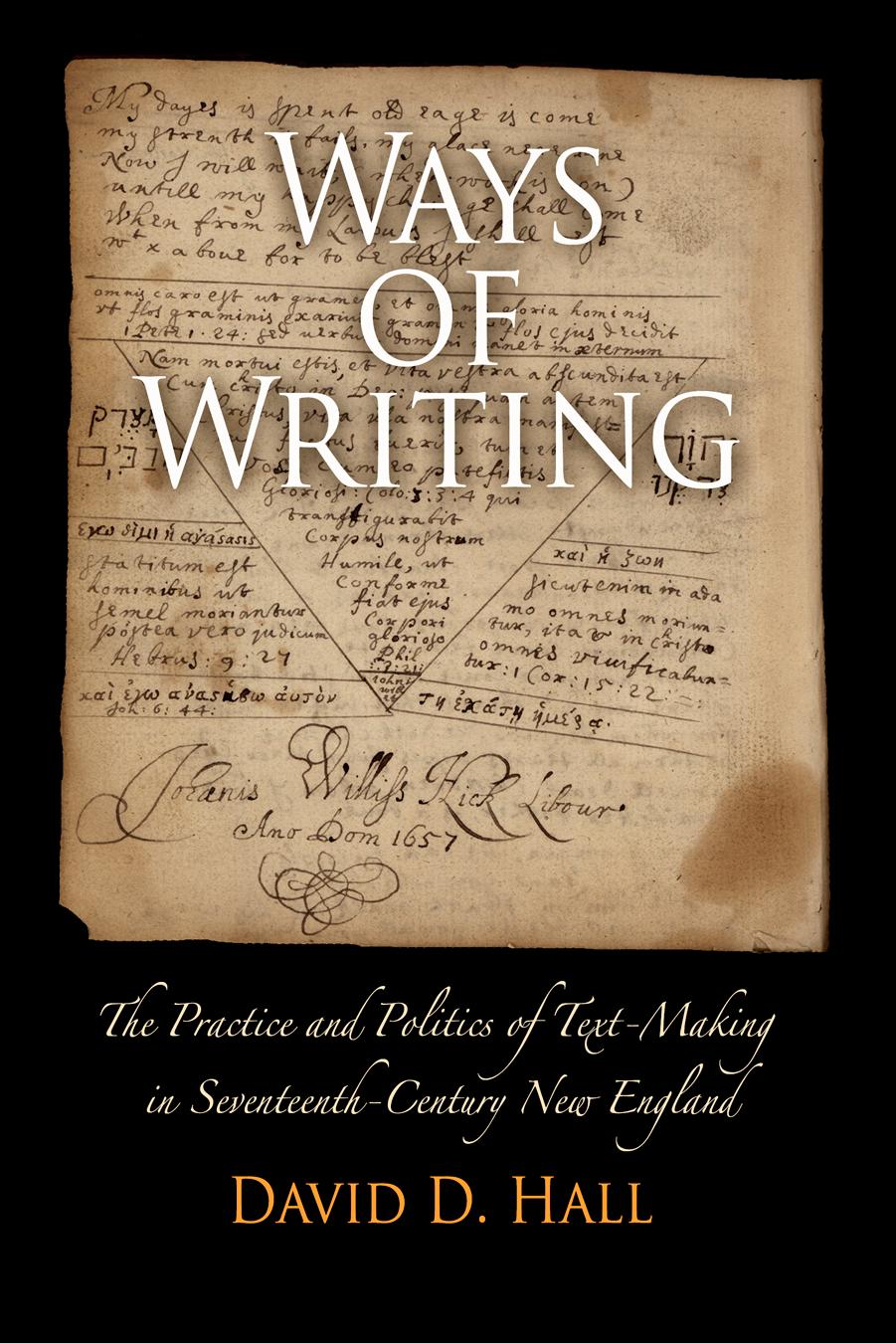
Writers abounded in seventeenth-century New England. From the moment of colonization and constantly thereafter, hundreds of people set pen to paper in the course of their lives, some to write letters that others recopied, some to compose sermons as part of their life work as ministers, dozens to attempt verse, and many more to narrate a remarkable experience, provide written testimony to a civil court, participate in a controversy, or keep some sort of records—and of these everyday forms of writing there was no limit.
Every colonial writer knew of two different modes of publication, each with its distinctive benefits and limitations. One was to entrust a manuscript to a printer who would set type and impose it on sheets of paper that were bound up into a book. The other was to make handwritten copies or have others make copies, possibly unauthorized. Among the colonists, the terms "publishing" and "book" referred to both of these technologies. Ways of Writing is about the making of texts in the seventeenth century, whether they were fashioned into printed books or circulated in handwritten form. The latter mode of publishing was remarkably common, yet it is much less understood or acknowledged than transmission in print. Indeed, certain writers, including famous ones such as John Winthrop and William Bradford, employed scribal publication almost exclusively; the Antimonian controversy of 1636-38 was carried out by this means until manuscripts relating to the struggle began to be printed in England.
Examining printed texts as well as those that were handwritten, David D. Hall explores the practices associated with anonymity, dedications, prefaces, errata, and the like. He also surveys the meaning of authority and authenticity, demonstrating how so many texts were prepared by intermediaries, not by authors, thus contributing to the history of "social" or collaborative authorship. Finally, he considers the political contexts that affected the transmission and publication of many texts, revealing that a space for dissent and criticism was already present in the colonies by the 1640s, a space exploited mainly by scribally published texts.
Before Memmo my notes were scattered across PDFs. Now a workspace pulls everything into one place — I see exactly what's still left to study.
Memmo's summaries are gold before exams. I don't have to re-read 800 pages two weeks before — just the important parts.
The AI chat has saved me the night before an exam more than once. I just keep asking until I get it — no waiting on a study group to reply.
The quizzes hit exactly what I need to know. Memmo tracks what I get stuck on — so I only practice what's worth it.
Flashcards with spaced repetition are magic. Memmo knows when I'm about to forget something and brings it back.
The AI podcasts are my favorite. I listen on my way to school and get a recap without sitting at a computer.

Handbok i kvalitativa metoder
281 kr

Hållbar utveckling: en introduktion för ingenjörer och andra problemlösare
334 kr

Brymans Samhällsvetenskapliga metoder
390 kr

Projektledning
491 kr

Den orättvisa hälsan: om socioekonomiska skillnader i hälsa och livslängd
326 kr

Organizational Leadership
429 kr

Vetenskapsteori för nybörjare
196 kr

På väg mot läraryrket
172 kr

Det sociala livet i skolan: Socialpsykologiska perspektiv
253 kr

Betygsättningens didaktik
151 kr

Personality
402 kr

Studying Leadership
404 kr

Managing Innovation
477 kr

Introduktion till samhällsvetenskaplig metod
347 kr

The Psychology of Sex and Gender
698 kr

Evidens och kunskap för socialt arbete
207 kr

Introduction to Leadership
605 kr