
Before Memmo my notes were scattered across PDFs. Now a workspace pulls everything into one place — I see exactly what's still left to study.
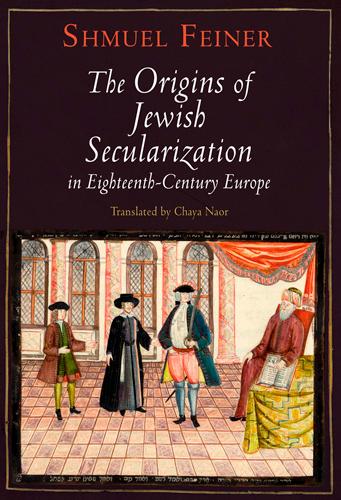
Throughout the eighteenth century, an ever-sharper distinction emerged between Jews of the old order and those who were self-consciously of a new world. As aspirations for liberation clashed with adherence to tradition, as national, ethnic, cultural, and other alternatives emerged and a long, circuitous search for identity began, it was no longer evident that the definition of Jewishness would be based on the beliefs and practices surrounding the study of the Torah.
In The Origins of Jewish Secularization in Eighteenth-Century Europe Shmuel Feiner reconstructs this evolution by listening to the voices of those who participated in the process and by deciphering its cultural codes and meanings. On the one hand, a great majority of observant Jews still accepted the authority of the Talmud and the leadership of the rabbis; on the other, there was a gradually more conspicuous minority of "Epicureans" and "freethinkers." As the ground shifted, each individual was marked according to his or her place on the path between faith and heresy, between devoutness and permissiveness or indifference.
Building on his award-winning Jewish Enlightenment, Feiner unfolds the story of critics of religion, mostly Ashkenazic Jews, who did not take active part in the secular intellectual revival known as the Haskalah. In open or concealed rebellion, Feiner's subjects lived primarily in the cities of western and central Europe—Altona-Hamburg, Amsterdam, London, Berlin, Breslau, and Prague. They participated as "fashionable" Jews adopting the habits and clothing of the surrounding Gentile society. Several also adopted the deist worldview of Enlightenment Europe, rejecting faith in revelation, the authority of Scripture, and the obligation to observe the commandments.
Peering into the synagogue, observing individuals in the coffeehouse or strolling the boulevards, and peeking into the bedroom, Feiner recovers forgotten critics of religion from both the margins and the center of Jewish discourse. His is a pioneering work on the origins of one of the most significant transformations of modern Jewish history.
Before Memmo my notes were scattered across PDFs. Now a workspace pulls everything into one place — I see exactly what's still left to study.
Memmo's summaries are gold before exams. I don't have to re-read 800 pages two weeks before — just the important parts.
The AI chat has saved me the night before an exam more than once. I just keep asking until I get it — no waiting on a study group to reply.
The quizzes hit exactly what I need to know. Memmo tracks what I get stuck on — so I only practice what's worth it.
Flashcards with spaced repetition are magic. Memmo knows when I'm about to forget something and brings it back.
The AI podcasts are my favorite. I listen on my way to school and get a recap without sitting at a computer.

Handbok i kvalitativa metoder
281 kr

Hållbar utveckling: en introduktion för ingenjörer och andra problemlösare
334 kr

Brymans Samhällsvetenskapliga metoder
390 kr

Projektledning
491 kr

Den orättvisa hälsan: om socioekonomiska skillnader i hälsa och livslängd
326 kr

Vetenskapsteori för nybörjare
196 kr

Organizational Leadership
429 kr

På väg mot läraryrket
172 kr

Det sociala livet i skolan: Socialpsykologiska perspektiv
253 kr

Betygsättningens didaktik
151 kr

Personality
402 kr

Studying Leadership
404 kr

Managing Innovation
477 kr

Introduktion till samhällsvetenskaplig metod
347 kr

The Psychology of Sex and Gender
698 kr

Evidens och kunskap för socialt arbete
207 kr

Introduction to Leadership
605 kr