
Before Memmo my notes were scattered across PDFs. Now a workspace pulls everything into one place — I see exactly what's still left to study.
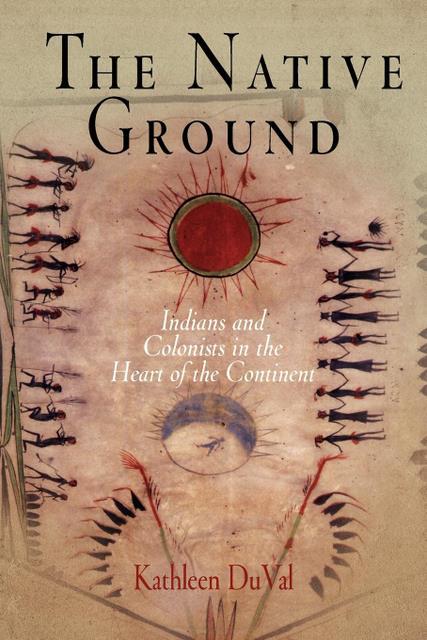
In The Native Ground, Kathleen DuVal argues that it was Indians rather than European would-be colonizers who were more often able to determine the form and content of the relations between the two groups. Along the banks of the Arkansas and Mississippi rivers, far from Paris, Madrid, and London, European colonialism met neither accommodation nor resistance but incorporation. Rather than being colonized, Indians drew European empires into local patterns of land and resource allocation, sustenance, goods exchange, gender relations, diplomacy, and warfare. Placing Indians at the center of the story, DuVal shows both their diversity and our contemporary tendency to exaggerate the influence of Europeans in places far from their centers of power. Europeans were often more dependent on Indians than Indians were on them.
Now the states of Arkansas, Oklahoma, Kansas, and Colorado, this native ground was originally populated by indigenous peoples, became part of the French and Spanish empires, and in 1803 was bought by the United States in the Louisiana Purchase. Drawing on archaeology and oral history, as well as documents in English, French, and Spanish, DuVal chronicles the successive migrations of Indians and Europeans to the area from precolonial times through the 1820s. These myriad native groups—Mississippians, Quapaws, Osages, Chickasaws, Caddos, and Cherokees—and the waves of Europeans all competed with one another for control of the region.
Only in the nineteenth century did outsiders initiate a future in which one people would claim exclusive ownership of the mid-continent. After the War of 1812, these settlers came in numbers large enough to overwhelm the region's inhabitants and reject the early patterns of cross-cultural interdependence. As citizens of the United States, they persuaded the federal government to muster its resources on behalf of their dreams of landholding and citizenship.
With keen insight and broad vision, Kathleen DuVal retells the story of Indian and European contact in a more complex and, ultimately, more satisfactory way.
Before Memmo my notes were scattered across PDFs. Now a workspace pulls everything into one place — I see exactly what's still left to study.
Memmo's summaries are gold before exams. I don't have to re-read 800 pages two weeks before — just the important parts.
The AI chat has saved me the night before an exam more than once. I just keep asking until I get it — no waiting on a study group to reply.
The quizzes hit exactly what I need to know. Memmo tracks what I get stuck on — so I only practice what's worth it.
Flashcards with spaced repetition are magic. Memmo knows when I'm about to forget something and brings it back.
The AI podcasts are my favorite. I listen on my way to school and get a recap without sitting at a computer.

Handbok i kvalitativa metoder
281 kr

Hållbar utveckling: en introduktion för ingenjörer och andra problemlösare
334 kr

Brymans Samhällsvetenskapliga metoder
390 kr

Projektledning
491 kr

Den orättvisa hälsan: om socioekonomiska skillnader i hälsa och livslängd
326 kr

Organizational Leadership
429 kr

Vetenskapsteori för nybörjare
196 kr

På väg mot läraryrket
172 kr

Det sociala livet i skolan: Socialpsykologiska perspektiv
253 kr

Betygsättningens didaktik
151 kr

Personality
402 kr

Studying Leadership
404 kr

Managing Innovation
477 kr

Introduktion till samhällsvetenskaplig metod
347 kr

The Psychology of Sex and Gender
698 kr

Evidens och kunskap för socialt arbete
207 kr

Introduction to Leadership
605 kr