
Before Memmo my notes were scattered across PDFs. Now a workspace pulls everything into one place — I see exactly what's still left to study.
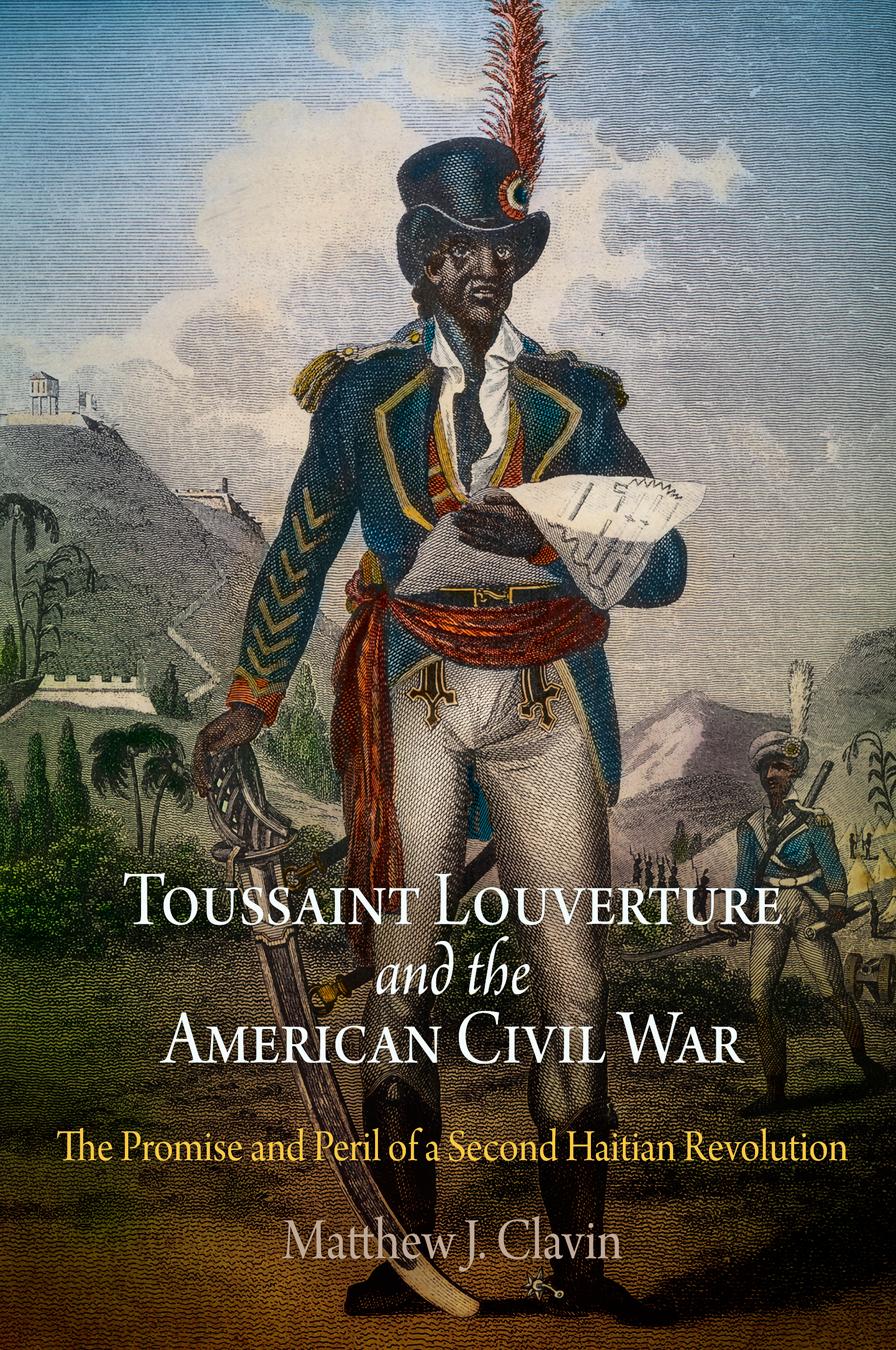
At the end of the eighteenth century, a massive slave revolt rocked French Saint Domingue, the most profitable European colony in the Americas. Under the leadership of the charismatic former slave François Dominique Toussaint Louverture, a disciplined and determined republican army, consisting almost entirely of rebel slaves, defeated all of its rivals and restored peace to the embattled territory. The slave uprising that we now refer to as the Haitian Revolution concluded on January 1, 1804, with the establishment of Haiti, the first "black republic" in the Western Hemisphere.
The Haitian Revolution cast a long shadow over the Atlantic world. In the United States, according to Matthew J. Clavin, there emerged two competing narratives that vied for the revolution's legacy. One emphasized vengeful African slaves committing unspeakable acts of violence against white men, women, and children. The other was the story of an enslaved people who, under the leadership of Louverture, vanquished their oppressors in an effort to eradicate slavery and build a new nation.
Toussaint Louverture and the American Civil War examines the significance of these competing narratives in American society on the eve of and during the Civil War. Clavin argues that, at the height of the longstanding conflict between North and South, Louverture and the Haitian Revolution were resonant, polarizing symbols, which antislavery and proslavery groups exploited both to provoke a violent confrontation and to determine the fate of slavery in the United States. In public orations and printed texts, African Americans and their white allies insisted that the Civil War was a second Haitian Revolution, a bloody conflict in which thousands of armed bondmen, "American Toussaints," would redeem the republic by securing the abolition of slavery and proving the equality of the black race. Southern secessionists and northern anti-abolitionists responded by launching a cultural counterrevolution to prevent a second Haitian Revolution from taking place.
Before Memmo my notes were scattered across PDFs. Now a workspace pulls everything into one place — I see exactly what's still left to study.
Memmo's summaries are gold before exams. I don't have to re-read 800 pages two weeks before — just the important parts.
The AI chat has saved me the night before an exam more than once. I just keep asking until I get it — no waiting on a study group to reply.
The quizzes hit exactly what I need to know. Memmo tracks what I get stuck on — so I only practice what's worth it.
Flashcards with spaced repetition are magic. Memmo knows when I'm about to forget something and brings it back.
The AI podcasts are my favorite. I listen on my way to school and get a recap without sitting at a computer.

Handbok i kvalitativa metoder
281 kr

Hållbar utveckling: en introduktion för ingenjörer och andra problemlösare
334 kr

Brymans Samhällsvetenskapliga metoder
390 kr

Projektledning
491 kr

Den orättvisa hälsan: om socioekonomiska skillnader i hälsa och livslängd
326 kr

Vetenskapsteori för nybörjare
196 kr

Organizational Leadership
429 kr

På väg mot läraryrket
172 kr

Det sociala livet i skolan: Socialpsykologiska perspektiv
253 kr

Betygsättningens didaktik
151 kr

Personality
402 kr

Studying Leadership
404 kr

Managing Innovation
477 kr

Introduktion till samhällsvetenskaplig metod
347 kr

The Psychology of Sex and Gender
698 kr

Evidens och kunskap för socialt arbete
207 kr

Introduction to Leadership
605 kr