
Before Memmo my notes were scattered across PDFs. Now a workspace pulls everything into one place — I see exactly what's still left to study.
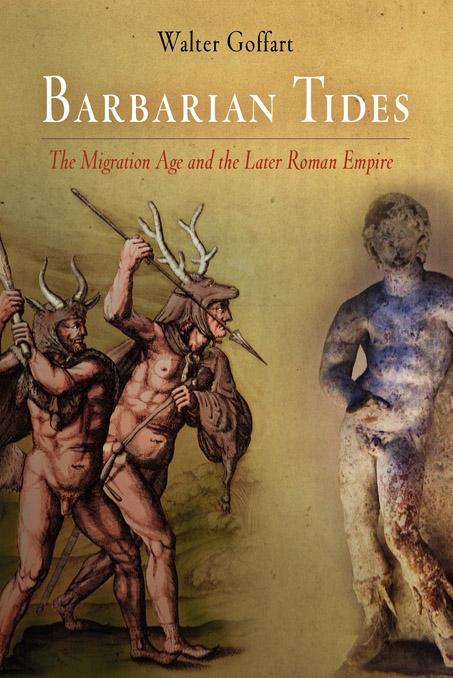
The Migration Age is still envisioned as an onrush of expansionary "Germans" pouring unwanted into the Roman Empire and subjecting it to pressures so great that its western parts collapsed under the weight. Further developing the themes set forth in his classic Barbarians and Romans, Walter Goffart dismantles this grand narrative, shaking the barbarians of late antiquity out of this "Germanic" setting and reimagining the role of foreigners in the Later Roman Empire.
The Empire was not swamped by a migratory Germanic flood for the simple reason that there was no single ancient Germanic civilization to be transplanted onto ex-Roman soil. Since the sixteenth century, the belief that purposeful Germans existed in parallel with the Romans has been a fixed point in European history. Goffart uncovers the origins of this historical untruth and argues that any projection of a modern Germany out of an ancient one is illusory. Rather, the multiplicity of northern peoples once living on the edges of the Empire participated with the Romans in the larger stirrings of late antiquity. Most relevant among these was the long militarization that gripped late Roman society concurrently with its Christianization.
If the fragmented foreign peoples with which the Empire dealt gave Rome an advantage in maintaining its ascendancy, the readiness to admit military talents of any social origin to positions of leadership opened the door of imperial service to immigrants from beyond its frontiers. Many barbarians were settled in the provinces without dislodging the Roman residents or destabilizing landownership; some were even incorporated into the ruling families of the Empire. The outcome of this process, Goffart argues, was a society headed by elites of soldiers and Christian clergy—one we have come to call medieval.
Before Memmo my notes were scattered across PDFs. Now a workspace pulls everything into one place — I see exactly what's still left to study.
Memmo's summaries are gold before exams. I don't have to re-read 800 pages two weeks before — just the important parts.
The AI chat has saved me the night before an exam more than once. I just keep asking until I get it — no waiting on a study group to reply.
The quizzes hit exactly what I need to know. Memmo tracks what I get stuck on — so I only practice what's worth it.
Flashcards with spaced repetition are magic. Memmo knows when I'm about to forget something and brings it back.
The AI podcasts are my favorite. I listen on my way to school and get a recap without sitting at a computer.

Handbok i kvalitativa metoder
281 kr

Hållbar utveckling: en introduktion för ingenjörer och andra problemlösare
334 kr

Brymans Samhällsvetenskapliga metoder
390 kr

Projektledning
491 kr

Den orättvisa hälsan: om socioekonomiska skillnader i hälsa och livslängd
326 kr

Vetenskapsteori för nybörjare
196 kr

Organizational Leadership
429 kr

På väg mot läraryrket
172 kr

Det sociala livet i skolan: Socialpsykologiska perspektiv
253 kr

Betygsättningens didaktik
151 kr

Personality
402 kr

Studying Leadership
404 kr

Managing Innovation
477 kr

Introduktion till samhällsvetenskaplig metod
347 kr

The Psychology of Sex and Gender
698 kr

Evidens och kunskap för socialt arbete
207 kr

Introduction to Leadership
605 kr