
Before Memmo my notes were scattered across PDFs. Now a workspace pulls everything into one place — I see exactly what's still left to study.
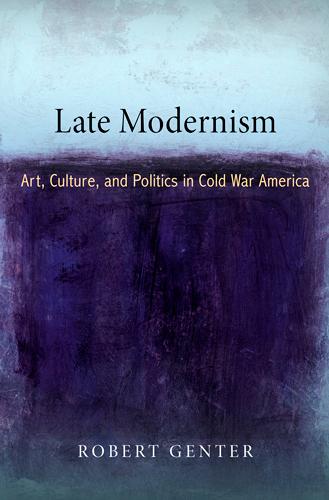
In the thirty years after World War II, American intellectual and artistic life changed as dramatically as did the rest of society. Gone were the rebellious lions of modernism—Joyce, Picasso, Stravinsky—and nearing exhaustion were those who took up their mantle as abstract expressionism gave way to pop art, and the barren formalism associated with the so-called high modernists wilted before the hothouse cultural brew of the 1960s. According to conventional thinking, it was around this time that postmodernism with its characteristic skepticism and relativism was born.
In Late Modernism, historian Robert Genter remaps the landscape of American modernism in the early decades of the Cold War, tracing the combative debate among artists, writers, and intellectuals over the nature of the aesthetic form in an age of mass politics and mass culture. Dispensing with traditional narratives that present this moment as marking the exhaustion of modernism, Genter argues instead that the 1950s were the apogee of the movement, as American practitioners—abstract expressionists, Beat poets, formalist critics, color-field painters, and critical theorists, among others—debated the relationship between form and content, tradition and innovation, aesthetics and politics. In this compelling work of intellectual and cultural history Genter presents an invigorated tradition of late modernism, centered on the work of Kenneth Burke, Ralph Ellison, C. Wright Mills, David Riesman, Jasper Johns, Norman Brown, and James Baldwin, a tradition that overcame the conservative and reactionary politics of competing modernist practitioners and paved the way for the postmodern turn of the 1960s.
Before Memmo my notes were scattered across PDFs. Now a workspace pulls everything into one place — I see exactly what's still left to study.
Memmo's summaries are gold before exams. I don't have to re-read 800 pages two weeks before — just the important parts.
The AI chat has saved me the night before an exam more than once. I just keep asking until I get it — no waiting on a study group to reply.
The quizzes hit exactly what I need to know. Memmo tracks what I get stuck on — so I only practice what's worth it.
Flashcards with spaced repetition are magic. Memmo knows when I'm about to forget something and brings it back.
The AI podcasts are my favorite. I listen on my way to school and get a recap without sitting at a computer.

Handbok i kvalitativa metoder
281 kr

Hållbar utveckling: en introduktion för ingenjörer och andra problemlösare
334 kr

Brymans Samhällsvetenskapliga metoder
390 kr

Projektledning
491 kr

Den orättvisa hälsan: om socioekonomiska skillnader i hälsa och livslängd
326 kr

Organizational Leadership
429 kr

Vetenskapsteori för nybörjare
196 kr

På väg mot läraryrket
172 kr

Det sociala livet i skolan: Socialpsykologiska perspektiv
253 kr

Betygsättningens didaktik
151 kr

Personality
402 kr

Studying Leadership
404 kr

Managing Innovation
477 kr

Introduktion till samhällsvetenskaplig metod
347 kr

The Psychology of Sex and Gender
698 kr

Evidens och kunskap för socialt arbete
207 kr

Introduction to Leadership
605 kr