
Before Memmo my notes were scattered across PDFs. Now a workspace pulls everything into one place — I see exactly what's still left to study.
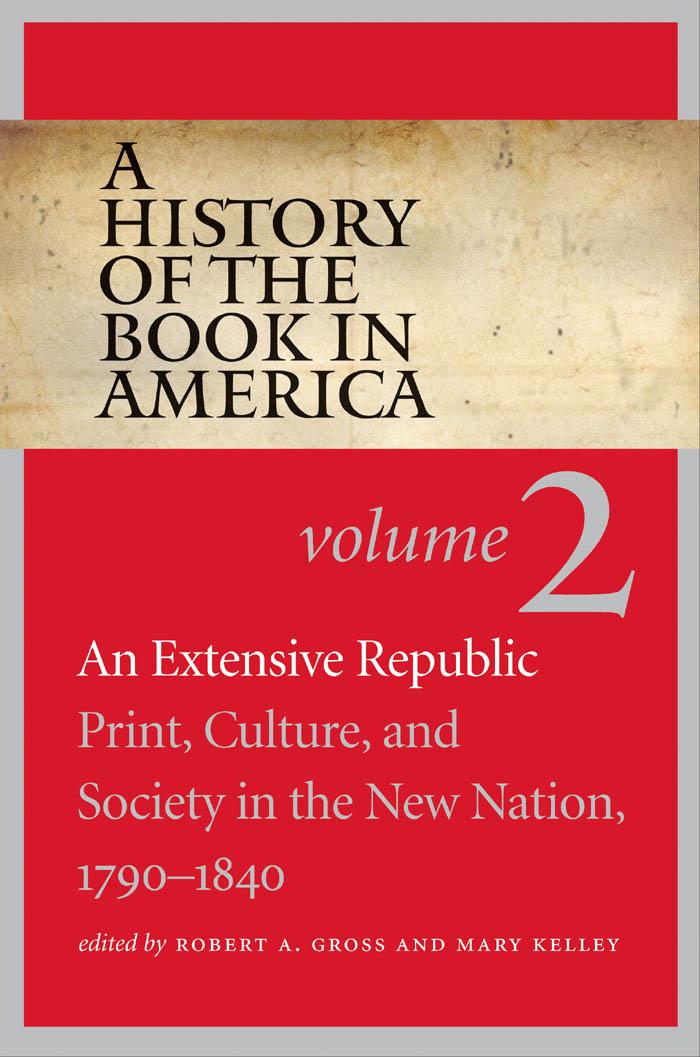
Volume Two of A History of the Book in America documents the development of a distinctive culture of print in the new American republic.
Between 1790 and 1840 printing and publishing expanded, and literate publics provided a ready market for novels, almanacs, newspapers, tracts, and periodicals. Government, business, and reform drove the dissemination of print. Through laws and subsidies, state and federal authorities promoted an informed citizenry. Entrepreneurs responded to rising demand by investing in new technologies and altering the conduct of publishing. Voluntary societies launched libraries, lyceums, and schools, and relied on print to spread religion, redeem morals, and advance benevolent goals. Out of all this ferment emerged new and diverse communities of citizens linked together in a decentralized print culture where citizenship meant literacy and print meant power. Yet in a diverse and far-flung nation, regional differences persisted, and older forms of oral and handwritten communication offered alternatives to print. The early republic was a world of mixed media.
Contributors:
Elizabeth Barnes, College of William and Mary
Georgia B. Barnhill, American Antiquarian Society
John L. Brooke, The Ohio State University
Dona Brown, University of Vermont
Richard D. Brown, University of Connecticut
Kenneth E. Carpenter, Harvard University Libraries
Scott E. Casper, University of Nevada, Reno
Mary Kupiec Cayton, Miami University
Joanne Dobson, Brewster, New York
James N. Green, Library Company of Philadelphia
Dean Grodzins, Massachusetts Historical Society
Robert A. Gross, University of Connecticut
Grey Gundaker, College of William and Mary
Leon Jackson, University of South Carolina
Richard R. John, Columbia University
Mary Kelley, University of Michigan
Jack Larkin, Clark University
David Leverenz, University of Florida
Meredith L. McGill, Rutgers University
Charles Monaghan, Charlottesville, Virginia
E. Jennifer Monaghan, Brooklyn College of The City University of New York
Gerald F. Moran, University of Michigan-Dearborn
Karen Nipps, Harvard University
David Paul Nord, Indiana University
Barry O'Connell, Amherst College
Jeffrey L. Pasley, University of Missouri-Columbia
William S. Pretzer, Central Michigan University
A. Gregg Roeber, Pennsylvania State University
David S. Shields, University of South Carolina
Andie Tucher, Columbia University
Maris A. Vinovskis, University of Michigan
Sandra A. Zagarell, Oberlin College
Before Memmo my notes were scattered across PDFs. Now a workspace pulls everything into one place — I see exactly what's still left to study.
Memmo's summaries are gold before exams. I don't have to re-read 800 pages two weeks before — just the important parts.
The AI chat has saved me the night before an exam more than once. I just keep asking until I get it — no waiting on a study group to reply.
The quizzes hit exactly what I need to know. Memmo tracks what I get stuck on — so I only practice what's worth it.
Flashcards with spaced repetition are magic. Memmo knows when I'm about to forget something and brings it back.
The AI podcasts are my favorite. I listen on my way to school and get a recap without sitting at a computer.

Handbok i kvalitativa metoder
281 kr

Hållbar utveckling: en introduktion för ingenjörer och andra problemlösare
334 kr

Brymans Samhällsvetenskapliga metoder
390 kr

Projektledning
491 kr

Den orättvisa hälsan: om socioekonomiska skillnader i hälsa och livslängd
326 kr

Vetenskapsteori för nybörjare
196 kr

Organizational Leadership
429 kr

På väg mot läraryrket
172 kr

Det sociala livet i skolan: Socialpsykologiska perspektiv
253 kr

Betygsättningens didaktik
151 kr

Personality
402 kr

Studying Leadership
404 kr

Managing Innovation
477 kr

Introduktion till samhällsvetenskaplig metod
347 kr

The Psychology of Sex and Gender
698 kr

Evidens och kunskap för socialt arbete
207 kr

Introduction to Leadership
605 kr