
Before Memmo my notes were scattered across PDFs. Now a workspace pulls everything into one place — I see exactly what's still left to study.
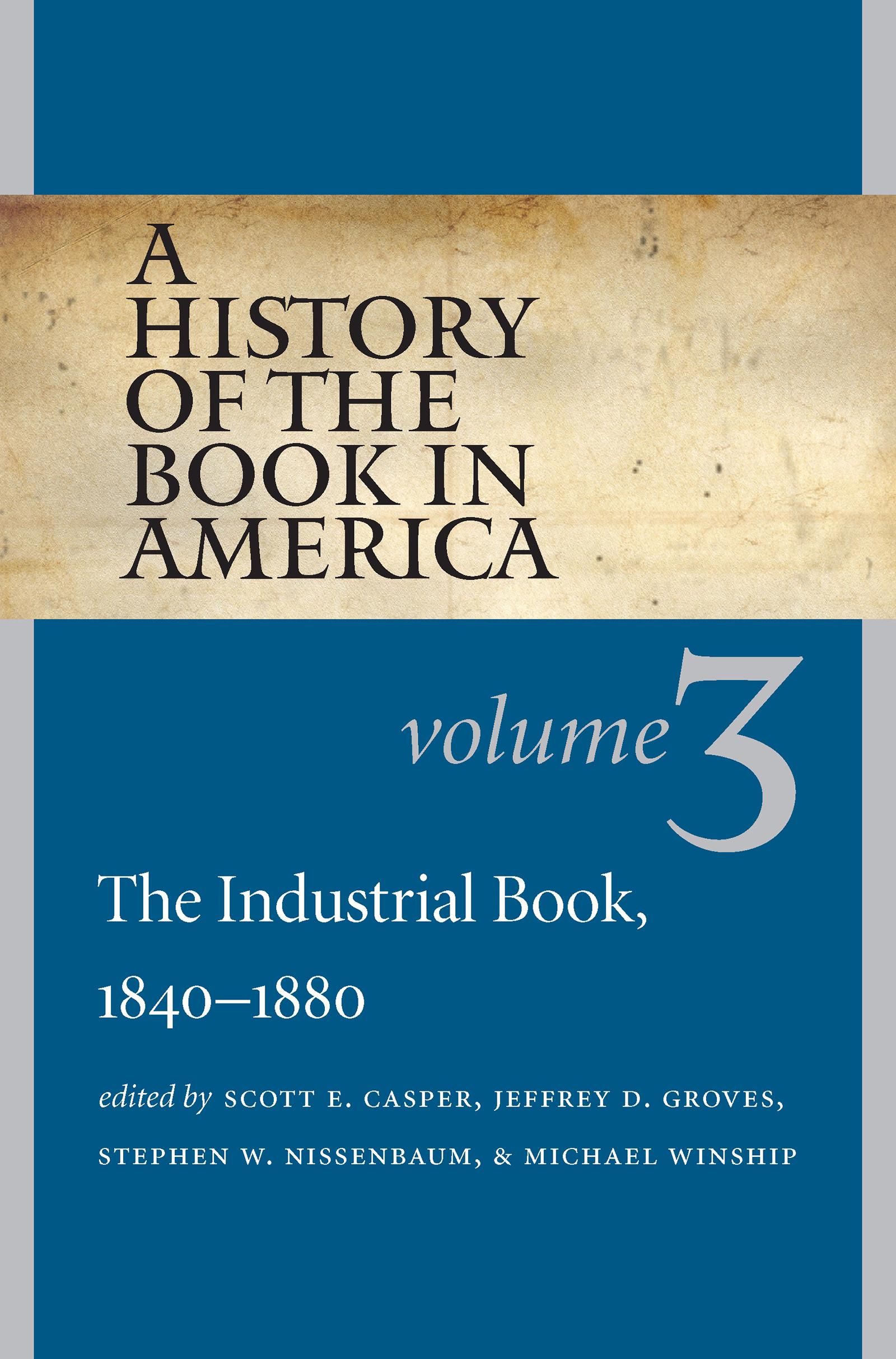
Volume 3 of A History of the Book in America narrates the emergence of a national book trade in the nineteenth century, as changes in manufacturing, distribution, and publishing conditioned, and were conditioned by, the evolving practices of authors and readers. Chapters trace the ascent of the “industrial book” — a manufactured product arising from the gradual adoption of new printing, binding, and illustration technologies and encompassing the profusion of nineteenth-century printed materials — which relied on nationwide networks of financing, transportation, and communication. In tandem with increasing educational opportunities and rising literacy rates, the industrial book encouraged new sites of reading; gave voice to diverse communities of interest through periodicals, broadsides, pamphlets, and other printed forms; and played a vital role in the development of American culture.
Contributors:
Susan Belasco, University of Nebraska
Candy Gunther Brown, Indiana University
Kenneth E. Carpenter, Newton Center, Massachusetts
Scott E. Casper, University of Nevada, Reno
Jeannine Marie DeLombard, University of Toronto
Ann Fabian, Rutgers University
Jeffrey D. Groves, Harvey Mudd College
Paul C. Gutjahr, Indiana University
David D. Hall, Harvard Divinity School
David M. Henkin, University of California, Berkeley
Bruce Laurie, University of Massachusetts, Amherst
Eric Lupfer, Humanities Texas
Meredith L. McGill, Rutgers University
John Nerone, University of Illinois
Stephen W. Nissenbaum, University of Massachusetts
Lloyd Pratt, Michigan State University
Barbara Sicherman, Trinity College
Louise Stevenson, Franklin & Marshall College
Amy M. Thomas, Montana State University
Tamara Plakins Thornton, State University of New York, Buffalo
Susan S. Williams, Ohio State University
Michael Winship, University of Texas at Austin
Before Memmo my notes were scattered across PDFs. Now a workspace pulls everything into one place — I see exactly what's still left to study.
Memmo's summaries are gold before exams. I don't have to re-read 800 pages two weeks before — just the important parts.
The AI chat has saved me the night before an exam more than once. I just keep asking until I get it — no waiting on a study group to reply.
The quizzes hit exactly what I need to know. Memmo tracks what I get stuck on — so I only practice what's worth it.
Flashcards with spaced repetition are magic. Memmo knows when I'm about to forget something and brings it back.
The AI podcasts are my favorite. I listen on my way to school and get a recap without sitting at a computer.

Handbok i kvalitativa metoder
281 kr

Hållbar utveckling: en introduktion för ingenjörer och andra problemlösare
334 kr

Brymans Samhällsvetenskapliga metoder
390 kr

Projektledning
491 kr

Den orättvisa hälsan: om socioekonomiska skillnader i hälsa och livslängd
326 kr

Vetenskapsteori för nybörjare
196 kr

Organizational Leadership
429 kr

På väg mot läraryrket
172 kr

Det sociala livet i skolan: Socialpsykologiska perspektiv
253 kr

Betygsättningens didaktik
151 kr

Personality
402 kr

Studying Leadership
404 kr

Managing Innovation
477 kr

Introduktion till samhällsvetenskaplig metod
347 kr

The Psychology of Sex and Gender
698 kr

Evidens och kunskap för socialt arbete
207 kr

Introduction to Leadership
605 kr