
Before Memmo my notes were scattered across PDFs. Now a workspace pulls everything into one place — I see exactly what's still left to study.
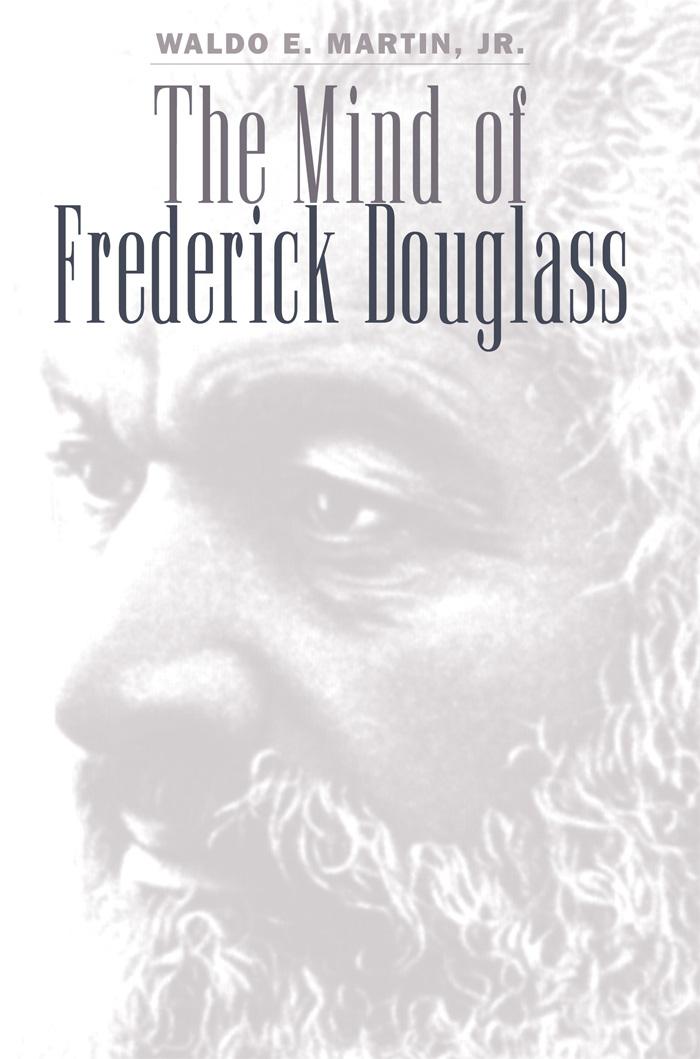
Frederick Douglass was unquestionably the foremost black American of the nineteenth century. The extraordinary life of this former slave turned abolitionist orator, newspaper editor, social reformer, race leader, and Republican party advocate has inspired many biographies over the years. This, however, is the first full–scale study of the origins, contours, development, and significance of Douglass’s thought.
Brilliant and to a large degree self–taught, Douglass personified intellectual activism; he possessed a sincere concern for the uses and consequences of ideas. Both his people’s struggle for liberation and his individual experiences, which he envisioned as symbolizing that struggle, provided the basis and structure for his intellectual maturation. As a representative American, he internalized and, thus, reflected major currents in the contemporary American mind. As a representative Afro–American, he revealed in his thinking the deep–seated influence of race on Euro–American, Afro–American, or, broadly conceived, American consciousness. He sought to resolve in his thinking the dynamic tension between his identities as a black and as an American.
Martin assesses not only how Douglass dealt with this enduring conflict, but also the extent of his success. An inveterate belief in a universal and egalitarian humanism unified Douglass’s thought. This grand organizing principle reflected his intellectual roots in the three major traditions of mid–nineteenth–century American thought: Protestant Christianity, the Enlightenment, and romanticism. Together, these influences buttressed his characteristic optimism.
Although nineteenth–century Afro–American intellectual history derived its central premises and outlook from concurrent American intellectual history, it offered a searching critique of the latter and its ramifications. How to square America’s rhetoric of freedom, equality, and justice with the reality of slavery and racial prejudice was the difficulty that confronted such Afro–American thinkers as Douglass.
Before Memmo my notes were scattered across PDFs. Now a workspace pulls everything into one place — I see exactly what's still left to study.
Memmo's summaries are gold before exams. I don't have to re-read 800 pages two weeks before — just the important parts.
The AI chat has saved me the night before an exam more than once. I just keep asking until I get it — no waiting on a study group to reply.
The quizzes hit exactly what I need to know. Memmo tracks what I get stuck on — so I only practice what's worth it.
Flashcards with spaced repetition are magic. Memmo knows when I'm about to forget something and brings it back.
The AI podcasts are my favorite. I listen on my way to school and get a recap without sitting at a computer.

Handbok i kvalitativa metoder
281 kr

Hållbar utveckling: en introduktion för ingenjörer och andra problemlösare
334 kr

Brymans Samhällsvetenskapliga metoder
390 kr

Projektledning
491 kr

Den orättvisa hälsan: om socioekonomiska skillnader i hälsa och livslängd
326 kr

Vetenskapsteori för nybörjare
196 kr

Organizational Leadership
429 kr

På väg mot läraryrket
172 kr

Det sociala livet i skolan: Socialpsykologiska perspektiv
253 kr

Betygsättningens didaktik
151 kr

Personality
402 kr

Studying Leadership
404 kr

Managing Innovation
477 kr

Introduktion till samhällsvetenskaplig metod
347 kr

The Psychology of Sex and Gender
698 kr

Evidens och kunskap för socialt arbete
207 kr

Introduction to Leadership
605 kr