
Before Memmo my notes were scattered across PDFs. Now a workspace pulls everything into one place — I see exactly what's still left to study.
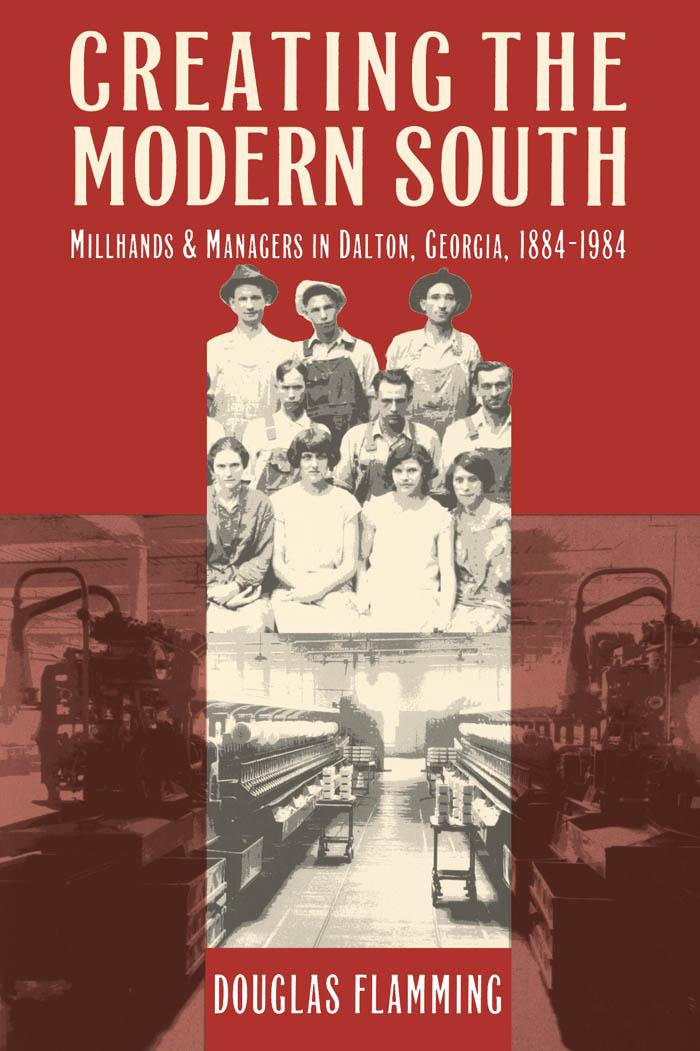
Built by local entrepreneurs during Dixie’s Cotton Mill in Dalton, Georgia, acted as a magnet for thousands of newly impoverished white farm families who moved to the factory and its company-owned village from the surrounding countryside. In Creating the Modern South, Douglas Flamming examines one hundred years in the life of the mill and the town, providing a uniquely perceptive view of Dixie’s social and economic transformation.
With a sophisticated blend of statistical analysis, oral history interviews, and a variety of such traditional sources as company records, federal census schedules, and local newspapers, Flamming weaves an empirically convincing, richly embroidered description of life in a southern cotton-mill village. Whereas some historians have characterized southern textile workers as slaves in an “industrial plantation” system, and others have described the creation of an autonomous culture of opposition to management, Flamming focuses on the intimate, ever-changing, and potentially explosive relationship between millhands and managers, effectively demonstrating that both groups acted as architects of the emerging industrial order.
The Crown Mill story addresses important issues of social change faced by the modernizing South: the origins of small-town industry, worker migration from farm to factory, and the rise of an industrial elite; the adaptation of rural customs to an industrial environment and the development of a working-class culture; the advent of mill-village paternalism and the dilemmas of unionization; the impact of World War II on southern life; the collapse of paternalism and the antilabor backlash of the 1950s; and the decline of Dixie’s cotton mills in the burgeoning Sunbelt economy. Ultimately, the history of the Crown Mill community both underscores the human dimensions of industrialization and places the New South in the broader context of an industrialized America.
Before Memmo my notes were scattered across PDFs. Now a workspace pulls everything into one place — I see exactly what's still left to study.
Memmo's summaries are gold before exams. I don't have to re-read 800 pages two weeks before — just the important parts.
The AI chat has saved me the night before an exam more than once. I just keep asking until I get it — no waiting on a study group to reply.
The quizzes hit exactly what I need to know. Memmo tracks what I get stuck on — so I only practice what's worth it.
Flashcards with spaced repetition are magic. Memmo knows when I'm about to forget something and brings it back.
The AI podcasts are my favorite. I listen on my way to school and get a recap without sitting at a computer.

Handbok i kvalitativa metoder
281 kr

Hållbar utveckling: en introduktion för ingenjörer och andra problemlösare
334 kr

Brymans Samhällsvetenskapliga metoder
390 kr

Projektledning
491 kr

Den orättvisa hälsan: om socioekonomiska skillnader i hälsa och livslängd
326 kr

Organizational Leadership
429 kr

Vetenskapsteori för nybörjare
196 kr

På väg mot läraryrket
172 kr

Det sociala livet i skolan: Socialpsykologiska perspektiv
253 kr

Betygsättningens didaktik
151 kr

Personality
402 kr

Studying Leadership
404 kr

Managing Innovation
477 kr

Introduktion till samhällsvetenskaplig metod
347 kr

The Psychology of Sex and Gender
698 kr

Evidens och kunskap för socialt arbete
207 kr

Introduction to Leadership
605 kr