
Before Memmo my notes were scattered across PDFs. Now a workspace pulls everything into one place — I see exactly what's still left to study.
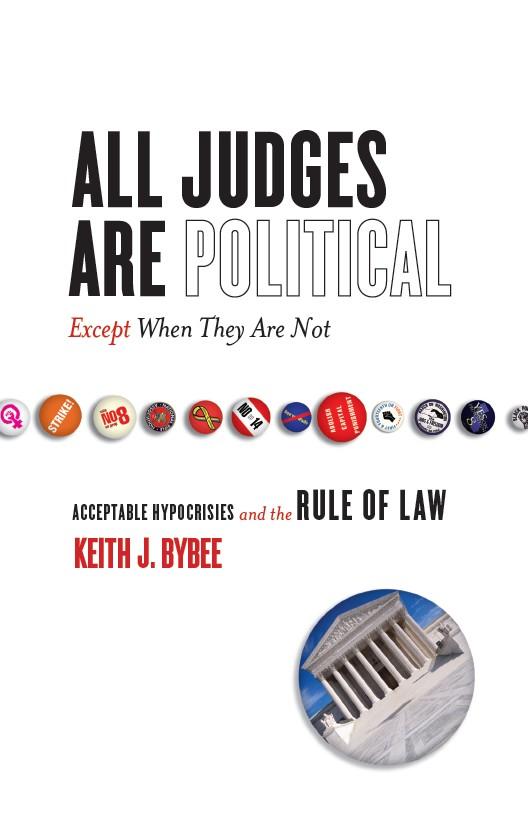
We live in an age where one person's judicial "activist" legislating from the bench is another's impartial arbiter fairly interpreting the law. After the Supreme Court ended the 2000 Presidential election with its decision in Bush v. Gore, many critics claimed that the justices had simply voted their political preferences. But Justice Clarence Thomas, among many others, disagreed and insisted that the Court had acted according to legal principle, stating: "I plead with you, that, whatever you do, don't try to apply the rules of the political world to this institution; they do not apply."
The legitimacy of our courts rests on their capacity to give broadly acceptable answers to controversial questions. Yet Americans are divided in their beliefs about whether our courts operate on unbiased legal principle or political interest. Comparing law to the practice of common courtesy, Keith Bybee explains how our courts not only survive under these suspicions of hypocrisy, but actually depend on them.
Law, like courtesy, furnishes a means of getting along. It frames disputes in collectively acceptable ways, and it is a habitual practice, drummed into the minds of citizens by popular culture and formal institutions. The rule of law, thus, is neither particularly fair nor free of paradoxical tensions, but it endures. Although pervasive public skepticism raises fears of judicial crisis and institutional collapse, such skepticism is also an expression of how our legal system ordinarily functions.
Before Memmo my notes were scattered across PDFs. Now a workspace pulls everything into one place — I see exactly what's still left to study.
Memmo's summaries are gold before exams. I don't have to re-read 800 pages two weeks before — just the important parts.
The AI chat has saved me the night before an exam more than once. I just keep asking until I get it — no waiting on a study group to reply.
The quizzes hit exactly what I need to know. Memmo tracks what I get stuck on — so I only practice what's worth it.
Flashcards with spaced repetition are magic. Memmo knows when I'm about to forget something and brings it back.
The AI podcasts are my favorite. I listen on my way to school and get a recap without sitting at a computer.

Handbok i kvalitativa metoder
281 kr

Hållbar utveckling: en introduktion för ingenjörer och andra problemlösare
334 kr

Brymans Samhällsvetenskapliga metoder
390 kr

Projektledning
491 kr

Den orättvisa hälsan: om socioekonomiska skillnader i hälsa och livslängd
326 kr

Vetenskapsteori för nybörjare
196 kr

Organizational Leadership
429 kr

På väg mot läraryrket
172 kr

Det sociala livet i skolan: Socialpsykologiska perspektiv
253 kr

Betygsättningens didaktik
151 kr

Personality
402 kr

Studying Leadership
404 kr

Managing Innovation
477 kr

Introduktion till samhällsvetenskaplig metod
347 kr

The Psychology of Sex and Gender
698 kr

Evidens och kunskap för socialt arbete
207 kr

Introduction to Leadership
605 kr