
Before Memmo my notes were scattered across PDFs. Now a workspace pulls everything into one place — I see exactly what's still left to study.
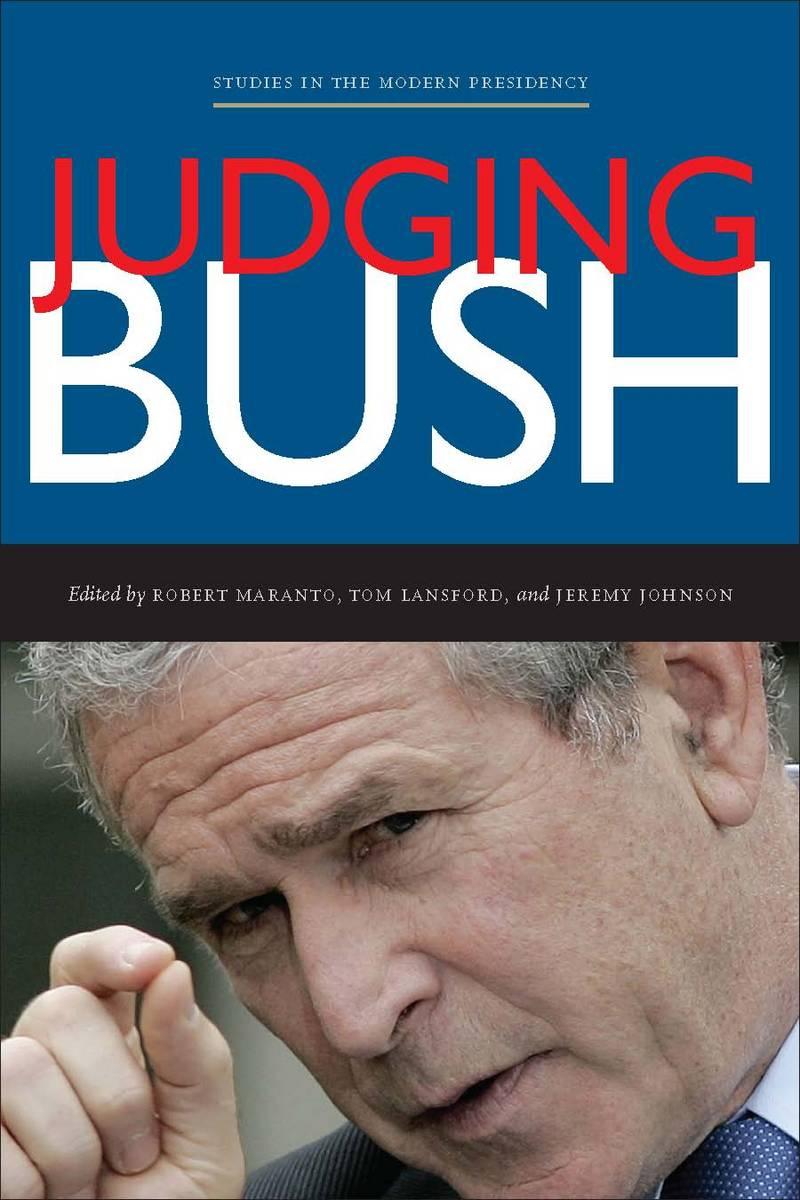
There is no shortage of opinions on the legacy that George W. Bush will leave as 43rd President of the United States. Recognizing that Bush the Younger has been variously described as dimwitted, opportunistic, innovative, and bold, it would be presumptuous to draw any hard and fast conclusions about how history will view him. Nevertheless, it is well within academia's ability to begin to make preliminary judgments by weighing the evidence we do have and testing assumptions.
In the wake of the September 11 terrorist attacks and the initially successful military campaign in Afghanistan, Bush and his administration enjoyed nearly unprecedented popularity. But after failures in Iraq and in the federal government's response to Hurricane Katrina, Bush's approval ratings plummeted. Guided by a new framework, Judging Bush boldly takes steps to evaluate the highs and lows of the Bush legacy according to four types of competence: strategic, political, tactical, and moral. It offers a first look at the man, his domestic and foreign policies, and the executive office's relationship to the legislative and judicial branches from a distinguished and ideologically diverse set of award-winning political scientists and White House veterans. Topics include Bush's decision-making style, the management of the executive branch, the role and influence of Dick Cheney, elections and party realignment, the Bush economy, Hurricane Katrina, No Child Left Behind, and competing treatments of the wars in Iraq and Afghanistan.
Contributors include Lara M. Brown, David B. Cohen, Jeffrey E. Cohen, Laura Conley, Jack Covarrubias, John J. DiIulio, Jr., William A. Galston, Frederick M. Hess, Karen M. Hult, Lori A. Johnson, Robert G. Kaufman, Anne M. Khademian, Lawrence J. Korb, Patrick McGuinn, Michael Moreland, Costas Panagopoulos, James P. Pfiffner, Richard E. Redding, Neil Reedy, Andrew Rudalevige, Charles E. Walcott, and Shirley Anne Warshaw.
Before Memmo my notes were scattered across PDFs. Now a workspace pulls everything into one place — I see exactly what's still left to study.
Memmo's summaries are gold before exams. I don't have to re-read 800 pages two weeks before — just the important parts.
The AI chat has saved me the night before an exam more than once. I just keep asking until I get it — no waiting on a study group to reply.
The quizzes hit exactly what I need to know. Memmo tracks what I get stuck on — so I only practice what's worth it.
Flashcards with spaced repetition are magic. Memmo knows when I'm about to forget something and brings it back.
The AI podcasts are my favorite. I listen on my way to school and get a recap without sitting at a computer.

Handbok i kvalitativa metoder
281 kr

Hållbar utveckling: en introduktion för ingenjörer och andra problemlösare
334 kr

Brymans Samhällsvetenskapliga metoder
390 kr

Projektledning
491 kr

Den orättvisa hälsan: om socioekonomiska skillnader i hälsa och livslängd
326 kr

Vetenskapsteori för nybörjare
196 kr

Organizational Leadership
429 kr

På väg mot läraryrket
172 kr

Det sociala livet i skolan: Socialpsykologiska perspektiv
253 kr

Betygsättningens didaktik
151 kr

Personality
402 kr

Studying Leadership
404 kr

Managing Innovation
477 kr

Introduktion till samhällsvetenskaplig metod
347 kr

The Psychology of Sex and Gender
698 kr

Evidens och kunskap för socialt arbete
207 kr

Introduction to Leadership
605 kr