
Before Memmo my notes were scattered across PDFs. Now a workspace pulls everything into one place — I see exactly what's still left to study.
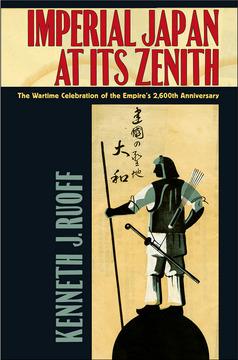
In 1940, Japan was into its third year of war with China, and relations with the United States were deteriorating, but it was a heady time for the Japanese nonetheless. That year, the Japanese commemorated the 2,600th anniversary of the founding of the Empire of Japan. According to the imperial myth-history, Emperor Jimmu, descended from the Sun Goddess Amaterasu, established the "unbroken imperial line" in 660 BCE. In carefully choreographed ceremonies throughout the empire, through new public monuments, with visual culture, and through heritage tourism, the Japanese celebrated the extension of imperial rule under the 124th emperor, Hirohito.
These celebrations, the climactic moment for the ideology that was central to modern Japan's identity until the imperial cult's legitimacy was bruised by defeat in 1945, are little known outside Japan. Imperial Japan at Its Zenith, the first book in English about the 2,600th anniversary, examines the themes of the celebration and what they tell us about Japan at mid-century. Kenneth J. Ruoff emphasizes that wartime Japan did not reject modernity in favor of nativist traditionalism. Instead, like Nazi Germany and Fascist Italy, it embraced reactionary modernism. Ruoff also highlights the role played by the Japanese people in endorsing and promoting imperial ideology and expansion, documenting the significant grassroots support for the cult of the emperor and for militarism.
Ruoff uses the anniversary celebrations to examine Japan's invention of a national history; the complex relationship between the homeland and the colonies; the significance of Imperial Japan's challenge to Euro-American claims of racial and cultural superiority; the role of heritage tourism in inspiring national pride; Japan's wartime fascist modernity; and, with a chapter about overseas Japanese, the boundaries of the Japanese nation. Packed with intriguing anecdotes, incisive analysis, and revelatory illustrations, Imperial Japan at Its Zenith is a major contribution to our understanding of wartime Japan.
Before Memmo my notes were scattered across PDFs. Now a workspace pulls everything into one place — I see exactly what's still left to study.
Memmo's summaries are gold before exams. I don't have to re-read 800 pages two weeks before — just the important parts.
The AI chat has saved me the night before an exam more than once. I just keep asking until I get it — no waiting on a study group to reply.
The quizzes hit exactly what I need to know. Memmo tracks what I get stuck on — so I only practice what's worth it.
Flashcards with spaced repetition are magic. Memmo knows when I'm about to forget something and brings it back.
The AI podcasts are my favorite. I listen on my way to school and get a recap without sitting at a computer.

Handbok i kvalitativa metoder
281 kr

Hållbar utveckling: en introduktion för ingenjörer och andra problemlösare
334 kr

Brymans Samhällsvetenskapliga metoder
390 kr

Projektledning
491 kr

Den orättvisa hälsan: om socioekonomiska skillnader i hälsa och livslängd
326 kr

Vetenskapsteori för nybörjare
196 kr

Organizational Leadership
429 kr

På väg mot läraryrket
172 kr

Det sociala livet i skolan: Socialpsykologiska perspektiv
253 kr

Betygsättningens didaktik
151 kr

Personality
402 kr

Studying Leadership
404 kr

Managing Innovation
477 kr

Introduktion till samhällsvetenskaplig metod
347 kr

The Psychology of Sex and Gender
698 kr

Evidens och kunskap för socialt arbete
207 kr

Introduction to Leadership
605 kr