
Before Memmo my notes were scattered across PDFs. Now a workspace pulls everything into one place — I see exactly what's still left to study.
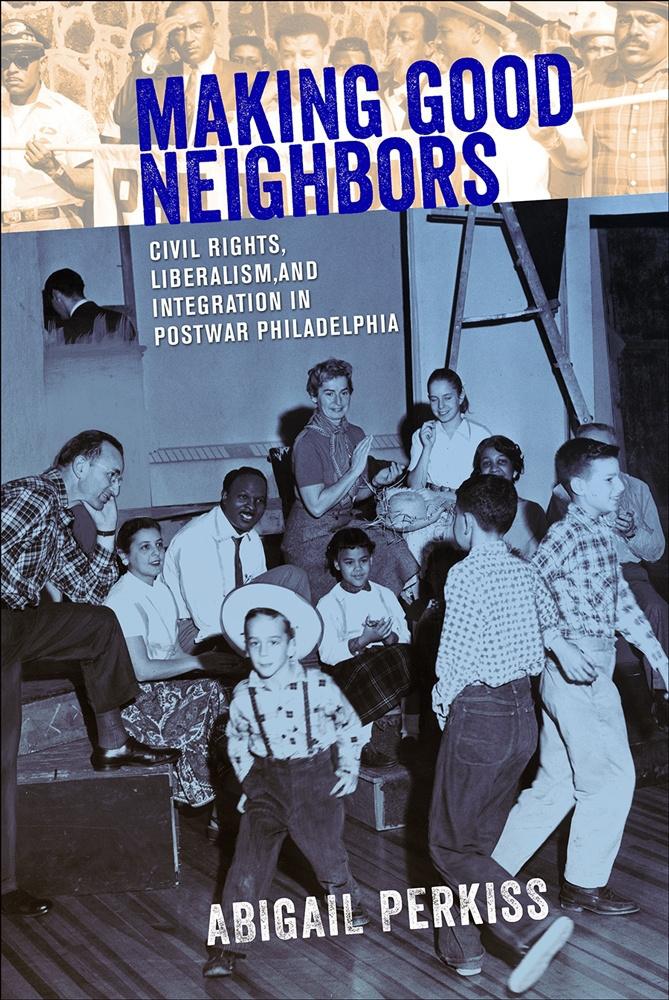
In the 1950s and 1960s, as the white residents, real estate agents, and municipal officials of many American cities fought to keep African Americans out of traditionally white neighborhoods, Philadelphia's West Mount Airy became one of the first neighborhoods in the nation where residents came together around a community-wide mission toward intentional integration. As West Mount Airy experienced transition, homeowners fought economic and legal policies that encouraged white flight and threatened the quality of local schools, seeking to find an alternative to racial separation without knowing what they would create in its place. In Making Good Neighbors, Abigail Perkiss tells the remarkable story of West Mount Airy, drawing on archival research and her oral history interviews with residents to trace their efforts, which began in the years following World War II and continued through the turn of the twenty-first century.
The organizing principles of neighborhood groups like the West Mount Airy Neighbors Association (WMAN) were fundamentally liberal and emphasized democracy, equality, and justice; the social, cultural, and economic values of these groups were also decidedly grounded in middle-class ideals and white-collar professionalism. As Perkiss shows, this liberal, middle-class framework would ultimately become contested by more militant black activists and from within WMAN itself, as community leaders worked to adapt and respond to the changing racial landscape of the 1960s and 1970s. The West Mount Airy case stands apart from other experiments in integration because of the intentional, organized, and long-term commitment on the part of WMAN to biracial integration and, in time, multiracial and multiethnic diversity. The efforts of residents in the 1950s and 1960s helped to define the neighborhood as it exists today.
Before Memmo my notes were scattered across PDFs. Now a workspace pulls everything into one place — I see exactly what's still left to study.
Memmo's summaries are gold before exams. I don't have to re-read 800 pages two weeks before — just the important parts.
The AI chat has saved me the night before an exam more than once. I just keep asking until I get it — no waiting on a study group to reply.
The quizzes hit exactly what I need to know. Memmo tracks what I get stuck on — so I only practice what's worth it.
Flashcards with spaced repetition are magic. Memmo knows when I'm about to forget something and brings it back.
The AI podcasts are my favorite. I listen on my way to school and get a recap without sitting at a computer.

Handbok i kvalitativa metoder
281 kr

Hållbar utveckling: en introduktion för ingenjörer och andra problemlösare
334 kr

Brymans Samhällsvetenskapliga metoder
390 kr

Projektledning
491 kr

Den orättvisa hälsan: om socioekonomiska skillnader i hälsa och livslängd
326 kr

Organizational Leadership
429 kr

Vetenskapsteori för nybörjare
196 kr

På väg mot läraryrket
172 kr

Det sociala livet i skolan: Socialpsykologiska perspektiv
253 kr

Betygsättningens didaktik
151 kr

Personality
402 kr

Studying Leadership
404 kr

Managing Innovation
477 kr

Introduktion till samhällsvetenskaplig metod
347 kr

The Psychology of Sex and Gender
698 kr

Evidens och kunskap för socialt arbete
207 kr

Introduction to Leadership
605 kr