
Before Memmo my notes were scattered across PDFs. Now a workspace pulls everything into one place — I see exactly what's still left to study.
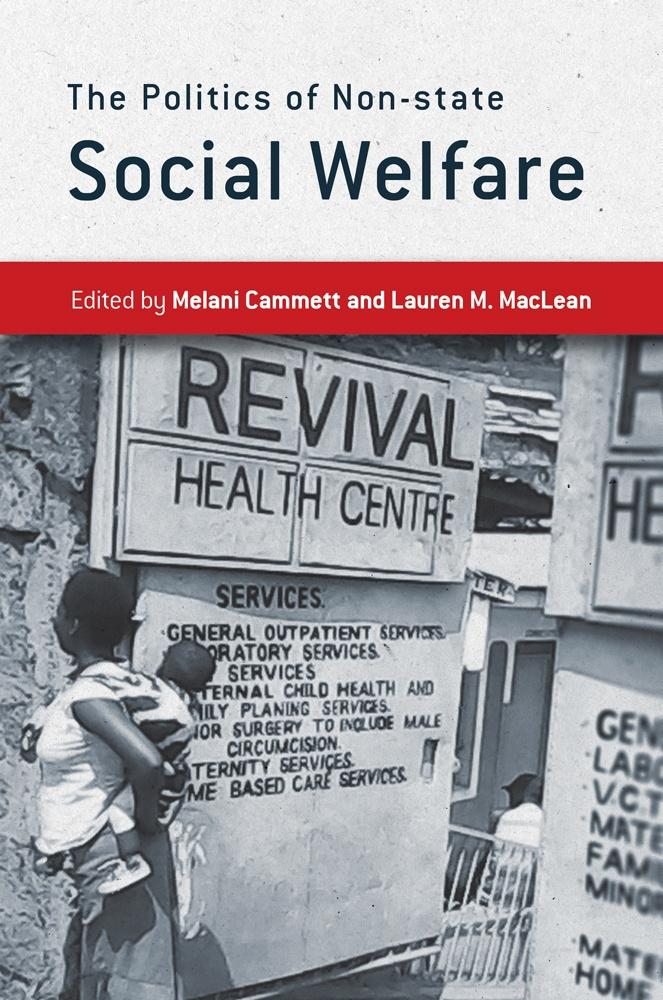
Across the world, welfare states are under challenge—or were never developed extensively in the first place—while non-state actors increasingly provide public goods and basic welfare. In many parts of the Middle East and South Asia, sectarian organizations and political parties supply basic services to ordinary people more extensively and effectively than governments. In sub-Saharan Africa, families struggle to pay hospital fees, and nongovernmental organizations (NGOs) launch welfare programs as states cut subsidies and social programs. Likewise, in parts of Latin America, international and domestic NGOs and, increasingly, private firms are key suppliers of social welfare in both urban and rural communities. Even in the United States, where the welfare state is far more developed, secular NGOs and faith-based organizations are critical components of social safety nets. Despite official entitlements to public welfare, citizens in Russia face increasing out-of-pocket expenses as they are effectively compelled to seek social services through the private market
In The Politics of Non-State Social Welfare, a multidisciplinary group of contributors use survey data analysis, spatial analysis, in-depth interviews, and ethnographic and archival research to explore the fundamental transformation of the relationship between states and citizens. The book highlights the political consequences of the non-state provision of social welfare, including the ramifications for equitable and sustainable access to social services, accountability for citizens, and state capacity. The authors do not assume that non-state providers will surpass the performance of weak, inefficient, or sometimes corrupt states but instead offer a systematic analysis of a wide spectrum of non-state actors in a variety of contexts around the world, including sectarian political parties, faith-based organizations, community-based organizations, family networks, informal brokers, and private firms.
Before Memmo my notes were scattered across PDFs. Now a workspace pulls everything into one place — I see exactly what's still left to study.
Memmo's summaries are gold before exams. I don't have to re-read 800 pages two weeks before — just the important parts.
The AI chat has saved me the night before an exam more than once. I just keep asking until I get it — no waiting on a study group to reply.
The quizzes hit exactly what I need to know. Memmo tracks what I get stuck on — so I only practice what's worth it.
Flashcards with spaced repetition are magic. Memmo knows when I'm about to forget something and brings it back.
The AI podcasts are my favorite. I listen on my way to school and get a recap without sitting at a computer.

Handbok i kvalitativa metoder
281 kr

Hållbar utveckling: en introduktion för ingenjörer och andra problemlösare
334 kr

Brymans Samhällsvetenskapliga metoder
390 kr

Projektledning
491 kr

Den orättvisa hälsan: om socioekonomiska skillnader i hälsa och livslängd
326 kr

Vetenskapsteori för nybörjare
196 kr

Organizational Leadership
429 kr

På väg mot läraryrket
172 kr

Det sociala livet i skolan: Socialpsykologiska perspektiv
253 kr

Betygsättningens didaktik
151 kr

Personality
402 kr

Studying Leadership
404 kr

Managing Innovation
477 kr

Introduktion till samhällsvetenskaplig metod
347 kr

The Psychology of Sex and Gender
698 kr

Evidens och kunskap för socialt arbete
207 kr

Introduction to Leadership
605 kr