
Before Memmo my notes were scattered across PDFs. Now a workspace pulls everything into one place — I see exactly what's still left to study.
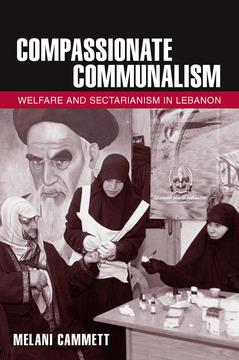
In Lebanon, religious parties such as Hezbollah play a critical role in providing health care, food, poverty relief, and other social welfare services alongside or in the absence of government efforts. Some parties distribute goods and services broadly, even to members of other parties or other faiths, while others allocate services more narrowly to their own base. In Compassionate Communalism, Melani Cammett analyzes the political logics of sectarianism through the lens of social welfare. On the basis of years of research into the varying welfare distribution strategies of Christian, Shia Muslim, and Sunni Muslim political parties in Lebanon, Cammett shows how and why sectarian groups deploy welfare benefits for such varied goals as attracting marginal voters, solidifying intraconfessional support, mobilizing mass support, and supporting militia fighters.
Cammett then extends her arguments with novel evidence from the Sadrist movement in post-Saddam Iraq and the Bharatiya Janata Party in contemporary India, other places where religious and ethnic organizations provide welfare as part of their efforts to build political support. Nonstate welfare performs a critical function in the absence of capable state institutions, Cammett finds, but it comes at a price: creating or deepening social divisions, sustaining rival visions of the polity, or introducing new levels of social inequality.
Compassionate Communalism is informed by Cammett's use of many methods of data collection and analysis, including Geographic Information Systems (GIS) analysis of the location of hospitals and of religious communities; a large national survey of Lebanese citizens regarding access to social welfare; standardized open-ended interviews with representatives from political parties, religious charities, NGOs, and government ministries, as well as local academics and journalists; large-scale proxy interviewing of welfare beneficiaries conducted by trained Lebanese graduate students matched with coreligionist respondents; archival research; and field visits to schools, hospitals, clinics, and other social assistance programs as well as political party offices throughout the country.
Before Memmo my notes were scattered across PDFs. Now a workspace pulls everything into one place — I see exactly what's still left to study.
Memmo's summaries are gold before exams. I don't have to re-read 800 pages two weeks before — just the important parts.
The AI chat has saved me the night before an exam more than once. I just keep asking until I get it — no waiting on a study group to reply.
The quizzes hit exactly what I need to know. Memmo tracks what I get stuck on — so I only practice what's worth it.
Flashcards with spaced repetition are magic. Memmo knows when I'm about to forget something and brings it back.
The AI podcasts are my favorite. I listen on my way to school and get a recap without sitting at a computer.

Handbok i kvalitativa metoder
281 kr

Hållbar utveckling: en introduktion för ingenjörer och andra problemlösare
334 kr

Brymans Samhällsvetenskapliga metoder
390 kr

Projektledning
491 kr

Den orättvisa hälsan: om socioekonomiska skillnader i hälsa och livslängd
326 kr

Organizational Leadership
429 kr

Vetenskapsteori för nybörjare
196 kr

På väg mot läraryrket
172 kr

Det sociala livet i skolan: Socialpsykologiska perspektiv
253 kr

Betygsättningens didaktik
151 kr

Personality
402 kr

Studying Leadership
404 kr

Managing Innovation
477 kr

Introduktion till samhällsvetenskaplig metod
347 kr

The Psychology of Sex and Gender
698 kr

Evidens och kunskap för socialt arbete
207 kr

Introduction to Leadership
605 kr