
Before Memmo my notes were scattered across PDFs. Now a workspace pulls everything into one place — I see exactly what's still left to study.
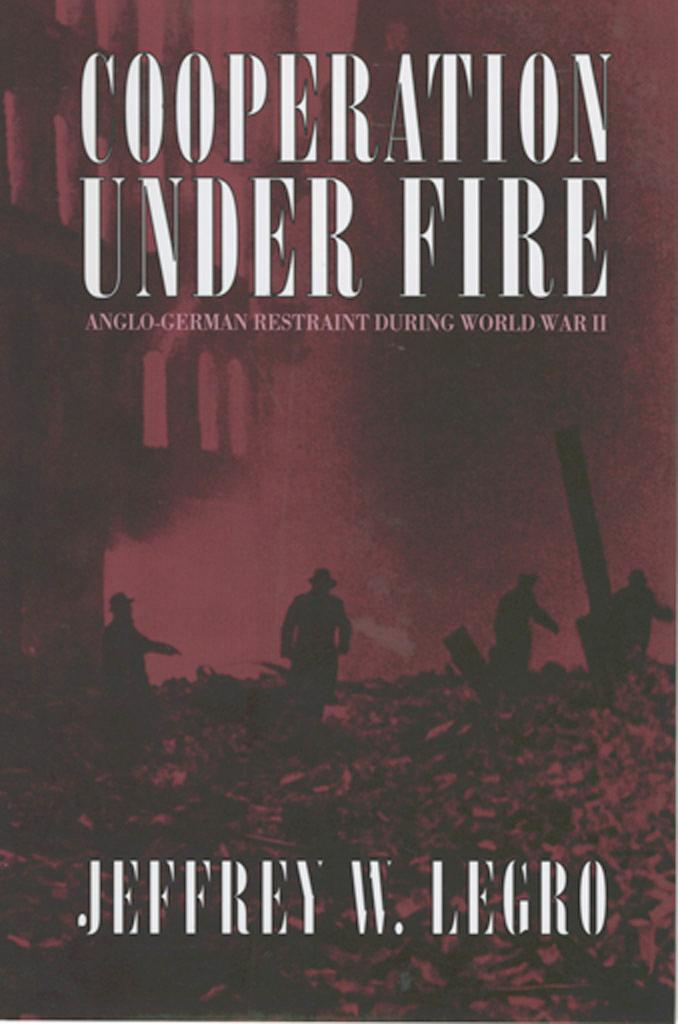
Why do nations cooperate even as they try to destroy each other? Jeffrey Legro explores this question in the context of World War II, the "total" war that in fact wasn't. During the war, combatant states attempted to sustain agreements limiting the use of three forms of combat considered barbarous—submarine attacks against civilian ships, strategic bombing of civilian targets, and chemical warfare. Looking at how these restraints worked or failed to work between such fierce enemies as Hitler's Third Reich and Churchill's Britain, Legro offers a new understanding of the dynamics of World War II and the sources of international cooperation.
While traditional explanations of cooperation focus on the relations between actors, Cooperation under Fire examines what warring nations seek and why they seek it—the "preference formation" that undergirds international interaction. Scholars and statesmen debate whether it is the balance of power or the influence of international norms that most directly shapes foreign policy goals. Critically assessing both explanations, Legro argues that it was, rather, the organizational cultures of military bureaucracies—their beliefs and customs in waging war—that decided national priorities for limiting the use of force in World War II.
Drawing on documents from Germany, Britain, the United States, and the former Soviet Union, Legro provides a compelling account of how military cultures molded state preferences and affected the success of cooperation. In its clear and cogent analysis, this book has significant implications for the theory and practice of international relations.
Before Memmo my notes were scattered across PDFs. Now a workspace pulls everything into one place — I see exactly what's still left to study.
Memmo's summaries are gold before exams. I don't have to re-read 800 pages two weeks before — just the important parts.
The AI chat has saved me the night before an exam more than once. I just keep asking until I get it — no waiting on a study group to reply.
The quizzes hit exactly what I need to know. Memmo tracks what I get stuck on — so I only practice what's worth it.
Flashcards with spaced repetition are magic. Memmo knows when I'm about to forget something and brings it back.
The AI podcasts are my favorite. I listen on my way to school and get a recap without sitting at a computer.

Handbok i kvalitativa metoder
281 kr

Hållbar utveckling: en introduktion för ingenjörer och andra problemlösare
334 kr

Brymans Samhällsvetenskapliga metoder
390 kr

Projektledning
491 kr

Den orättvisa hälsan: om socioekonomiska skillnader i hälsa och livslängd
326 kr

Organizational Leadership
429 kr

Vetenskapsteori för nybörjare
196 kr

På väg mot läraryrket
172 kr

Det sociala livet i skolan: Socialpsykologiska perspektiv
253 kr

Betygsättningens didaktik
151 kr

Personality
402 kr

Studying Leadership
404 kr

Managing Innovation
477 kr

Introduktion till samhällsvetenskaplig metod
347 kr

The Psychology of Sex and Gender
698 kr

Evidens och kunskap för socialt arbete
207 kr

Introduction to Leadership
605 kr